


Quick Summary: The advertising robot business model offers brands and retail partners a new way to approach in-store advertising, but its commercial value depends on more than placing ads on a mobile screen. This blog breaks down how Odigo’s advertising slots work, how campaign pricing is determined, what influences revenue potential, and which responsibilities partners need to clarify before committing. It also explains how to evaluate campaign performance, estimate profitability, and assess whether robotic advertising fits your retail media strategy, helping you move from interest to a more informed business decision.
Key Takeaways
- Odigo’s advertising inventory allows brands to select slots based on their campaign requirements and budget.
- Campaign revenue depends on slot pricing, booking demand, inventory utilization, and operating costs.
- Realistic revenue forecasts require actual pricing and booking assumptions, not estimated earnings presented as guaranteed returns.
- Clear responsibilities across brands, supermarkets, and technology partners help keep advertising campaigns coordinated.
- Ad plays, impressions, shopper engagement, and attributed sales measure different aspects of campaign performance.
- Pricing terms, content approvals, reporting, and campaign delivery should be clarified before entering a partnership.
- Robotic advertising offers a potential retail media opportunity, but its commercial value depends on how effectively the network is planned, sold, and measured.
When a brand considers advertising in a supermarket, the decision comes down to a few practical questions: Will the placement suit its campaign? Can you choose the advertising inventory it needs? Is the pricing clear? And can it evaluate the opportunity before committing its budget?
These questions are equally important for retailers and advertising partners considering a new retail media channel.
The advertising robot business model gives brands an opportunity to advertise on mobile robots operating in retail environments. Potential partners need to understand how brands select advertising slots, how campaign charges are determined, how bookings are coordinated, and which responsibilities come with the arrangement.
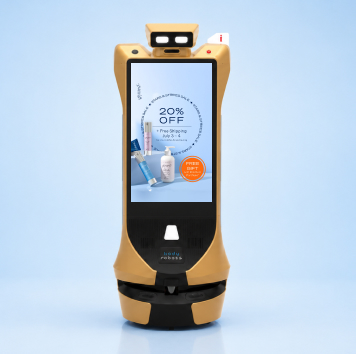
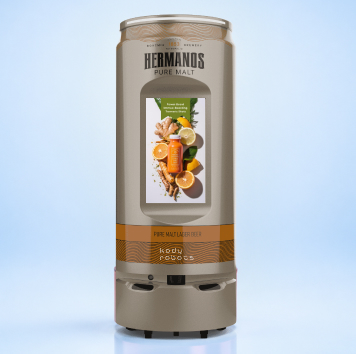
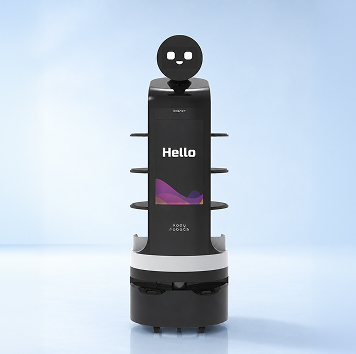
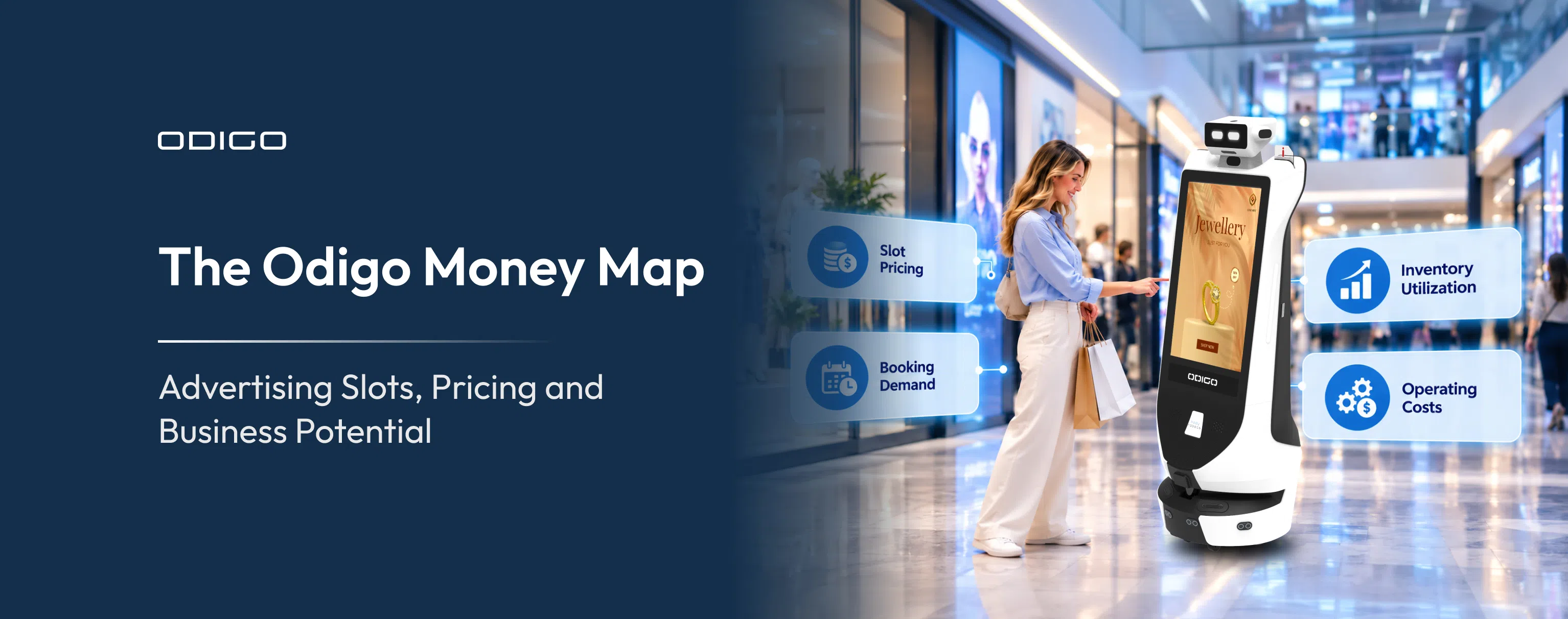
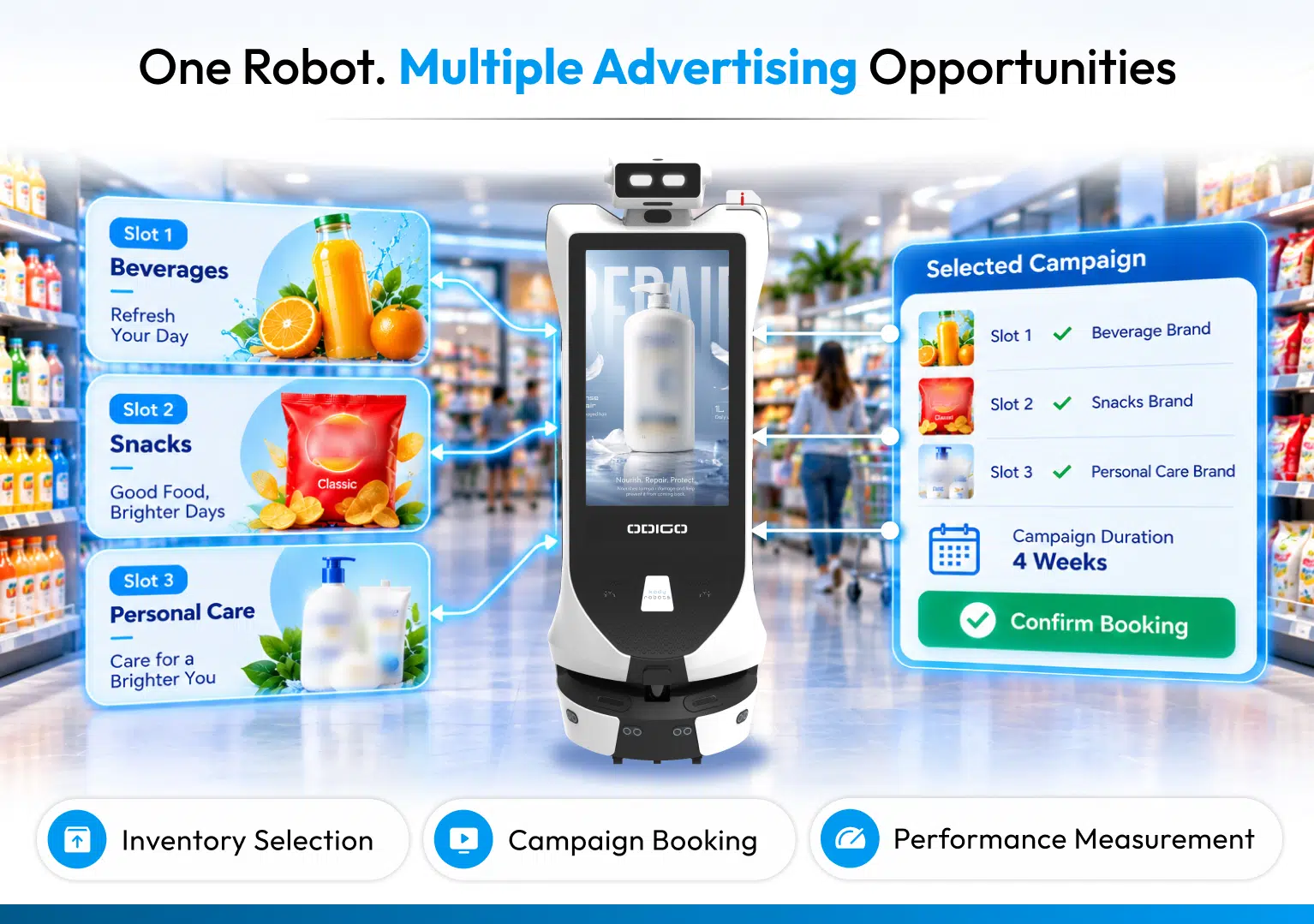
Odigo, developed by Kody Robots, combines digital advertising screens, mobile robotic capabilities, and AI concierge functions. Brands can select available advertising inventory according to their campaign requirements, with pricing based on the selected slots and applicable commercial terms.
The wider retail media market adds context to this opportunity. In January 2025, EMARKETER forecast that US in-store retail media ad spending would grow by 32.8% in 2026 to reach $550 million. (Source: Emarketer)
So, is Odigo worth considering for your brand, retail business, or advertising network? This guide explains the buying process, commercial considerations, and questions to resolve before approaching Kody Robots.
How Does the Advertising Robot Business Model Work?
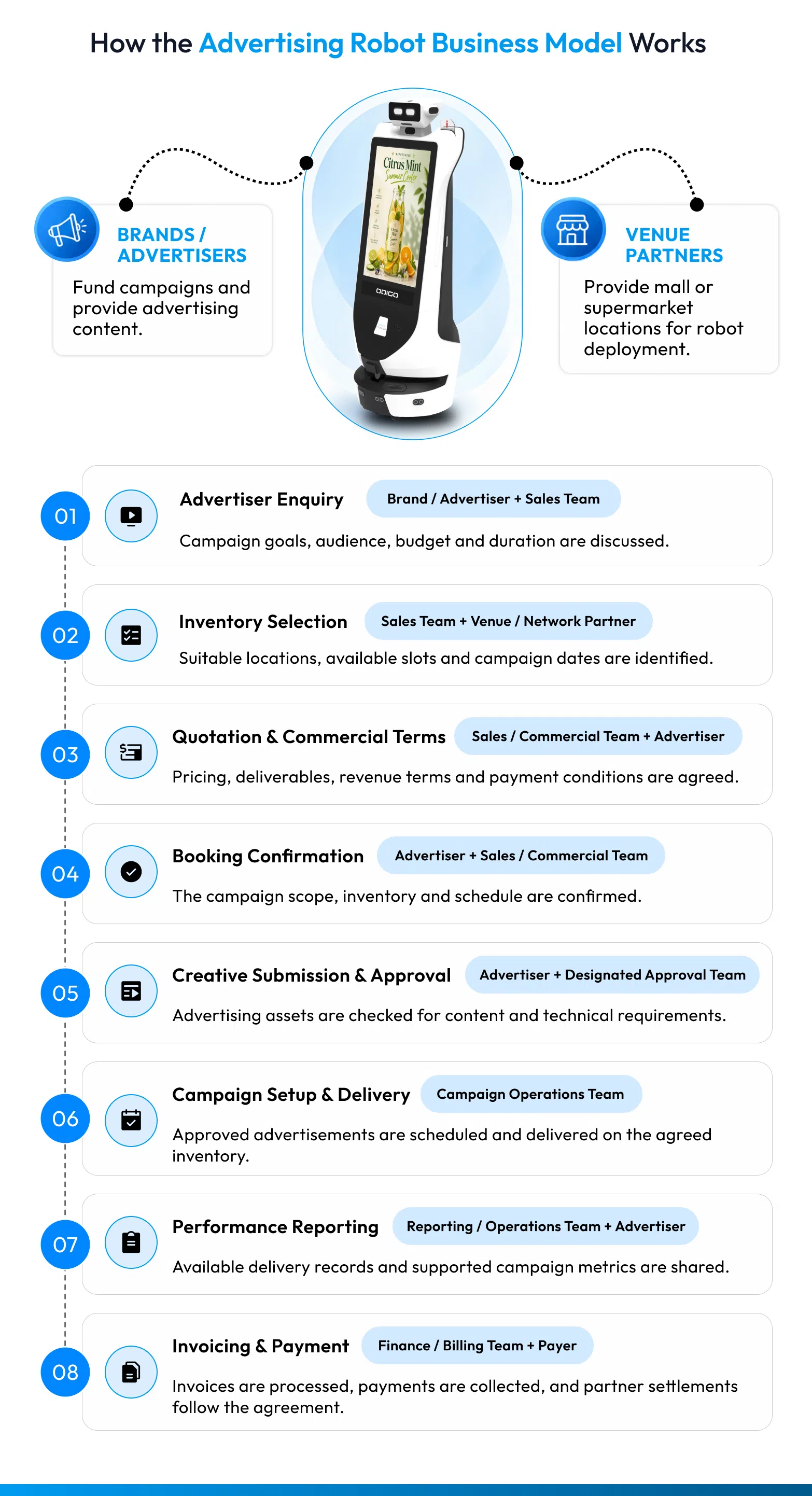
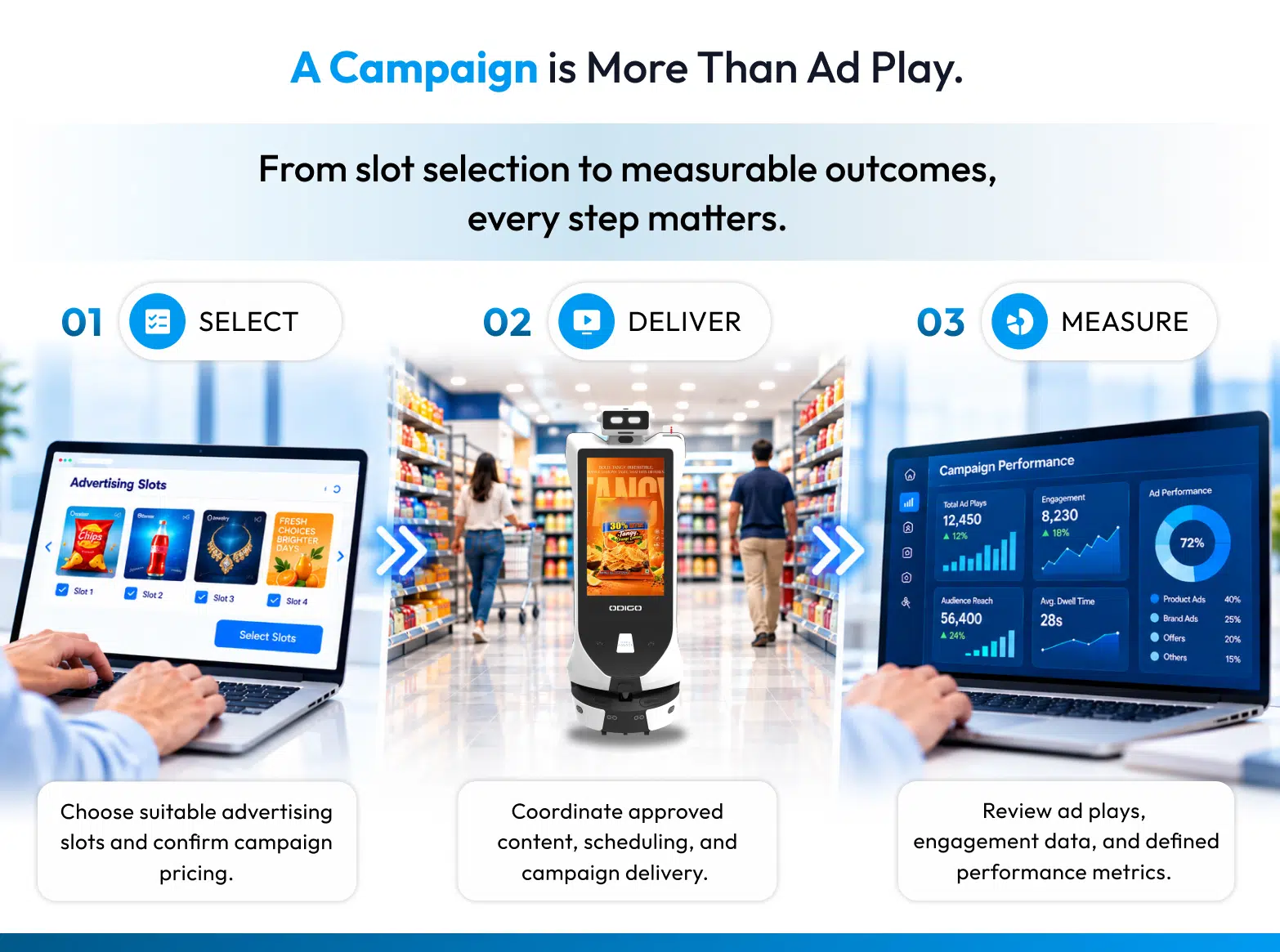
The advertising robot business model connects brands looking to advertise with available inventory on Odigo. The buying process begins with a campaign requirement and progresses through inventory selection, price confirmation, and booking coordination.
How do brands select advertising slots?
Odigo has approximately 18 advertising slots available for selection. A brand can choose the slots that suit its campaign objectives and budget. For example, it may select two or three slots, depending on the available inventory and its requirements.
The brand communicates its advertising requirements to the supermarket team, which coordinates the selection and booking process.
Before choosing inventory, a brand should establish:
- Which slots are currently available.
- Which options suit its campaign objectives.
- The price of the selected combination.
- The campaign duration and booking conditions.
Each slot has its own pricing, which can vary by brand. The final campaign charge depends on the selected inventory and applicable commercial terms.
What happens after a brand selects its slots?
The booking process should establish the content requirements, scheduling arrangements, campaign duration, and reporting available. The responsibilities for content approval, campaign delivery, payment, and communication should be confirmed by the relevant parties.
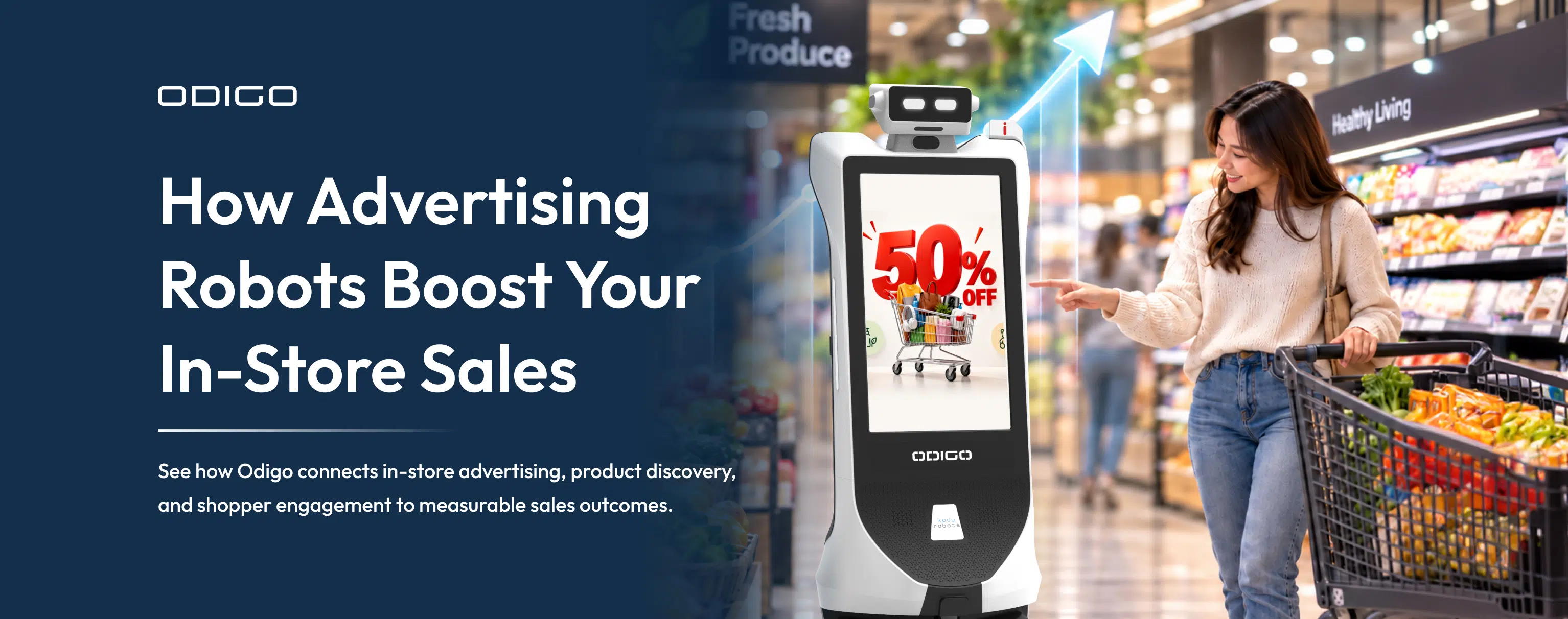
For brands considering the format as part of a wider promotional strategy, how advertising robot boost sales provides additional context on the role robotic advertising can play in retail engagement.
The buying decision: Confirm the available inventory, applicable price, booking conditions, and campaign deliverables before committing the advertising budget.
How Should You Evaluate the Advertising Robot Revenue Model?
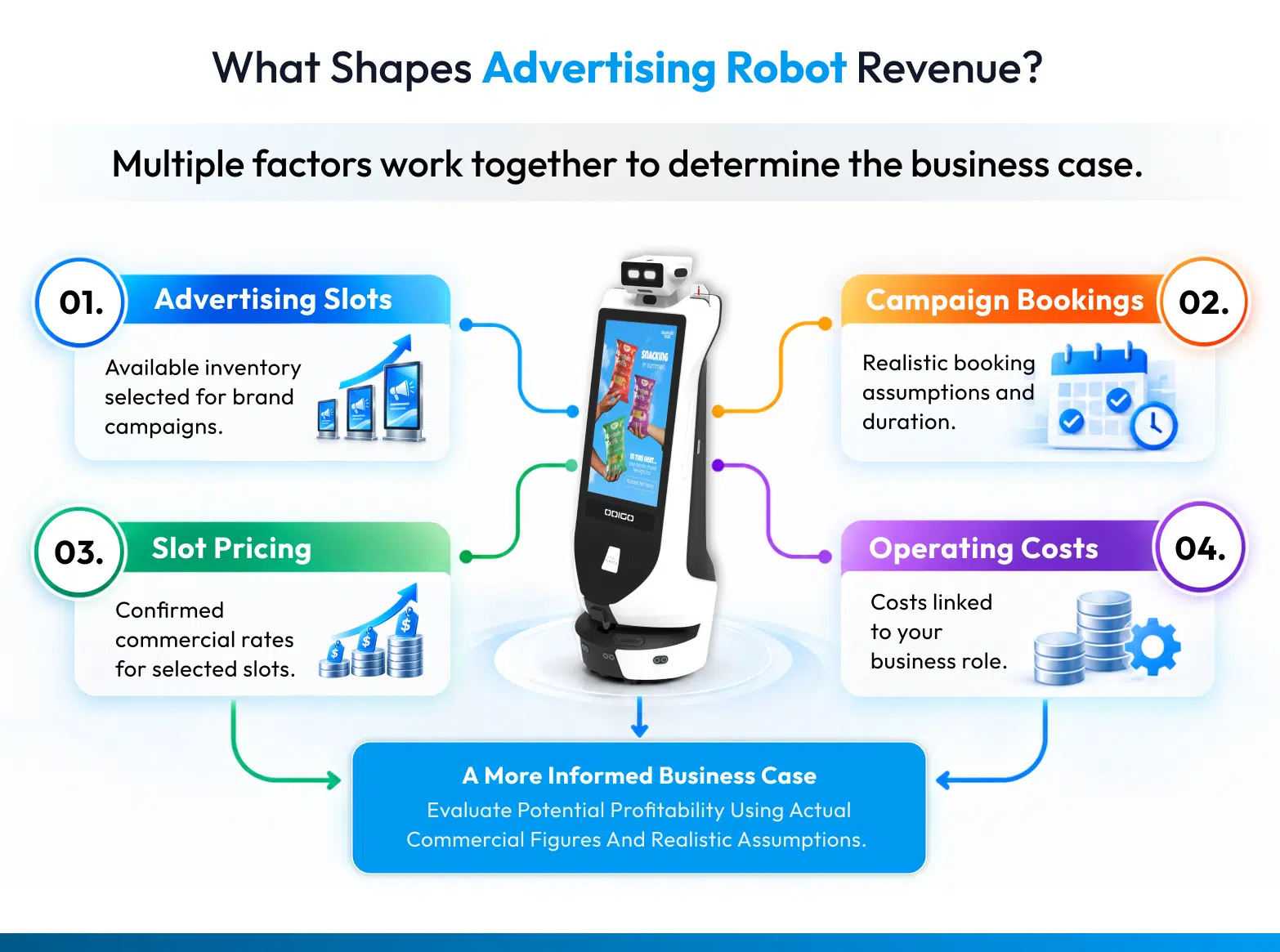
An advertising robot revenue model needs to be assessed against actual commercial terms and realistic campaign demand. The available inventory is one input into the decision, not a financial forecast by itself.
The advertising robot business model should be evaluated using confirmed commercial terms, realistic booking expectations, and the costs associated with your role.
Build a revenue estimate from confirmed figures
Start by requesting the applicable prices and understanding how campaigns are booked. Then estimate how many campaigns your business could realistically secure over a defined period.
Your estimate should account for:
- The price of the selected advertising inventory.
- Expected campaign bookings and duration.
- The commercial terms relevant to your role.
- Costs your business may incur.
- The timing of payments and expenses.
Illustrative calculation (hypothetical figures only)
Suppose an advertising partner charges between $300 and $1,000 per slot per campaign. If the business secures three advertising slots across four campaigns in a month, the estimated revenue would be:
| Item | Calculation | Amount |
| Gross campaign revenue | 3 slots × ($300–$1,000) × 4 campaigns | $3,600–$12,000 |
| Venue or network partner’s share | 40% of gross revenue | $1,440–$4,800 |
| Advertising partner’s share before costs | 60% of gross revenue | $2,160–$7,200 |
| Advertising partner’s operating costs | Assumed monthly costs | $200 |
| Advertising partner’s estimated amount retained | 60% share − $200 | $1,960–$7,000 |
In this hypothetical example, gross campaign revenue ranges from $3,600 to $12,000 per month. Under the assumed 60:40 revenue-sharing arrangement, the venue or network partner receives 40% of gross revenue, while the advertising partner receives 60%.
After deducting the assumed $200 in monthly operating costs, the advertising partner estimated amount retained ranges from $1,960 to $7,000.
Distinguish revenue from profit
Revenue is the amount generated by the relevant campaigns. Profit reflects what remains after applicable business costs.
Use these formulas when assessing your own opportunity:
Net profit = Revenue attributable to your business − Applicable business costs
ROI = (Net profit ÷ Investment cost) × 100
The calculation should reflect your actual arrangement. Depending on your role, relevant costs may include sales, staffing, deployment, or campaign management.
If you are considering a wider deployment, robot network configuration can help identify the technical and operational requirements to clarify before finalizing the business case.
The financial decision: Build your estimate using confirmed prices, realistic booking assumptions, and the costs associated with your role. Avoid relying on generic earning estimates.
What Determines In-Store Advertising Revenue?
In-store advertising revenue depends on whether brands book the available inventory, the applicable campaign prices, and the commercial terms attached to those bookings.
A sustainable advertising robot business model depends on advertiser demand, suitable inventory, and a clear process for converting campaign interest into confirmed bookings.
Evaluate advertiser demand
Different brands have different objectives. One may want a small number of slots for a specific promotion, while another may need a different combination of inventory.
The key commercial question is whether the available options fit the requirements of the advertisers you intend to approach.
Retailers and media partners should consider which brands are a suitable fit, how campaign options will be presented, and what information advertisers need to make a booking decision.
For additional context on the retail use case, why supermarkets deploy robots can help you assess how robotic solutions may fit into store operations and customer-facing activities.
Assess campaign delivery and measurement
Before a campaign begins, retailers and advertisers should agree on which performance metrics will be available, how they will be measured, and what each metric can indicate about campaign effectiveness.
Different metrics provide different insights:
Ad plays
Show how many times advertisements were played by the system, helping advertisers assess campaign delivery and whether scheduled content ran as intended.
Recorded interactions
Show how often shoppers interacted with supported platform functions, helping assess audience response to the campaign.
Navigation requests
Indicate how often shoppers requested directions or assistance finding a store or location, helping retailers understand demand for navigation support.
Store visits
Can help retailers assess whether shoppers visited a store during or after a campaign, provided visits are measured using a defined and reliable method. A visit alone does not establish that an advertisement caused it.
Attributed sales
Help advertisers evaluate sales linked to a campaign through an appropriate attribution method. The reliability of these results depends on the attribution approach and supporting data.
An ad play does not automatically confirm that a shopper saw an advertisement. A change in sales alone also does not establish that an advertising campaign caused the change.
An effective in-store robot data collection strategy helps businesses determine which activity metrics to track and how to use the resulting data to inform deployment decisions.
The revenue decision: Evaluate advertiser demand, confirmed bookings, applicable prices, and reporting together. Each contributes different information to your commercial assessment.
What Does Each Partner Need to Manage?
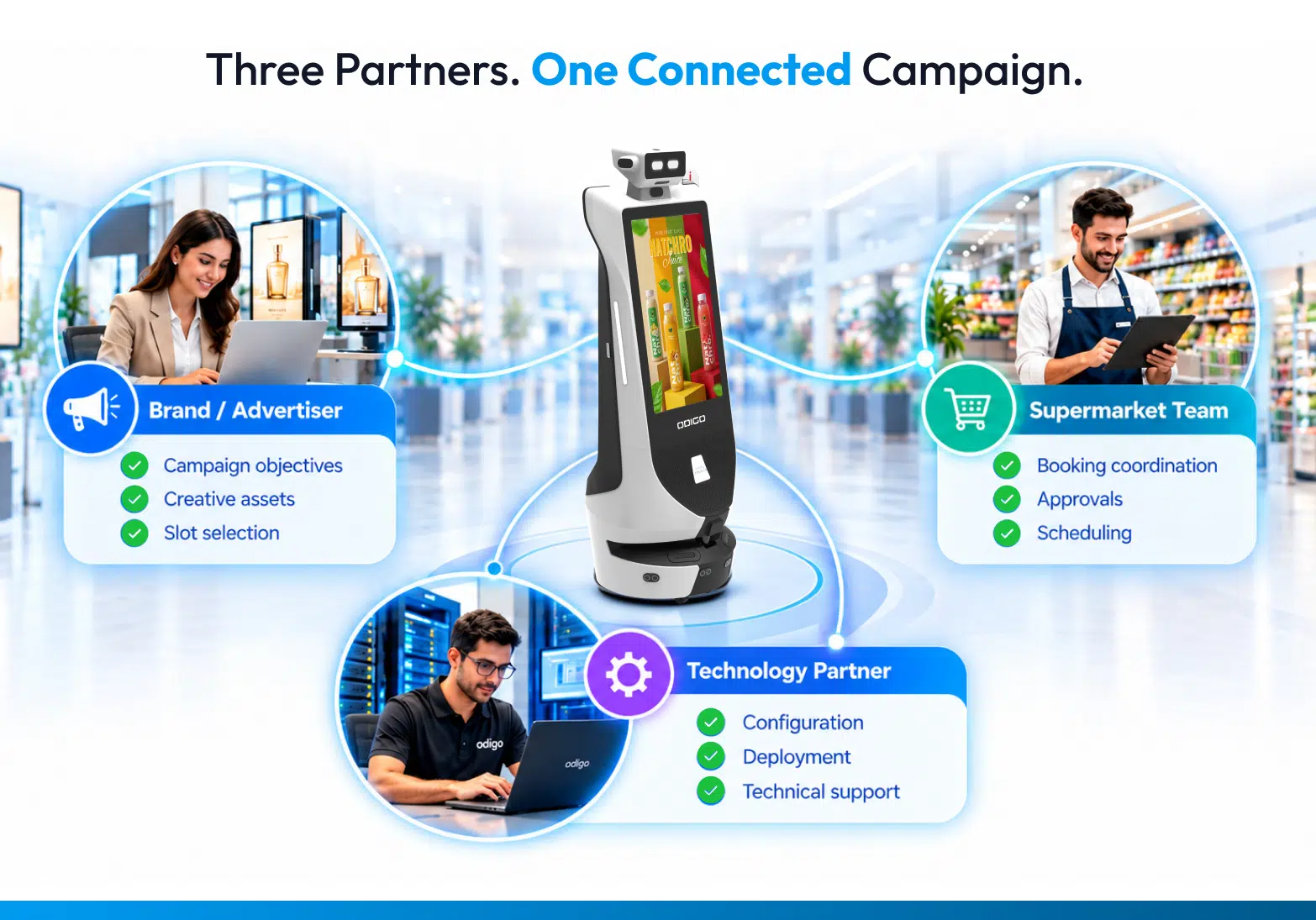
A clear division of responsibilities helps brands, supermarket teams, and technology partners coordinate campaigns. The exact arrangement should be agreed upon before the partnership begins.
For the advertising robot business model to work effectively, each partner needs a clear understanding of their responsibilities throughout the campaign lifecycle.
Brand or advertiser responsibilities
The brand defines its campaign objectives, selects suitable slots, supplies the required advertising content, and coordinates the booking with the supermarket team.
It should also understand the content specifications, campaign duration, scheduling arrangements, and reporting available for the campaign.
Supermarket responsibilities
Under the described process, the supermarket team coordinates advertising requests and slot selection. The proposed arrangement should clarify who handles content approval, booking confirmation, scheduling changes, and communication with advertisers.
Operational readiness also matters. Why retail robots fail can help frame questions about deployment planning, ownership, and ongoing support.
Technology and deployment requirements
Odigo combines digital advertising screens, mobile robotic capabilities, and AI concierge functions. Its configuration should be assessed against the intended retail use case.
Discuss deployment requirements, product configuration, support arrangements, and campaign reporting with Kody Robots. Confirm which capabilities and services are included in the proposed setup.
You can use before vs after advertising robot in retail to define the operational outcomes you want to assess during a proposed deployment.
The partnership decision: Establish who manages booking, approvals, deployment, campaign delivery, reporting, and support. Responsibilities should match the agreed commercial arrangement.
Is the Advertising Robot Monetization Model Right for Your Business?
The advertising robot monetization model can mean different things depending on the business involved. A brand may be evaluating an advertising purchase, a supermarket may be considering an in-store media opportunity, and an advertising network may be assessing a new format for its clients.
The right advertising robot business model depends on whether the commercial arrangement aligns with your business objectives, available resources, and target audience.
If you are a brand or advertiser
Assess whether Odigo’s available inventory suits your campaign objectives and budget. Confirm the selected slots, applicable price, campaign duration, creative requirements, and reporting before booking.
The decision should be based on campaign fit and the deliverables included in the proposed arrangement.
If you are a supermarket or retail partner
Consider how advertising requests and campaign delivery would fit into your existing store operations. Clarify the approval process, scheduling responsibilities, and resources required from your team.
If navigation and customer assistance are also part of your evaluation, wayfinding robots vs wayfinding kiosks can help you compare the different approaches for your intended retail environment.
If you operate an advertising or media network
Consider how the format fits your advertiser relationships, sales capabilities, and campaign management processes.
Understanding retail media inventory can help your business assess available advertising slots, pricing, booking terms, and responsibilities before committing to a campaign.
The fit decision: Proceed when the intended use case, responsibilities, and commercial terms are clear enough to evaluate against your business objectives.
What Should You Confirm Before Committing?
Use the commercial discussion to resolve the details that will affect your decision.
Before committing to the advertising robot business model, confirm the pricing, deliverables, reporting capabilities, and terms that will shape your investment decision.
Commercial terms
Confirm the current slot list, applicable prices, booking conditions, campaign duration, and process for confirming availability. If you intend to select multiple slots, request the price for that specific combination.
Also clarify payment arrangements, contract duration, renewal, termination, and any costs your business may be responsible for.
Campaign delivery
Establish how brands submit content, who approves it, how campaigns are scheduled, and how changes or cancellations are handled.
Ask how campaign status is communicated and who is responsible for addressing delivery issues.
Reporting and support
Request details about the reports available, the metrics they include, and the methodology used to interpret them. Clarify who handles technical issues, campaign queries, and ongoing support.
Before committing, make sure you can answer these four questions:
- What inventory can be booked, and at what price?
- What does the campaign or partnership include?
- Which responsibilities and costs belong to your business?
- What reporting will help you assess campaign delivery?
The commitment decision: You should understand the costs, deliverables, responsibilities, and measurement criteria before agreeing to the arrangement.
How to Discuss an Odigo Advertising Partnership with Kody Robots
Once you have defined your objectives and identified the information you need, the next step is a focused commercial discussion.
Prepare the following details before contacting the team:
Business type
Brand, supermarket, retail partner, or advertising network.
Objective
Campaign booking, deployment evaluation, or advertising partnership.
Target environment
The retail setting and campaign requirements you have in mind.
Commercial questions
Available slots, pricing, booking arrangements, and campaign duration.
Evaluation criteria
Reporting, deployment requirements, responsibilities, support, and costs.
The Robot Assistant for Supermarkets concept highlights how Odigo can help retailers improve shopper assistance, simplify in-store navigation, and deliver targeted advertising.
You can also visit Kody Robots to learn more about the company behind Odigo and its robotics solutions.
Evaluating Odigo’s Advertising Opportunity for Your Business
The Advertising Robot Business Model presents a potential opportunity for brands and retail partners to consider robotic advertising as part of their in-store media strategy. However, the right decision depends on clear pricing, available inventory, campaign requirements, and the responsibilities involved.
Before moving forward, ensure you have the commercial details needed to evaluate the opportunity against your business objectives.
Ready to discuss your requirements? Contact Kody Robots to discuss an advertising partnership or request a demo. Share your campaign objectives, target retail environment, and questions about slot selection and pricing to make the conversation more focused and productive.
Advertising Robot Business Model: General FAQs
Get clear answers about the advertising robot business model, including Odigo’s advertising slots, campaign pricing, revenue potential, ROI, and partnership requirements.
1. What is the Advertising Robot Business Model?
It is a commercial model in which brands select advertising inventory on a robotic advertising platform and pay according to the applicable campaign pricing and booking terms. The wider partnership structure depends on the arrangement.
2. How many advertising slots does Odigo have?
Odigo the robot assistant has approximately 18 advertising slots available for selection. Confirm current availability with the relevant team before planning a campaign.
3. Can a brand select multiple advertising slots on Odigo?
Yes. A brand may select two or three slots, or another suitable combination, depending on its campaign requirements and available inventory.
4. How is Odigo advertising slot pricing determined?
Each slot has its own pricing, which can vary by brand. The campaign charge depends on the selected inventory and applicable commercial terms. Confirm the final price before booking.
5. Who coordinates an advertising booking?
Under the described process, the brand communicates its advertising requirements to the supermarket team, which coordinates slot selection and booking. Other responsibilities should be confirmed with the relevant parties.
6. How can I estimate robot advertising revenue?
Use confirmed slot prices, realistic campaign-booking assumptions, and the commercial terms applicable to your role. Account for relevant business costs when assessing profitability.
7. Does the number of available slots guarantee revenue?
No. Available inventory represents potential campaign opportunities. Actual revenue depends on bookings, applicable prices, campaign demand, and the commercial arrangement.
8. How can I calculate ROI for an advertising robot opportunity?
Estimate the revenue attributable to your business, subtract applicable costs to calculate net profit, and compare that profit with your investment cost. Use actual commercial information rather than assumed earnings.
9. Which factors affect in-store advertising revenue?
Relevant factors include campaign demand, selected slots, applicable pricing, booking frequency, campaign duration, and costs associated with your business responsibilities.
10. What should a brand confirm before booking an Odigo campaign?
Confirm slot availability, pricing, campaign duration, content requirements, booking conditions, and the reporting available for campaign delivery.
11. Which metrics can be used to assess campaign performance?
Depending on the platform’s capabilities and agreed reporting methodology, reports may include ad plays, engagement, and other defined measures. Impressions and attributed sales require appropriate definitions and supporting evidence.
12. What should a supermarket clarify before supporting advertising campaigns?
Clarify the booking workflow, content approval, scheduling, campaign coordination, operating requirements, reporting, and responsibilities assigned to the supermarket team.
13. What should an advertising partner ask Kody Robots?
Ask about available inventory, slot selection, pricing, product configuration, deployment requirements, reporting capabilities, support, and the commercial terms relevant to your role.
14. Can Odigo be evaluated for a wider retail deployment?
Yes. Discuss the intended retail use case, operating requirements, advertising objectives, deployment configuration, and commercial arrangements with Kody Robots.
15. How do I request an Odigo demo?
Contact Kody Robots, a leading Robotics Company in India, with your business type, target retail environment, campaign or deployment objectives, and questions about the advertising workflow. Request a demo or a commercial discussion to clarify the relevant requirements.