


How Autonomous Robots Improve Efficiency in Modern Airport Operations
Explore the real difference these robots for airports make across every corner of modern airport operations.


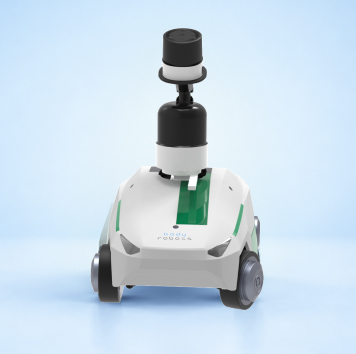
Without Dasher
- Staff manually carry food orders across terminals.
- Long wait times frustrate passengers at boarding gates.
- Staff leave counters unattended, hurting guest interaction.
- Peak-hour bottlenecks delay service and upset passengers.
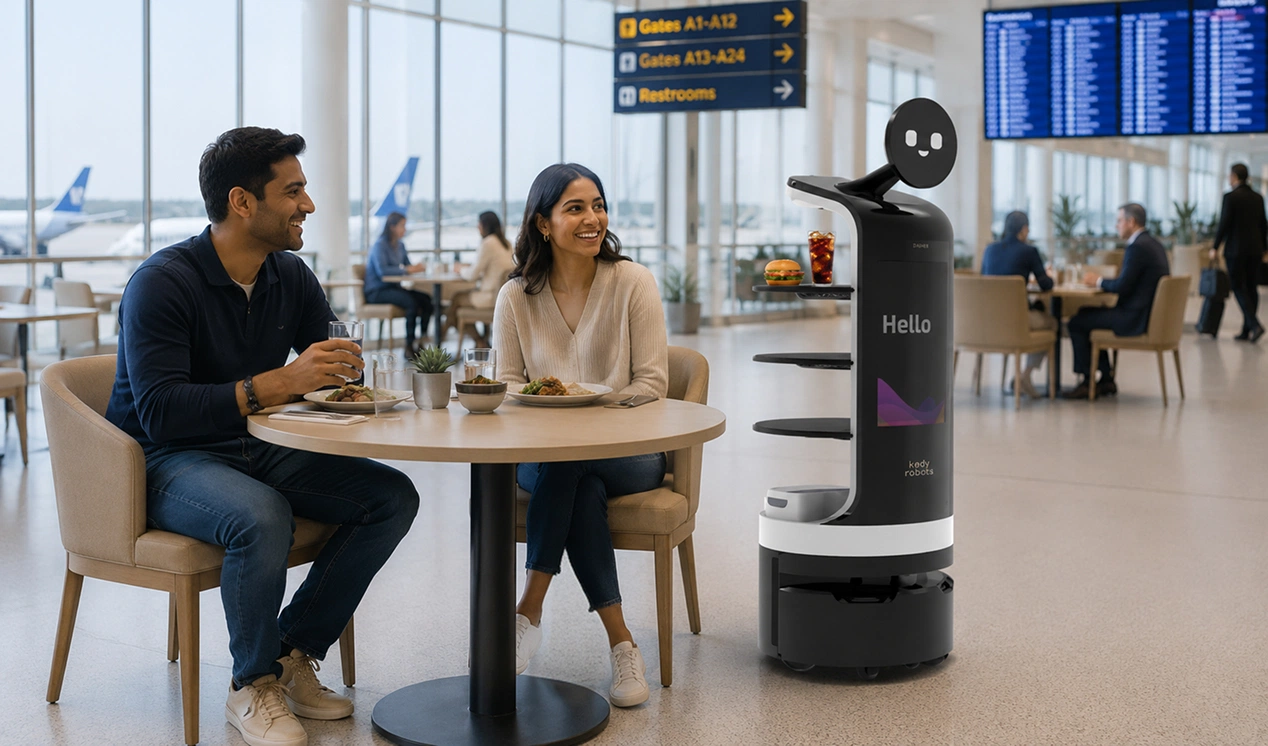

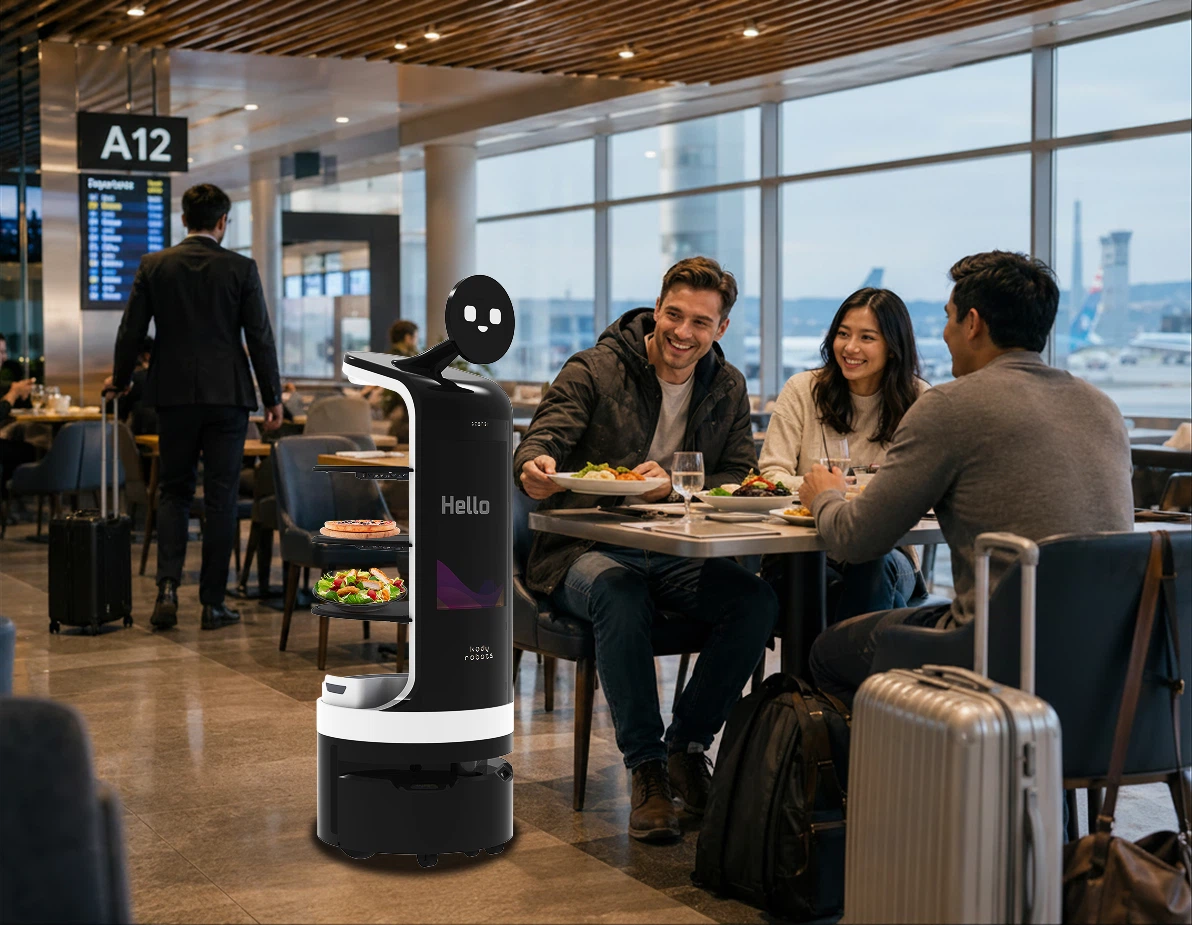
With Dasher
- Automated delivery reaches gates fast with no staff effort.
- Passengers get contactless, on-time delivery to seats.
- Staff focus on guests while Dasher handles all deliveries.
- Lounge and cafe operations run smoothly even at peak hours.
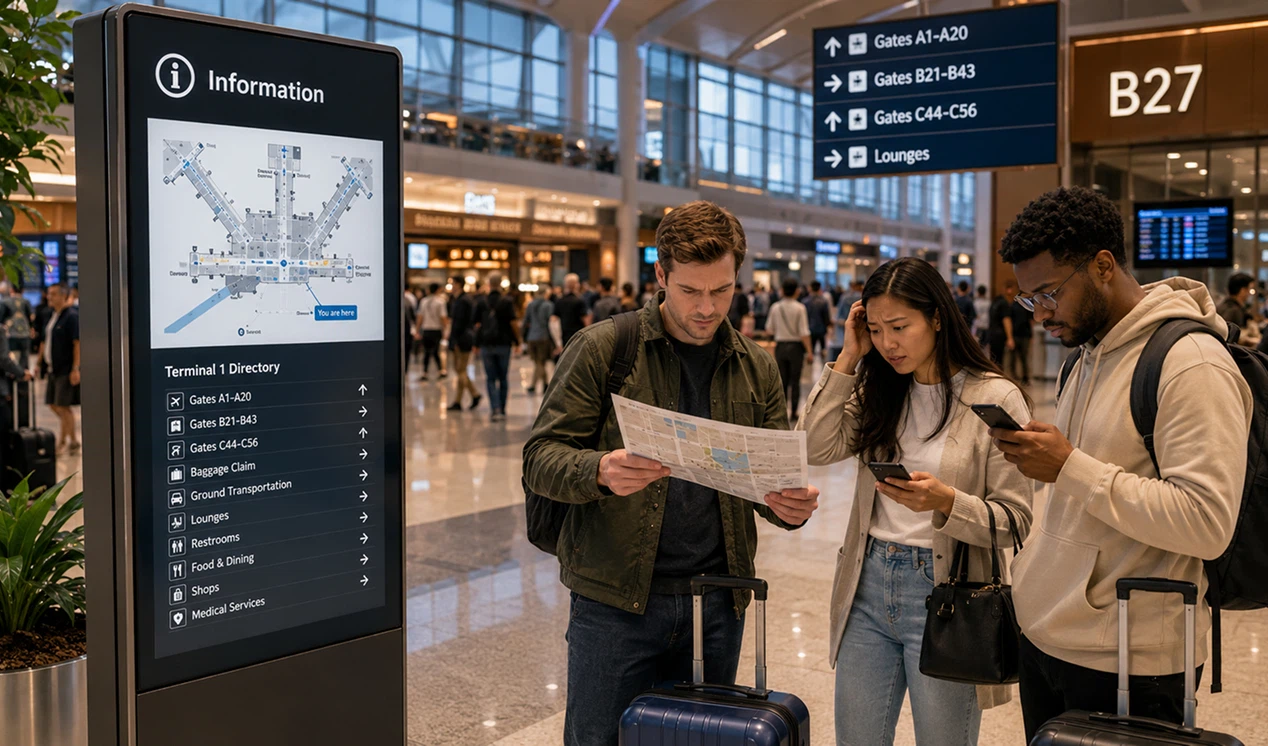
Without Odigo
- Static displays fail to capture attention in terminals.
- Brands lose ad exposure from poorly placed fixed screens.
- Passengers struggle to find gates without digital guidance.
- Ad campaigns deliver no real-time engagement data at all.
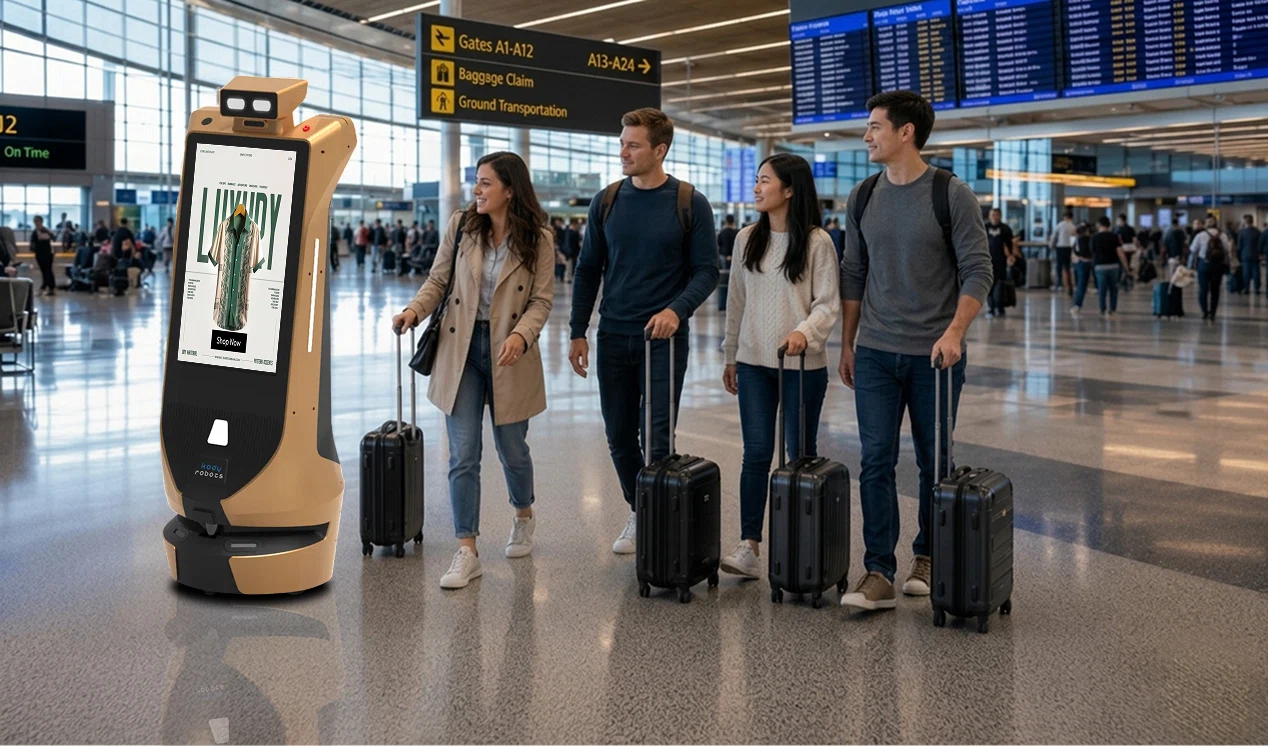
With Odigo
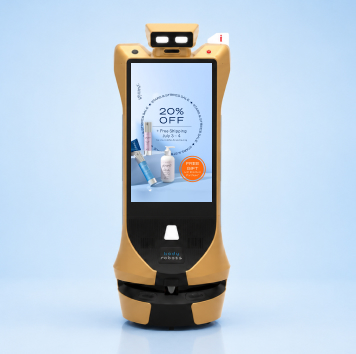
- Dynamic ads follow passengers, maximizing brand visibility.
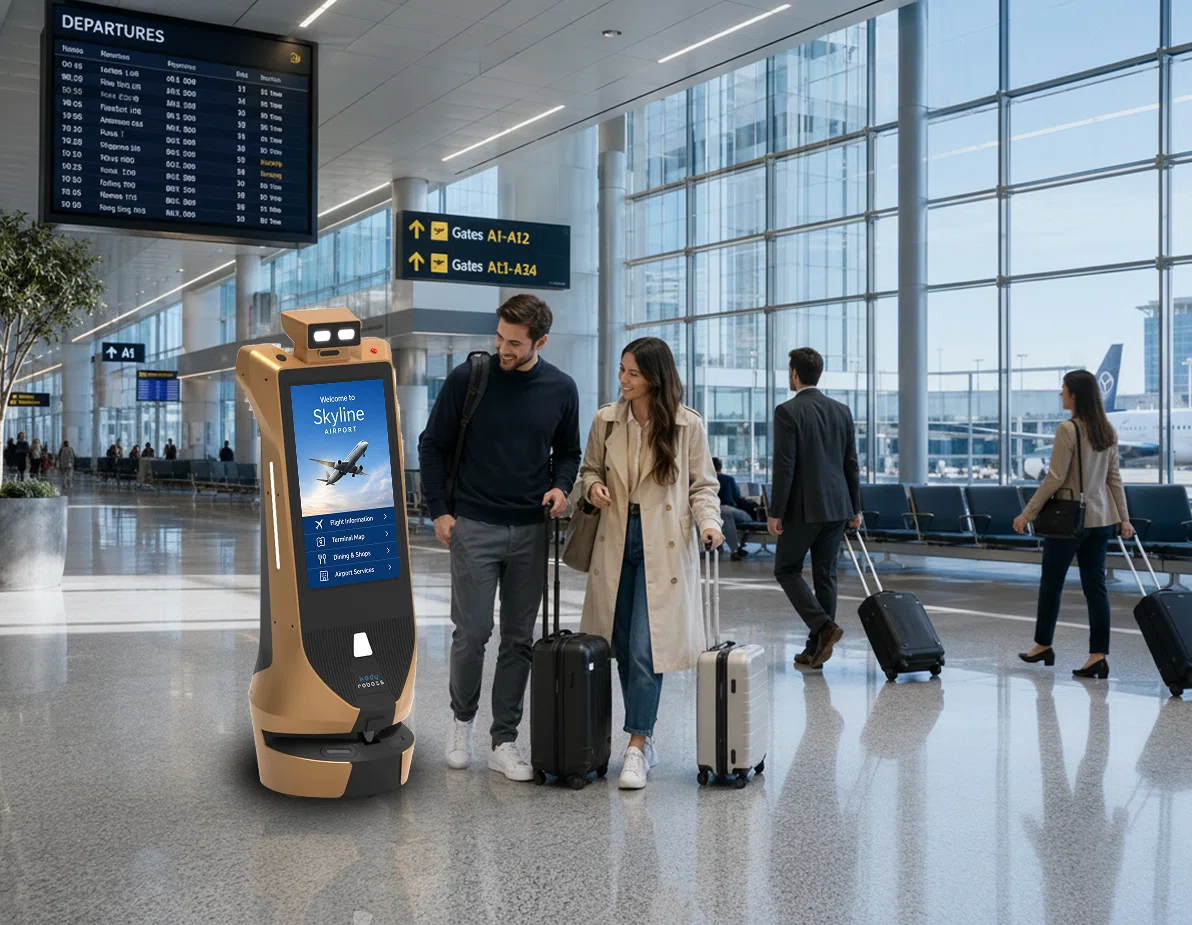
- Travelers navigate easily with Odigo’s interactive screens.
- Brands access real-time analytics on live ad performance.
- Targeted promotions reach travelers at high-impact moments.
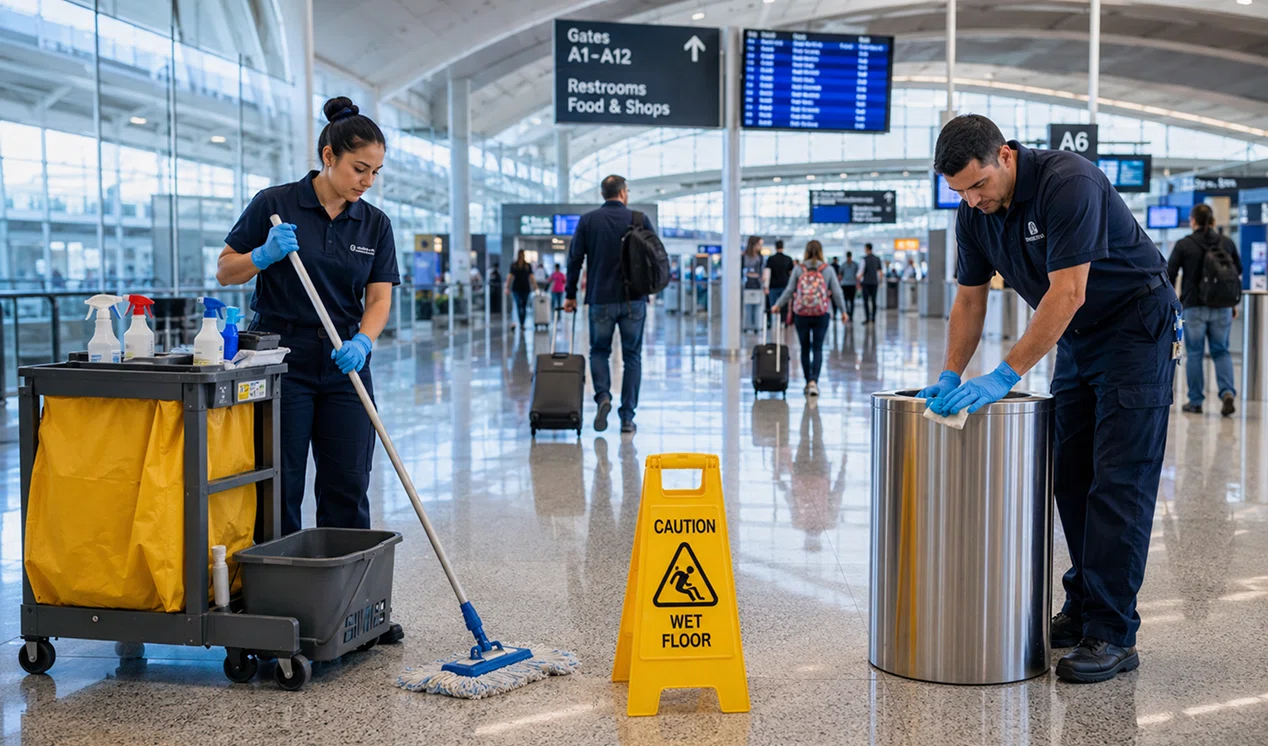
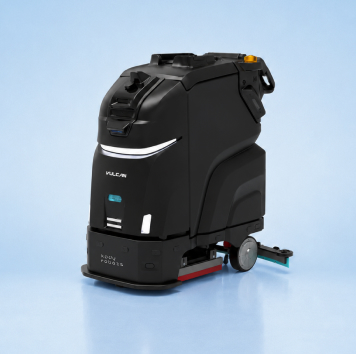
Without Vulcan
- Large terminals rely on multiple staff for manual cleaning.
- Spills and dirt go unaddressed during peak boarding rushes.
- Manual cleaning disrupts flow and adds terminal congestion.
- Uneven cleaning standards raise hygiene risks in terminals.
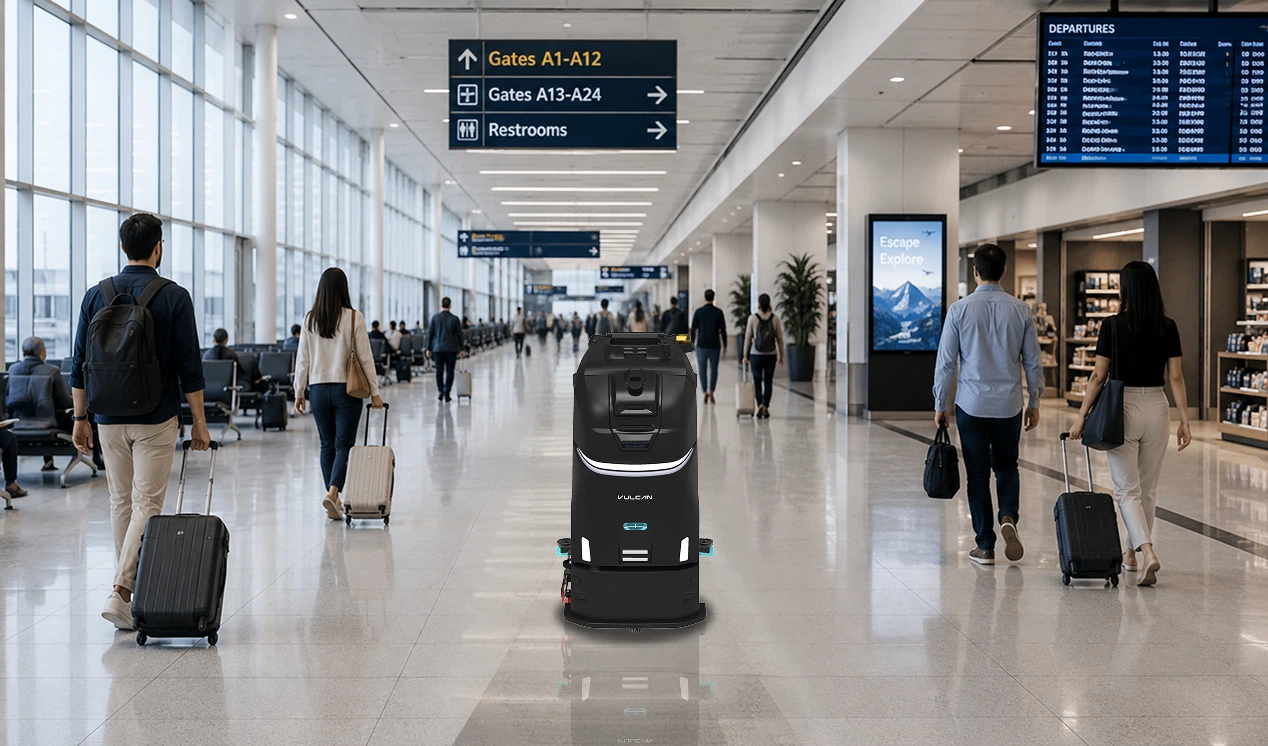
With Vulcan
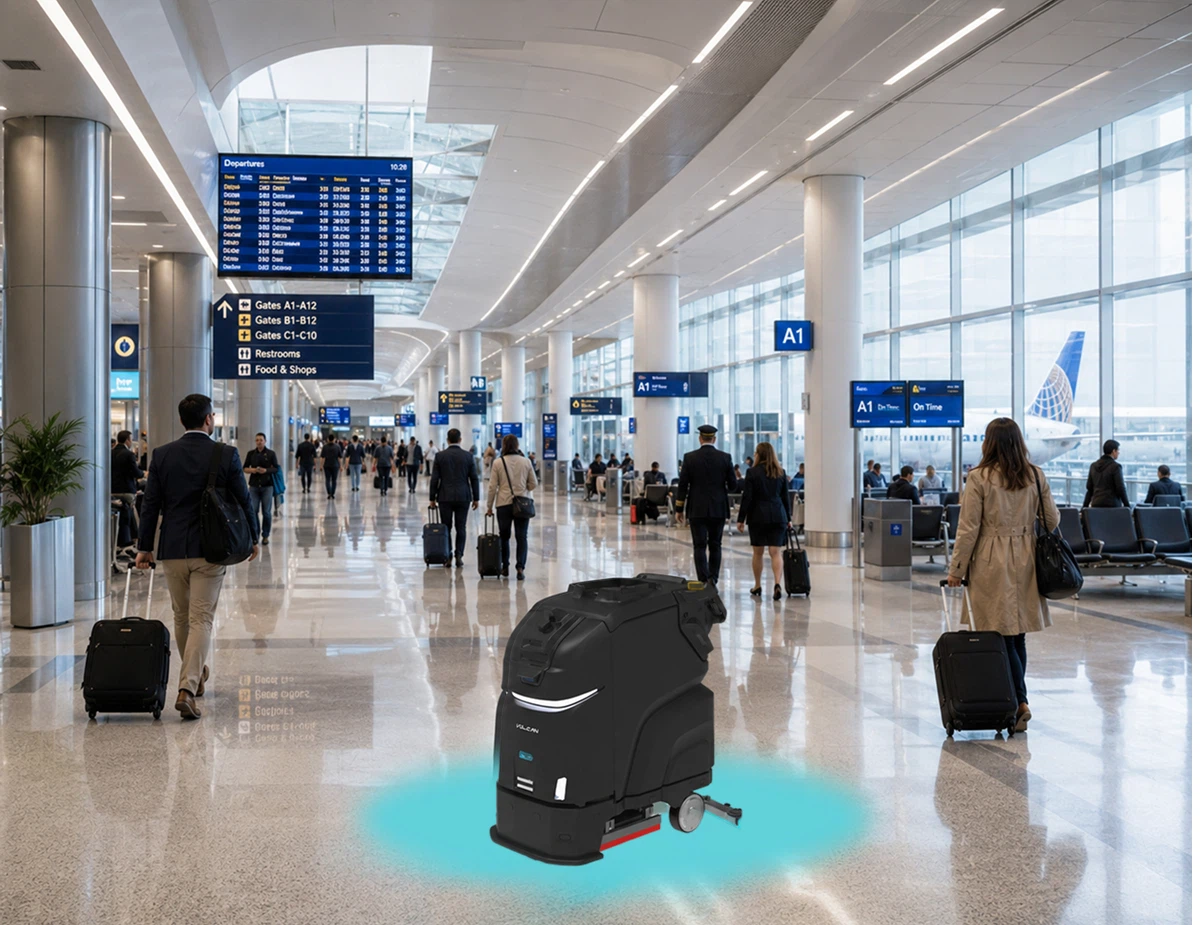
- Vulcan cleans all terminals autonomously, around the clock.
- Vulcan covers 2040 m² per hour, slashing cleaning time.
- Automated cleaning runs with zero disruption to operations.
- Uniform hygiene standards are maintained across terminals.
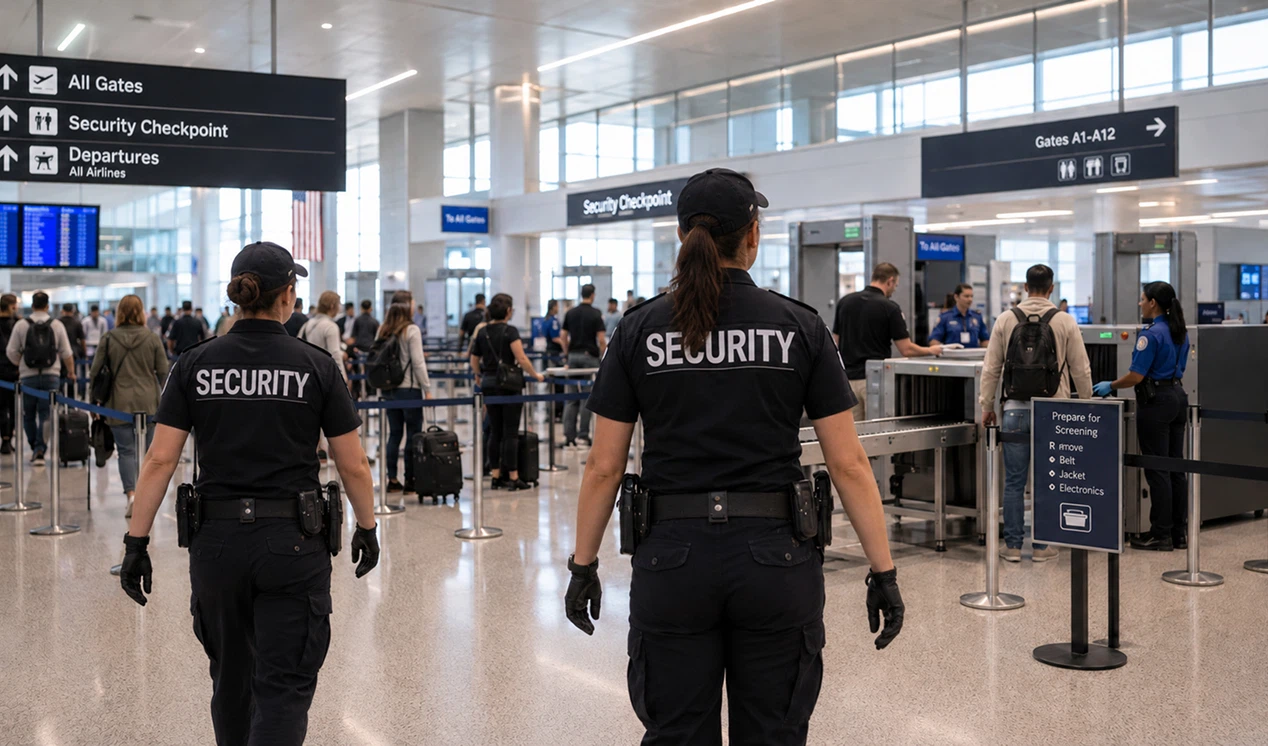
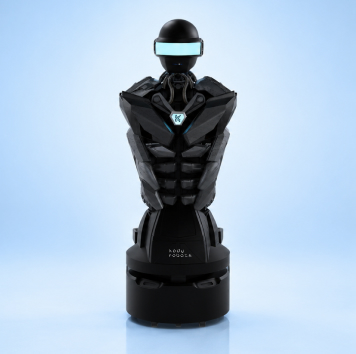
Without FRT-737
- Guards cover limited ground, leaving dangerous blind spots.
- Overnight fatigue slows vigilance and threat response time.
- Parking lacks monitoring and automated plate recognition.
- Security incidents go undetected due to manual patrol gaps.
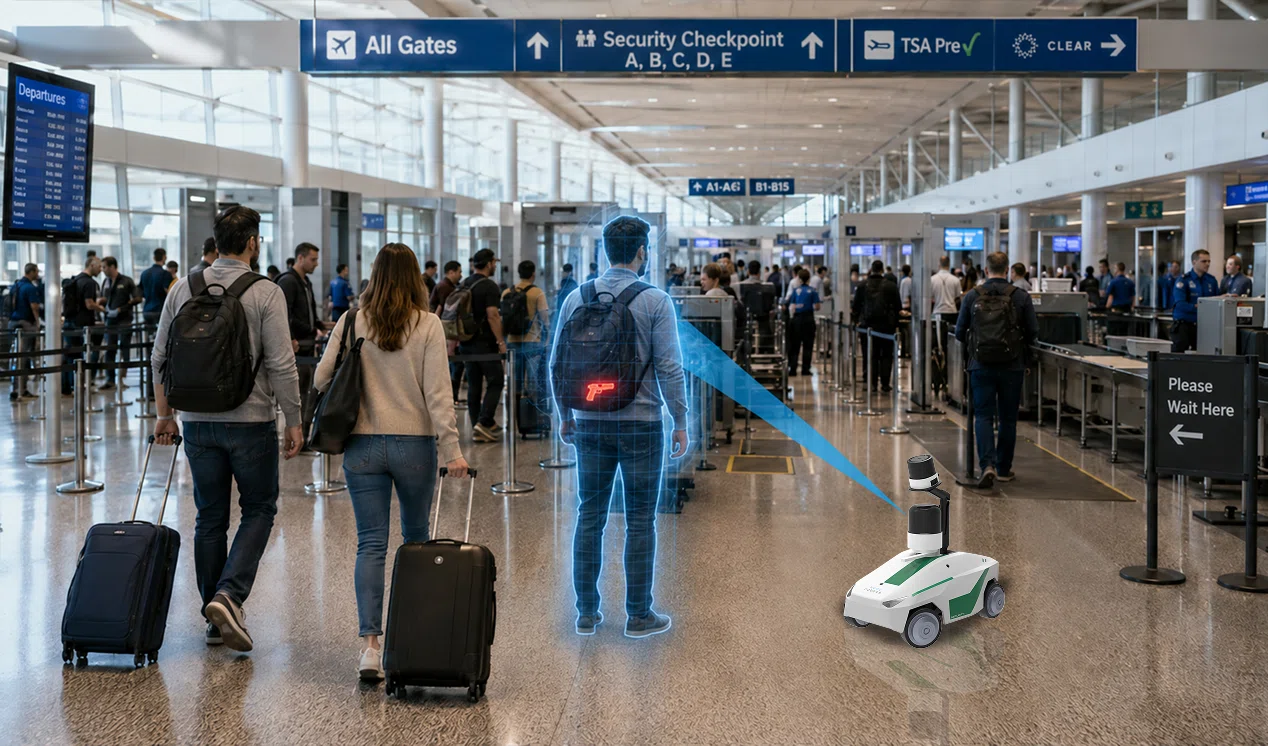
With FRT-737
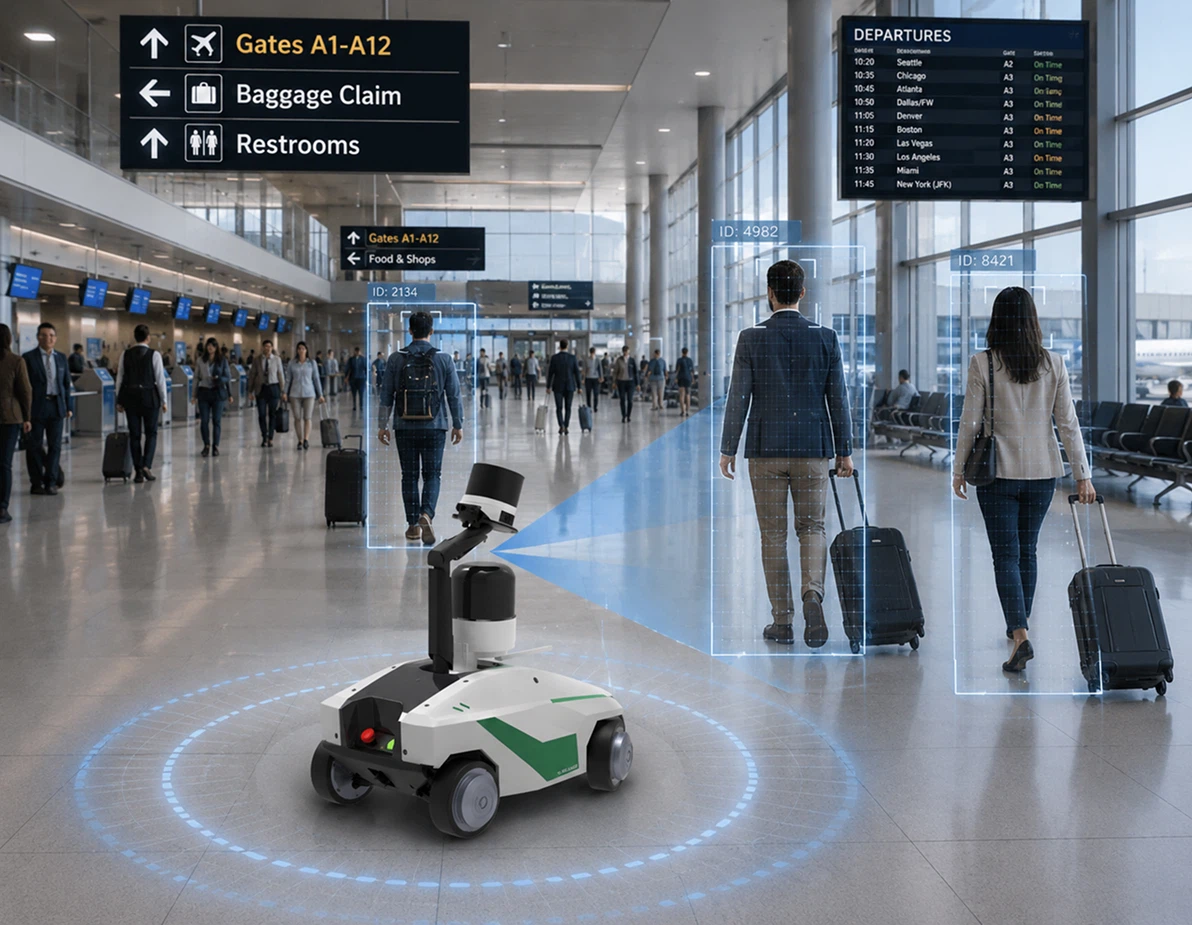
- AI patrolling covers all airport zones continuously, 24/7.
- Real-time alerts enable faster security threat response.
- ALPR automatically tracks every vehicle in airport parking.
- Thermal and PTZ systems ensure full visibility after dark.
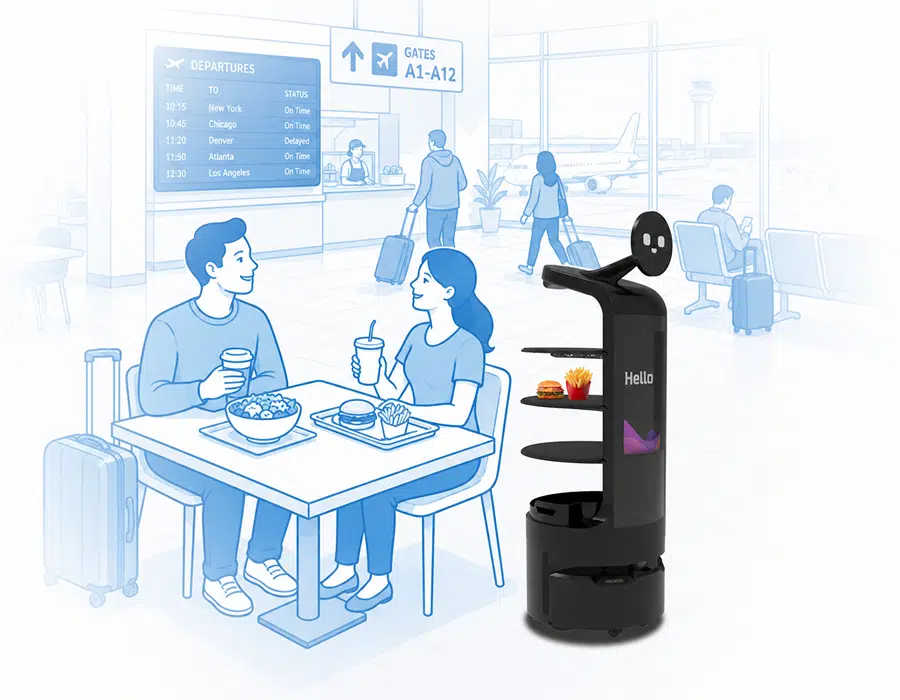
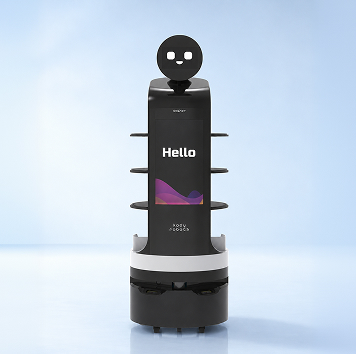
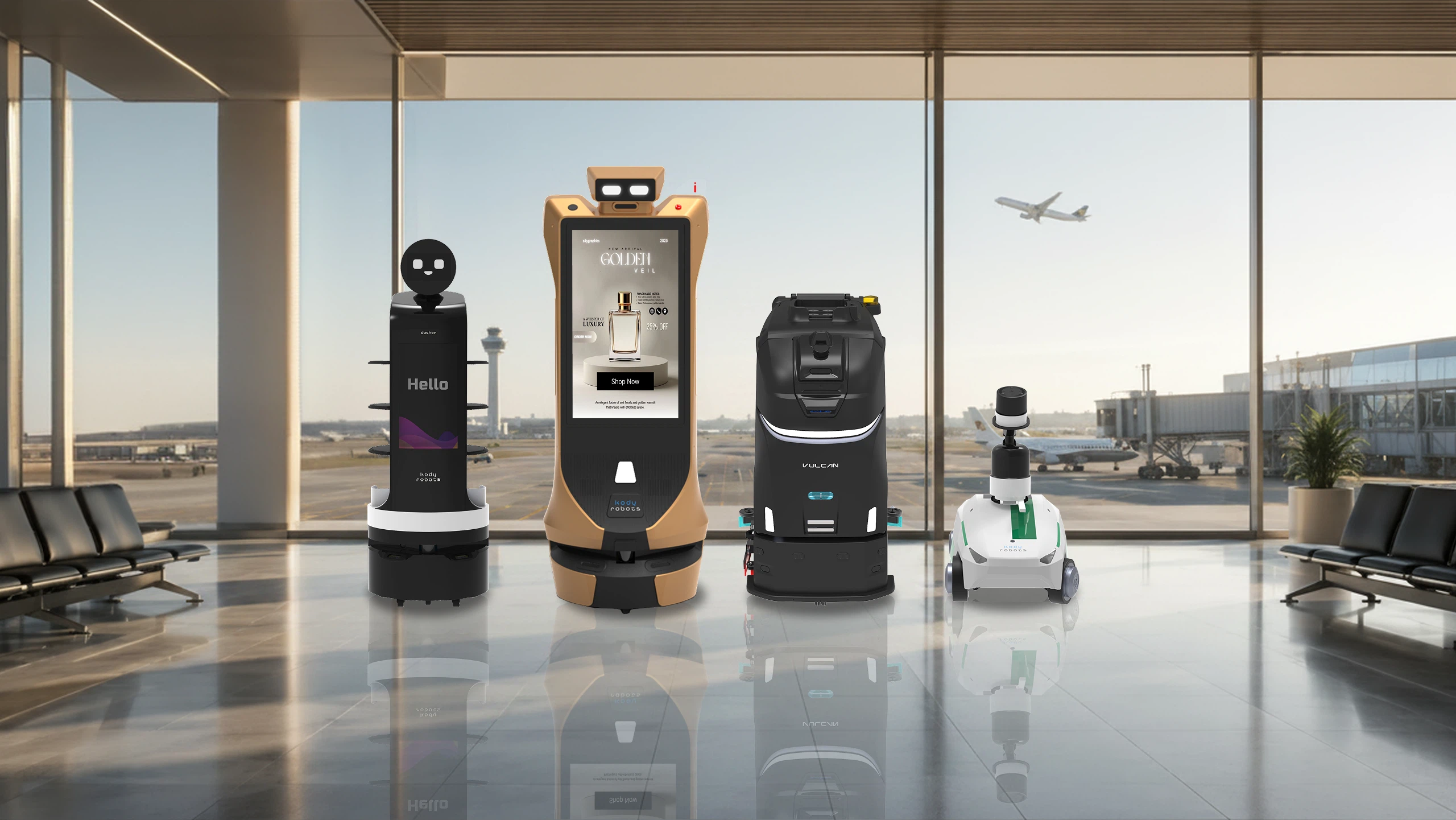
Dasher for Airports
Manage food and beverage delivery across terminal cafes, lounges, and gate seating areas, keeping service seamless and consistent for passengers even during peak boarding hours.
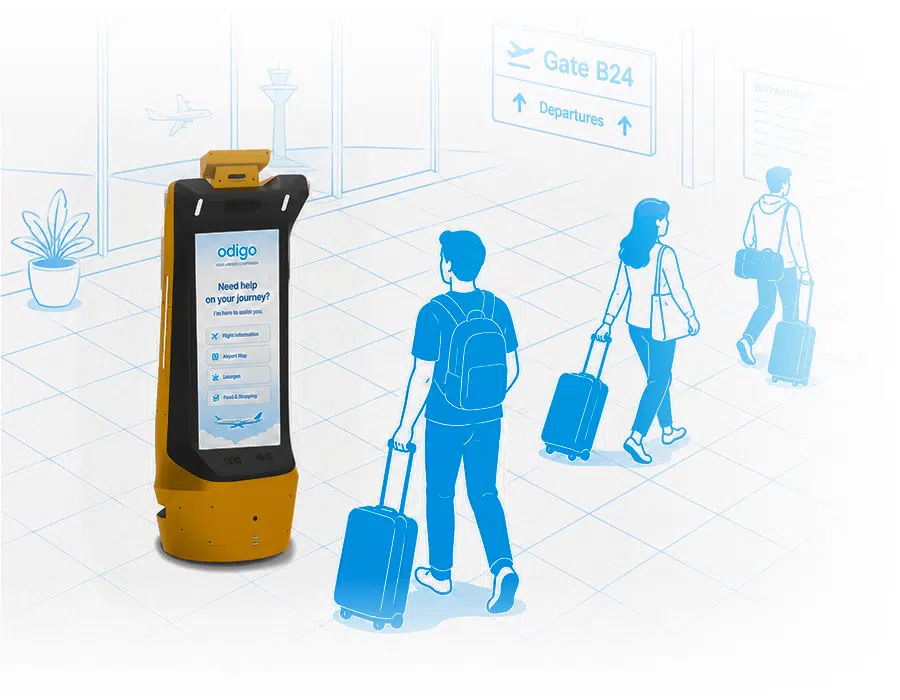
Odigo for Airports
Drive dynamic advertising and interactive passenger wayfinding across terminal concourses and retail corridors, ensuring brand visibility stays high, and travelers always know where to go.
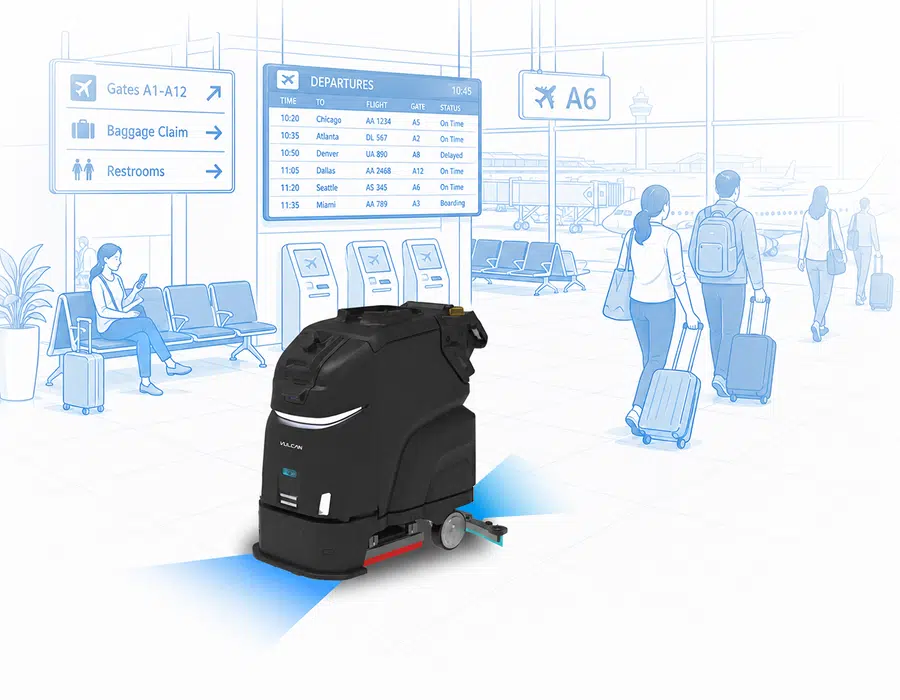
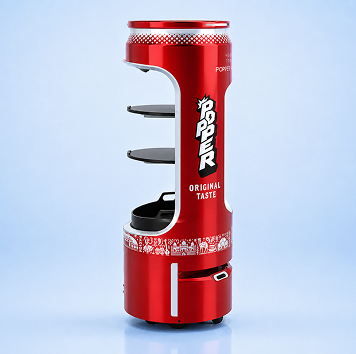
Vulcan for Airports
Maintain spotless floors across high-footfall concourses, boarding gates, and baggage claim areas with fully autonomous cleaning cycles mapped precisely to your airport's operating schedule.
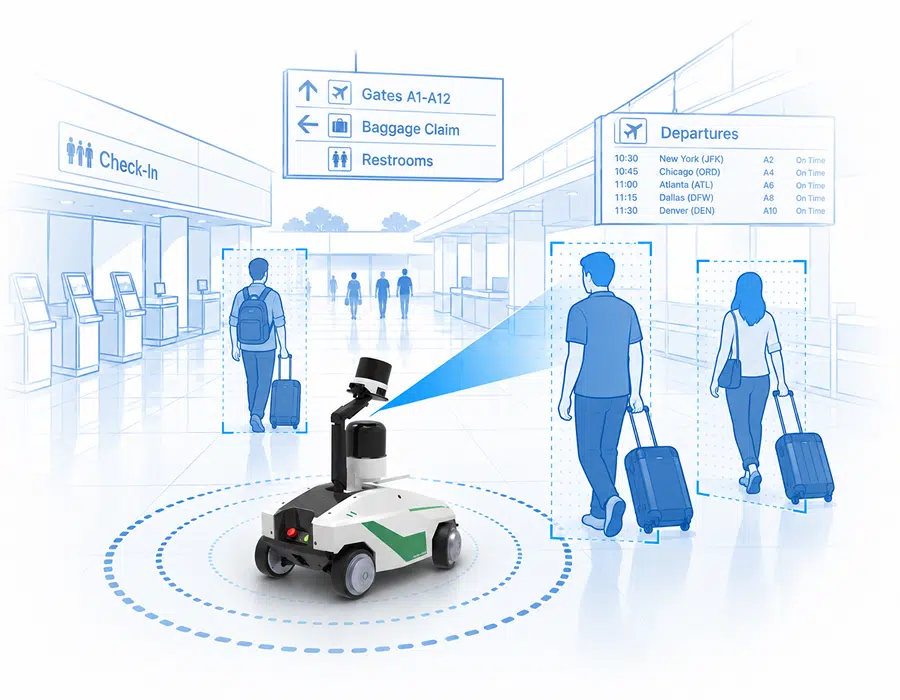
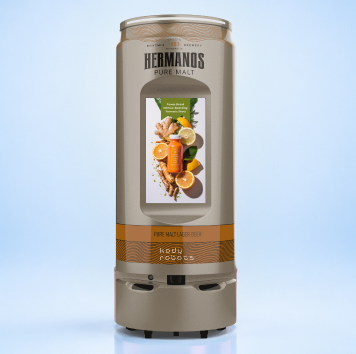
FRT-737 for Airports
Strengthen security patrol coverage across terminal corridors, entry checkpoints, and parking structures with AI-powered threat detection and real-time monitoring running continuously, day and night.
Airport Robotics Designed Around Real Operational Challenges
Airports run on precision, but delayed food service, dirty terminals, confused passengers, invisible advertising, and security blind spots silently erode that standard every single day. When each of these problems operates in isolation, no single fix is enough.
That is where deploying the right autonomous robots together changes everything. A serving robot handles in-terminal dining. An advertising robot keeps brands visible in motion while actively guiding passengers to gates, lounges, and retail zones. An autonomous cleaning robot maintains hygiene across every corridor. A patrol robot secures every zone around the clock. Four individual robots, each solving a distinct airport challenge, working across your facility to make it genuinely autonomous, operationally efficient, and consistently passenger-ready.
Explore the operational impact of autonomous robots across modern airport environments.
Efficiency
Why Should Choose Kody Robots for Autonomous Robots for Airports
A smarter automation ecosystem designed to improve airport efficiency, passenger experience, hygiene, and operational visibility across high-footfall aviation environments.
Designed for your Airport Needs
These robots for airports are designed to operate smoothly across terminals, boarding gates, lounges, food courts, and passenger walkways without disrupting airport movement or daily operations.

Unified Automation Ecosystem
Instead of managing separate vendors for cleaning, advertising, delivery, and security, airports can streamline multiple operational functions through one connected robotics ecosystem.

Improve Workforce Efficiency
Autonomous robots reduce repetitive workload for airport staff, helping teams focus on passenger assistance, security response, and higher-value operational responsibilities.

Scalable for Growing Demand
From improving hygiene consistency to supporting 24/7 patrol and passenger engagement, airport robotics helps reduce operational gaps while supporting scalable airport growth.
Buy Robots for Airports For High-Flow Terminals
Modern airports require faster response, continuous operations, and better passenger experiences without increasing operational complexity. Our autonomous robots for airports help aviation teams automate cleaning, delivery, advertising, and patrol operations while improving efficiency across terminals, lounges, boarding areas, and high-traffic passenger zones.

General FAQs –
Robots for Airports
Get answers to common questions about airport robotics, operations, deployment, and ROI.
Here’s everything you need to know about deploying autonomous robots for airports.
Airports can deploy autonomous robots for airports focused on cleaning, food serving, dynamic advertising, passenger assistance, and AI-powered security patrolling, depending on operational requirements.
Yes. Robots for airports like Dasher, Odigo, Vulcan, and FRT-737 are designed for high-footfall aviation environments and can safely navigate terminals, lounges, boarding gates, and public areas during peak traffic periods.
No. Most airport robotics systems operate autonomously with AI navigation, obstacle detection, and centralized monitoring support for operational visibility.
Yes. Robots in airports can be deployed alongside existing facility management, security, hospitality, and passenger service operations without disrupting workflows.
These robots for airports can operate across terminals, lounges, food courts, corridors, boarding zones, parking areas, retail spaces, and other high-traffic airport environments.
Airport robotics automates repetitive operational tasks such as cleaning, delivery, navigation assistance, and patrol monitoring, helping teams operate more efficiently with reduced manual workload.
Yes. Robots for airports help deliver faster service, interactive navigation, cleaner terminals, and better operational consistency, contributing to a smoother passenger experience across airport environments.
Yes. Autonomous robots for airports are designed to scale across both small terminals and large multi-zone aviation infrastructures with continuous operational support.
Airport robots help facility teams maintain cleaning schedules, monitor operations, reduce repetitive tasks, and improve overall operational coordination across airport premises.
Yes. Every airport robot is built for continuous operation, making it suitable for round-the-clock aviation environments with constant passenger movement.
By automating repetitive tasks and improving operational efficiency, robots for airports help optimize workforce allocation and reduce long-term dependency on manual processes.
Yes. Advertising robots such as Odigo by Kody Robots create new digital advertising opportunities through interactive passenger engagement across high-traffic airport zones.
Airport robotics helps improve operational consistency, passenger satisfaction, hygiene standards, and security coverage while supporting scalable airport growth.
Many airports notice improvements in cleaning efficiency, passenger engagement, service coordination, and operational visibility shortly after deploying airport robots.
Airports looking to buy robots for airports can choose Kody Robots for automation solutions based on operational goals such as advertising, cleaning, passenger engagement, food serving, and AI-powered security monitoring.
See Autonomous Robots In Action For Your Operations
Share your environment and requirements and we will walk you through how robots fit into your operations.
Brands we worked with