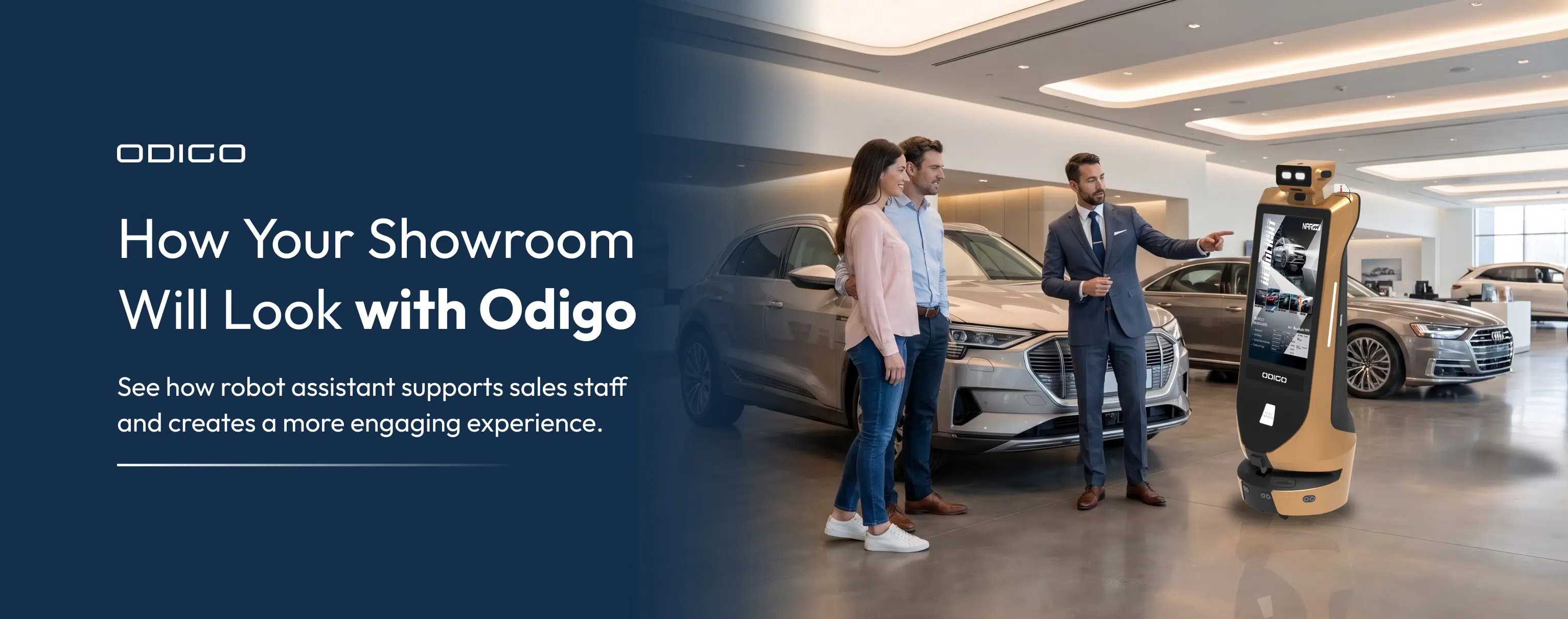

Quick Summary: AI robot assistants add an extra layer of support for car showroom sales teams by handling visitor engagement, product questions, vehicle exploration, model comparisons, and test-drive requests. Odigo helps keep customers informed throughout the showroom journey while sales staff focus on product expertise, customer conversations, negotiation, and closing. This blog explains how robot assistants support sales staff and fits into the sales journey, how the handoff between the robot and sales team works, which showroom metrics dealers can track, and how AI robot assistance can support different showroom environments, including EV, luxury, mass-market, and multi-brand dealerships.
Key Takeaways
- How Robot Assistants Support Sales Staff is less about replacing salespeople and more about shifting repetitive showroom interactions away from the sales team.
- AI robot assistants can engage visitors, support vehicle exploration, answer product questions, manage test-drive requests, and capture relevant customer information before a salesperson takes over.
- The handoff between an AI robot assistant and a salesperson can give the sales team more context before entering a customer conversation.
- Dealers can evaluate the impact through visitor engagement, lead generation, dwell time, test-drive requests, model interest, and sales conversion.
- The value of an AI robot assistant changes by showroom type, from managing high footfall in mass-market dealerships to supporting product education in EV showrooms.
Ensuring every showroom visitor receives timely attention while keeping sales staff focused on serious buyers is a growing challenge for dealerships. Understanding how robot assistants support sales staff in car showrooms can help bridge that gap. KPMG’s India CX Report 2025 found that 45% of automotive customers struggle to find adequate information about vehicles, while 50% of passenger-vehicle customers consider the pre-purchase assessment stage the most impactful in shaping overall brand perception.
This puts the showroom sales team in a demanding position. Salespeople need to answer product questions, explain features, compare models, support test drives, and discuss pricing, often while handling multiple visitors. Repetitive information sharing can take time away from conversations that require sales expertise and human judgment.
AI robot assistants like Odigo can take on this information-heavy layer of the showroom journey, keeping visitors engaged and informed before handing the conversation to a salesperson. The opportunity is not to replace the sales team, but to make every salesperson’s time more valuable.
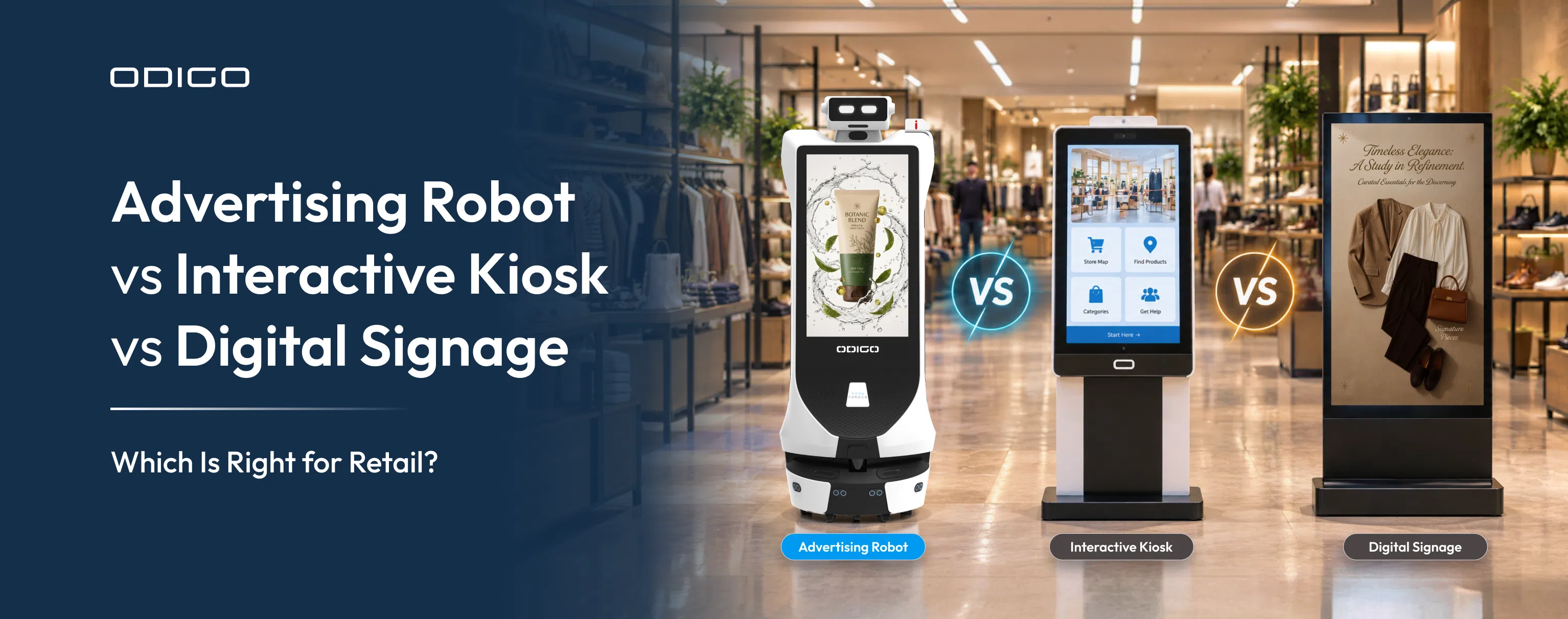
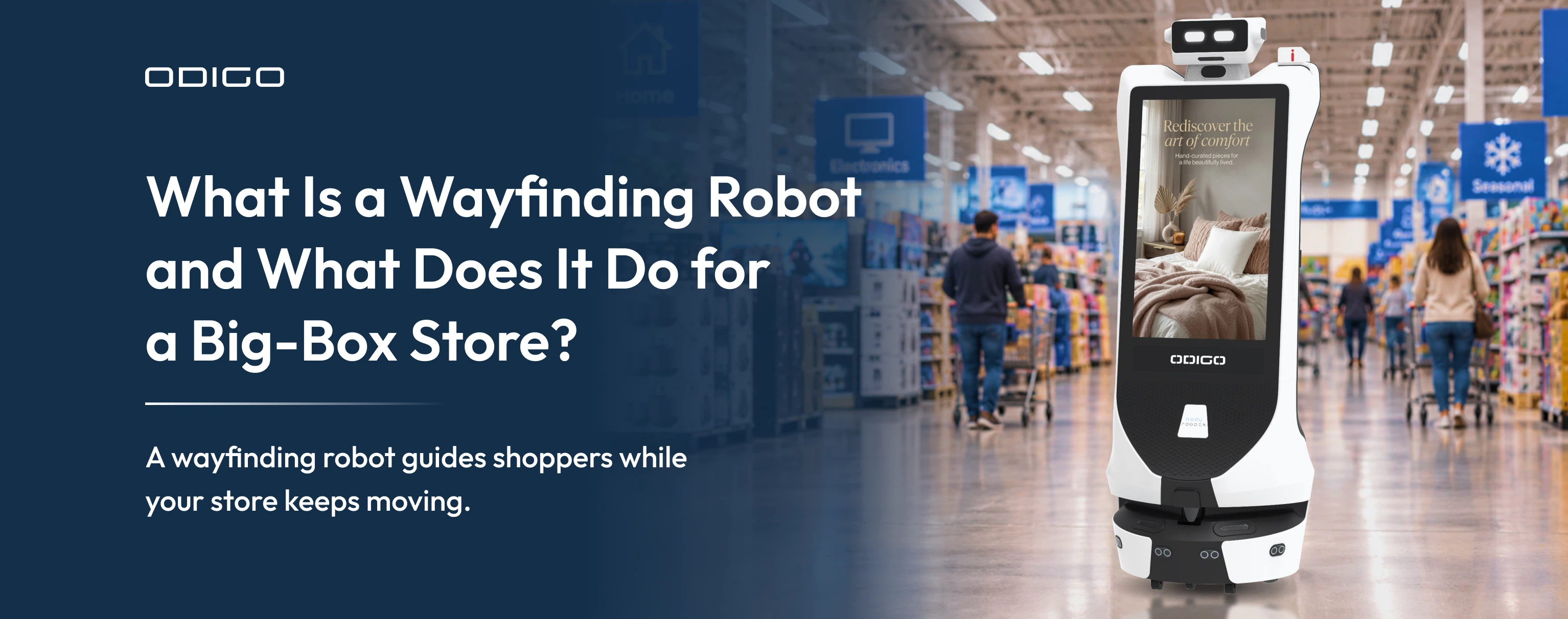
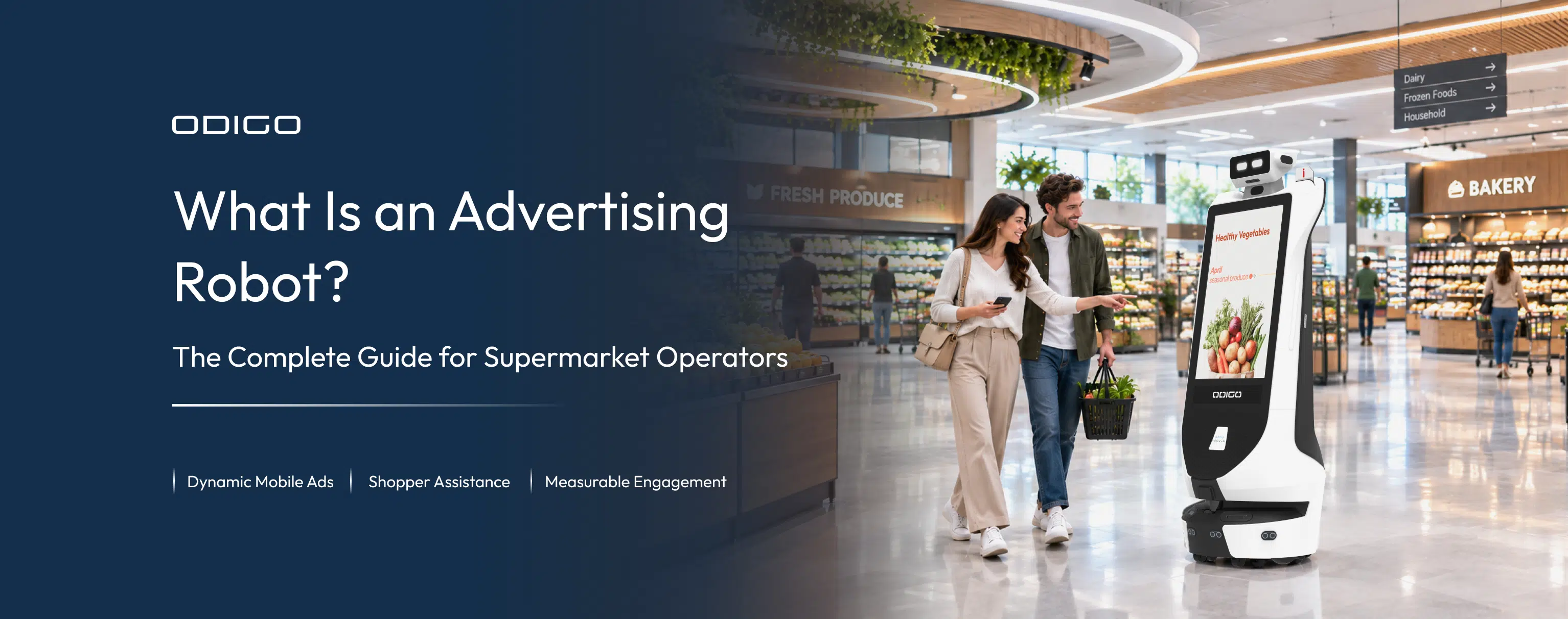
What is An AI Robot Assistant for a Car Showroom
An AI robot assistant brings intelligence, mobility, and interaction to the showroom floor, helping visitors explore vehicles, get answers, and navigate their buying journey without waiting for a salesperson. You can see a robot assistant for car showroom as a step toward a future where artificial intelligence is always by your side, with robots acting as your daily companion and assistants.
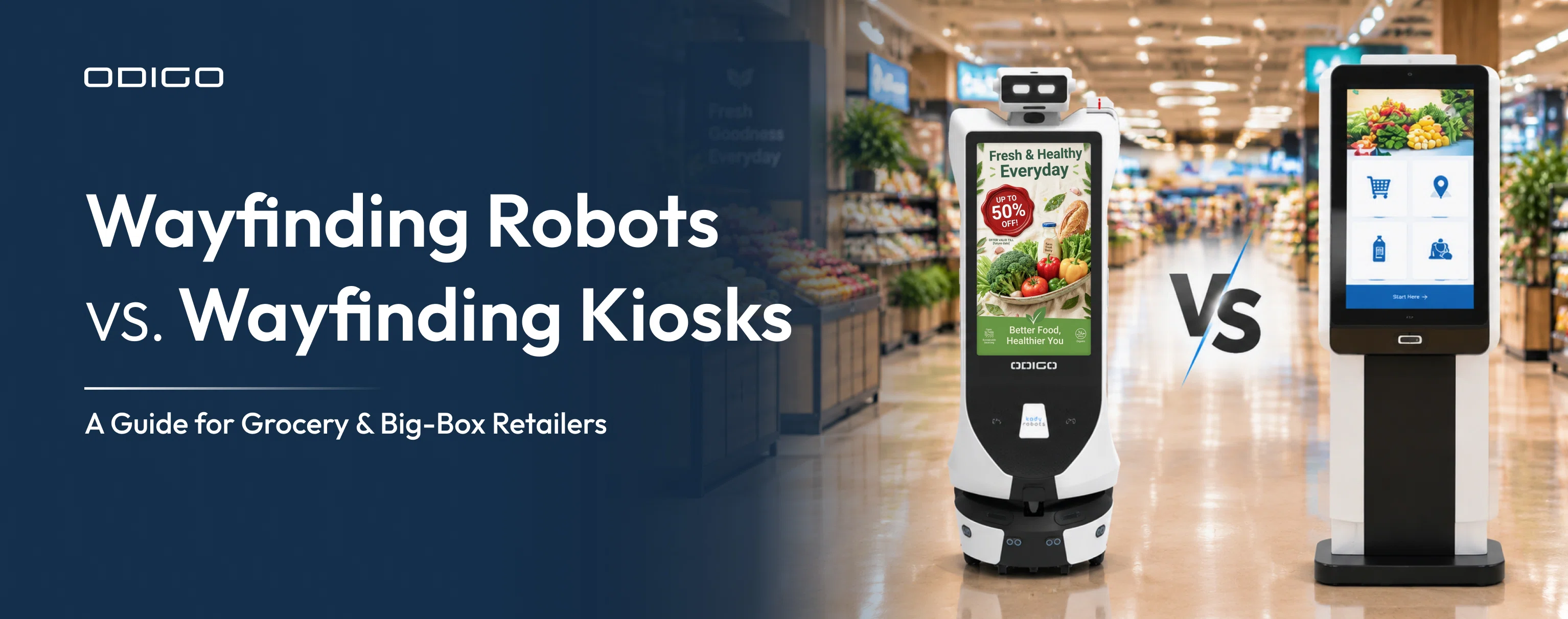
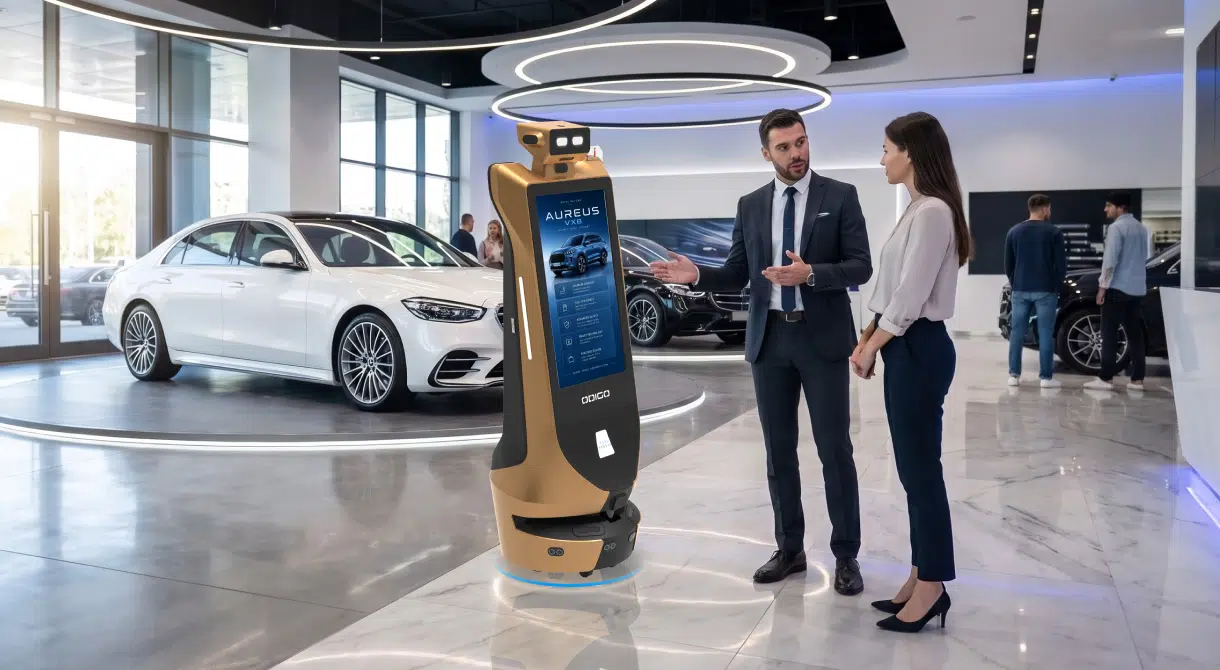
Robot assistants like Odigo can greet visitors, navigate them to the right vehicle zone, and offer guided vehicle tours. Unlike a fixed kiosk, an AI robot assistant can move through the showroom. They move with visitors to answer questions and stay with customers until your salesperson is free. That mobility makes it part of the sales floor, not a screen bolted to a wall.
Common Use Cases for AI Robot Assistants in Car Showroom
The role of robot assistants in supporting sales teams is not limited to greeting visitors. They can support different stages of the showroom journey, from the first interaction to test-drive requests, financing questions, and follow-ups. Understanding how car showrooms use AI robot assistants helps illustrate how these capabilities can support the customer journey and sales team.
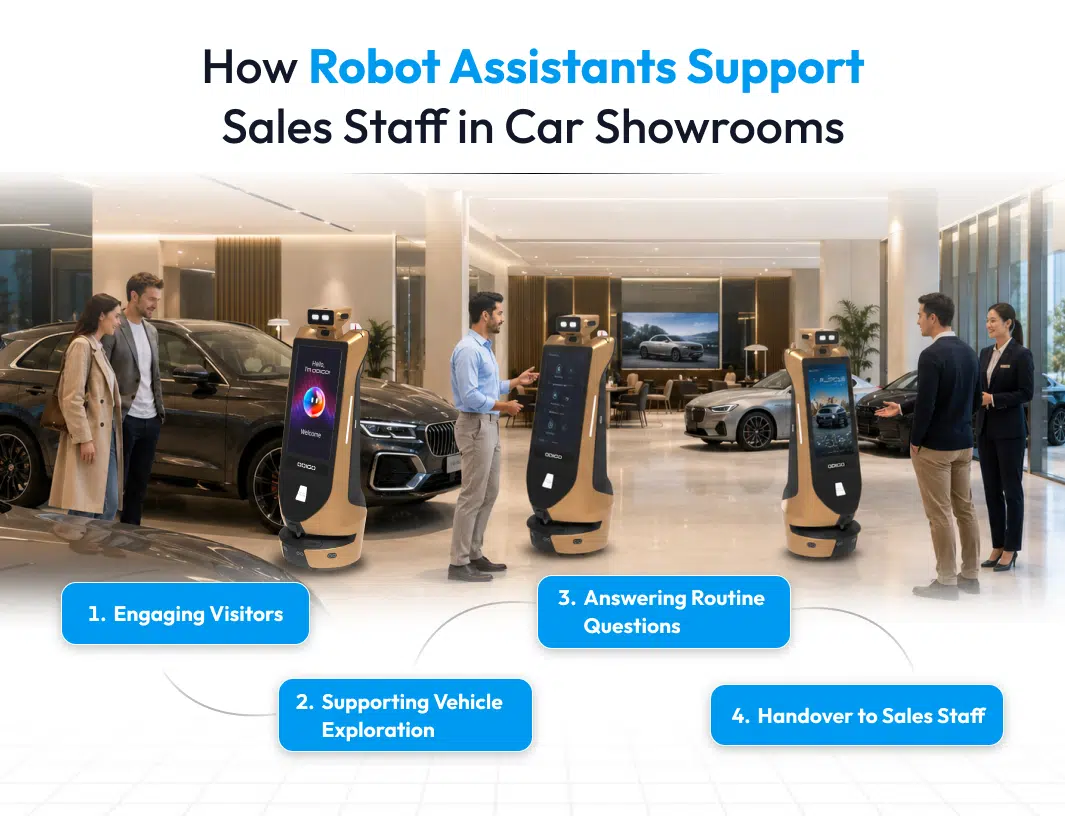
1: Keeping visitors engaged
AI robot assistants like Odigo can be positioned at the showroom entrance, making them one of the first things visitors notice when they enter. The robot can greet visitors, understand their requirements through an interactive Q&A based on lifestyle, usage, and budget, and guide them directly to the selected vehicle.
2: Helping visitors explore and compare vehicles
AI robot assistants can support the information-heavy part of the interaction. Visitors can compare models and variants side by side, access specifications and pricing on-screen. Odigo can also provide guided interior and exterior tours and demonstrate features to visitors. This is one practical example of how robot assistants help sales staff: the robot can support product exploration while salespeople remain available for conversations that require human involvement.
3: Supporting test drive intent
AI robot assistant can check whether the demo vehicle for the selected model is available. If the vehicle is busy, the visitors can be placed in a queue. Odigo can also capture license and contact details on screen before the drive so that the sales rep can see the customer’s test drive request. This reduces the manual coordination required when several customers are interested in the same demo vehicle.
4: Helping understand cost and financing
KPMG’s India CX Report 2025 found that 43% of customers want a detailed view of vehicle features and seamless financing at the dealership during purchase. AI robot assistants can support this requirement by helping visitors access pricing and financing information before a salesperson or finance representative takes over the conversation.
Odigo can also support the showroom beyond direct customer conversation by displaying recent offers and new launches, with track and QR engagement tracked on a single dashboard. Odigo can analyze passive footfall and dwell analytics to track which vehicles get the most attention.
Together, these use cases extend the role of an AI robot assistant beyond basic visitor assistance, giving dealers another way to keep customers engaged while reducing the routine interactions handled by sales staff.
How Robot Assistants Support Sales Staff
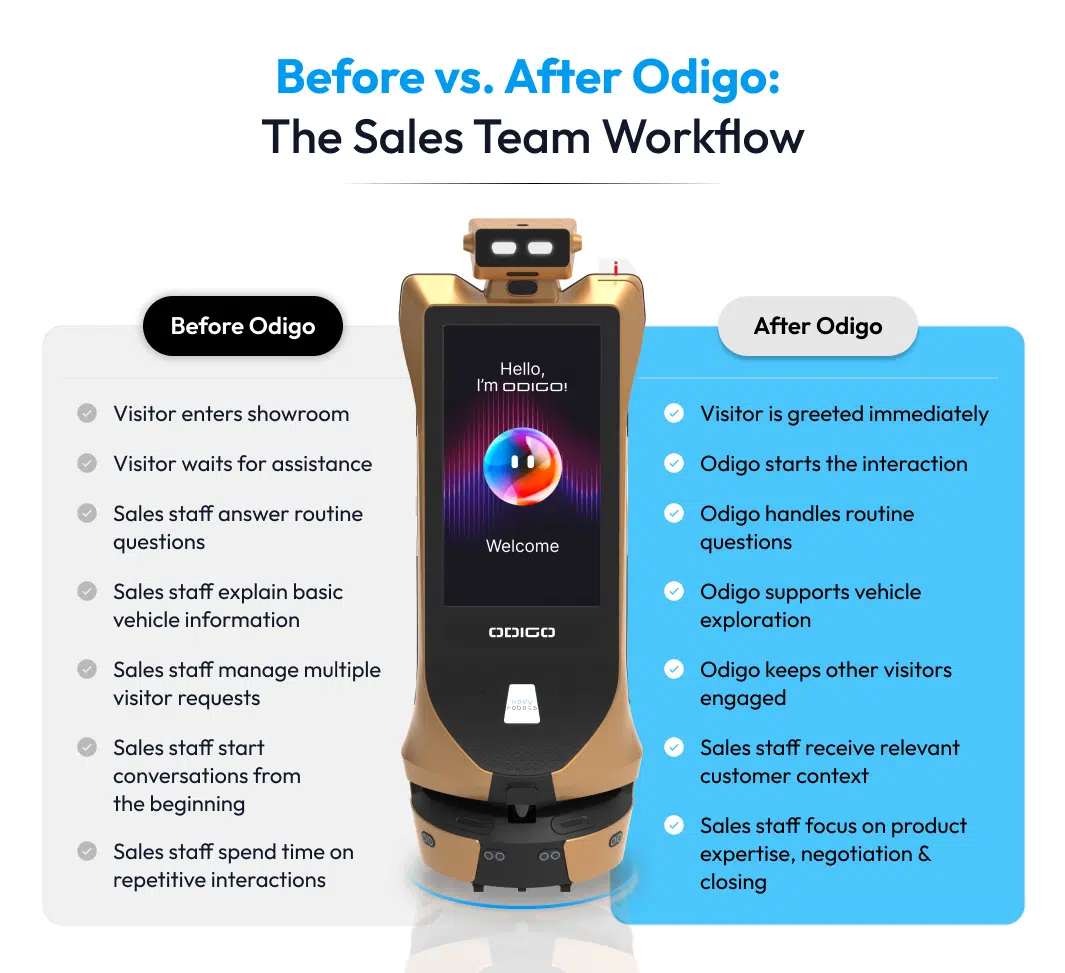
Showroom robots do not work in a separate lane from the sales staff. Odigo is designed to hand the conversation to the sales team when human involvement becomes important. Understanding how robot assistants support sales staff helps show how this collaboration works across the showroom journey.
Here is how robot assistants work alongside sales staff throughout the showroom journey:
At entry
When a visitor arrives, Odigo greets them right away. No one waits for a free staff member before getting attention.
While browsing
For visitors still comparing options, Odigo can explain variants, pricing, and current offers on its displays. Your staff stays free to focus on buyers who are further along in the decision-making process.
At the handoff
When a visitor asks about a test drive, trade-in value, or final price, Odigo flags them as ready and routes the visitors to an available salesperson with a summary of what was already discussed. The salesperson can continue from the existing context rather than starting from the beginning.
During peak hours
During festive season, launch events, or weekends, several visitors need assistance at the same time. With Odigo on the floor, no one stands unattended at the entrance for long. Even a couple of minutes is often enough time for a buyer to walk out to a competitor, and Odigo can be there to engage them with its personality instead.
For follow-ups
Odigo can record questions, models viewed, and contact details. The system can also recognize returning or high-value customers, flag them, and alert an assigned sales manager.
The value of this handoff becomes clearer when considering how AI robot assistants work: dealers can provide salespeople with relevant customer context, allowing them to spend less time covering basic questions and more time applying their expertise where it can influence the buying decision.
What an AI Robot Assistant Means for Your Team and Your Business
For sales staff, the benefit is primarily about how working time is used. For dealers, the opportunity is to improve visitor engagement, sales capacity, and visibility into the showroom journey.
Benefits for Dealers
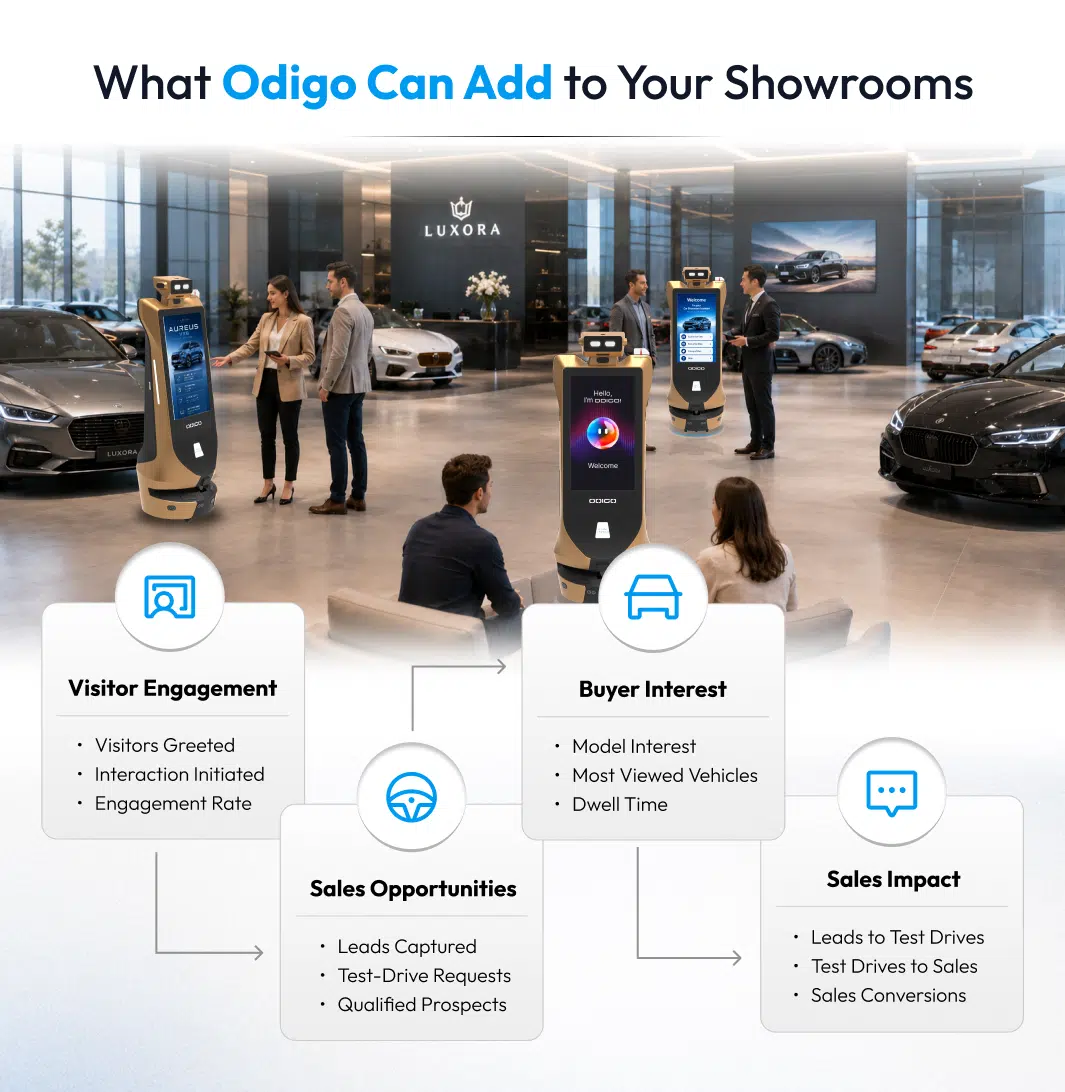
AI robot assistants help dealers use sales capacity more effectively, engage more showroom visitors, understand buyer behavior, identify drop-off points, and measure showroom ROI.
More value from existing sales capacity
AI robot assistants can handle the first layer of visitor interaction without requiring a salesperson for every basic question. This gives dealers an opportunity to use existing sales capacity for conversations that require human involvement.
More sales conversations from existing footfall
Every showroom visitor represents an opportunity for meaningful sales engagement. Odigo, your showroom assistant, can interact with visitors from the moment they arrive, answer initial questions, and guide them towards the right vehicle zone before handing them to a salesperson. This creates an opportunity to move more showroom footfall into meaningful sales interaction.
Better visibility into buyer interest
Odigo can log information related to model interests, questions, test-drive requests, and other interactions. Dealers can use this information to understand what visitors are exploring and where buyers are showing interest.
Better visibility into where buyers drop off
Visitor interactions, dwell time, model interest, lead generation, and test-drive requests can help dealers identify where the showroom experience may be affecting the buyer’s journey.
Measurable showroom ROI
The impact of a showroom robot can be measured by comparing metrics such as visitor engagement, leads captured, dwell time, test-drive requests, model interest, and sales conversion before and after implementing AI robot assistants like Odigo.
For dealers, understanding how robot assistants support sales staff can help improve the value generated from existing showroom footfall and sales capacity by reducing the gaps between visitor interest, engagement, and sales interaction.
Benefits for Sales Team
AI robot assistants help sales teams start better-informed conversations, reduce interruptions and repetitive tasks, improve follow-up data, and spend more time negotiating and closing deals.
Pre-qualified conversations
By the time a visitor reaches a salesperson, the sales team can have context around the budget, model, and key questions asked.
Fewer interruptions
Odigo handles walk-ins that arrive in mid-conversation. No one pulls a salesperson away from a serious buyer.
Less repeat fatigue
Answering the same pricing question forty times a week wears staff down. Odigo can handle part of this repetitive interaction.
Better follow-up data
AI showroom robot support for sales staff is beyond first-level interaction; it logs interactions to replace memory and guesswork on follow-up calls.
More time on deals
Staff spend more time on negotiation and closing, the work that drives commission.
For sales teams, the benefit is a shift in where their time goes: less time on repetitive information-sharing and more time on understanding buyers, handling objections, and moving serious conversations toward a decision.

Measuring the Impact of How Robot Assistants Support Sales Staff in Car Showrooms
Before investing in something, we all think about the outcome. Dealers need measurable indicators to understand whether an AI showroom robot is contributing to the showroom journey. Odigo can provide data across different stages of visitor engagement.
You can also compare data from the period with and without the robot to calculate your exact return on investment.
Visitors greeted
Odigo can track the total number of visitors welcomed, along with daily footfall, engagement trends, and customer interactions, to understand showroom traffic and optimize the visitor experience.
Most popular vehicle
Odigo can help you identify the vehicles that receive the highest customer interest through AI interactions. This information can help dealers understand buyer preferences and inform inventory and sales strategies.
Lead generation
Odigo can also count emails, phone numbers, or sign-ups collected during interaction with visitors, giving the sales team structured information for follow-up.
Dwell time
Odigo can measure how long shoppers remain in the showroom and their engagement with specific vehicles. This gives dealers another indicator of visitor interest.
Language preference
Language preference data can show which languages visitors choose during interactions. Dealers can use this information when planning customer-facing content, training, and staffing.
Test-drive requests
Odigo can help you analyze drives requested, confirmed, queued, and completed. This can help dealers understand whether scheduling capacity is impacting the next step in the customer journey.
These metrics give you visibility into the stages before a sale, helping you identify where visitor interest is strong, where engagement drops, and where sales capacity may be limiting the next step.
Where Different Showrooms Can Use Odigo
Not every showroom floor looks the same. Odigo is personalized to adapt to each showroom, whether it is a mass-market showroom, luxury car showroom, EV showroom, or multi-brand dealership:
EV showrooms
EV buyers ask more technical questions on range, charging, and battery warranty. They often need this covered before a salesperson step in, which is where how AI robot assistants educate EV buyers becomes relevant. They can also help visitors explore EV models and understand key product information before speaking with the sales team.
Odigo can support this experience through interactive assistance across the showroom. Odigo’s role as a robot assistant for EV showrooms can complement the sales team’s expertise and support visitors during their buying journey.
Luxury car showrooms
Here, the priority is a premium greeting and quiet lead qualification. Sales consultants stay free for high-value conversations and can use Odigo for live feature walkthroughs, technology feature showcases through screen mirroring, referral or loyalty points, and live event launch announcements the kind of setup covered in robot assistant for luxury car showrooms.
Multi-brand dealerships
With several brands under one roof, Odigo also directs visitors to the right brand zone, on top of an interactive Q&A and lead capture, an approach detailed in a robot assistant for multi-brand car dealerships.
Mass-market showrooms
This is the highest-footfall setting. Workload reduction for staff shows up fastest here. Odigo helps attend to visitors and manage high footfall.
The value of Odigo changes with the showroom environment. In high-footfall dealerships, it can help manage visitor volume; in luxury showrooms, it can protect sales consultants’ time; in EV showrooms, it can support product education; and in multi-brand dealerships, it can simplify vehicle discovery and comparison.
What to Consider Before Bringing Odigo onto Your Floor
Before implementing an AI robot assistant in your car showroom, you can consider a few factors that shape whether a rollout works:
Talk to the sales team first
Introduce Odigo as a tool that feeds qualified opportunities to sales staff, not as a replacement for their role. Clear communication can help the team understand when the robot handles an interaction and when the salesperson takes over.
Check the floor layout
Walkway width and vehicle placement affect how effectively Odigo can move through the showroom and where it should be positioned.
Set a clear handoff rule
Define exactly when and how Odigo routes a visitor to a specific salesperson.
Connect to the CRM
Confirm that Odigo’s lead and interaction data feeds into the existing follow-up process so the sales team can use the captured information.
Set realistic expectations
Identify repetitive interactions and visitor-engagement gaps that need support before implementation, and define the metrics used to evaluate the outcome.
A successful rollout starts with a clear operational need, a defined handoff between the robot and sales team, and measurable outcomes. Understanding how robot assistants support sales staff can also help dealers define where the AI robot assistant fits within the showroom workflow. When these are established before implementation, dealers can evaluate where the AI robot assistant is creating real value rather than treating the robot as another showroom attraction.
Is an AI Robot Assistant Right for Your Showroom?
The biggest opportunity for AI robot assistants in car showrooms lies in giving sales staff more time for conversations that directly influence the buying decision.
Odigo can take care of the first layer of visitor engagement, from answering routine questions and guiding vehicle exploration to supporting comparisons and test-drive requests. This allows sales staff to step in when the conversation needs product expertise, negotiation, or human judgment.
For dealers, the next step is simple: identify which showroom interactions are consuming sales staff time without requiring their direct involvement and evaluate whether an AI robot assistant can take them over.
Kody Robots can help you explore where Odigo fits into your showroom. Book an Odigo demo to see how it can work alongside your sales team.
How Robot Assistants Support Sales Staff – General FAQs
Find quick answers to common questions about how robot assistants support sales staff, including visitor engagement, product exploration, lead capture, test-drive requests, and routine customer interactions. These FAQs explain how AI robot assistants can fit into the showroom journey and support sales teams at different stages of the buying process.
1: How can robot assistants support sales staff in car showrooms?
Understanding how robot assistants support sales staff starts with looking at the tasks teams handle throughout the customer journey. From greeting visitors and answering routine questions to sharing vehicle information and capturing test-drive requests, these interactions show how robot assistants support sales staff while giving sales teams more time for personalized conversations, negotiation, and closing.
2: How do AI robot assistants and sales staff work together in car showrooms?
AI robot assistants like Odigo and sales staff can team up in car showrooms to enhance customer experience, guide buyers from their first visit to the final decision and handle routine tasks. AI robot assistants can offer immediate responses to customers instead of raw data until a sales rep is free.
3: Can AI robot assistants reduce the workload of showroom sales staff?
Yes, AI robot assistants like Odigo reduce showroom sales staff workload by managing inventory checks, keeping visitor records, scheduling follow-ups, and sharing the metrics that matter. It logs what it learns from the interaction with visitors, so that sales staff can pick up exactly where it left off.
4: Can AI robot assistants qualify leads before involving sales staff?
Yes, AI robot assistants like Odigo can easily qualify leads before involving sales staff. With a fun Q&A, they learn about a visitor’s budget and needs; thus, they analyze the lead and pass good prospects to the sales rep.
5: Do robot assistants replace sales staff or support them?
Robot assistants support sales staff by automating multiple repetitive tasks. They free up human workers to focus on relationship-building, solving complex problems, and closing deals. All the routine showroom interactions can be managed by an AI robot assistant, while sales reps can focus on customer needs, negotiation, relationship building, and closing conversations.
6: Can AI robot assistants integrate with dealership CRM systems?
Yes. AI robot assistant can connect with dealership CRM systems to capture car model interest, visitors’ details, questions, and test-drive requests. Robot assistant support for car showroom sales teams can extend beyond the showroom visit by providing sales staff with structured customer information for follow-ups.
7: What showroom tasks can an AI robot assistant handle independently?
AI robot assistant for a car showroom can automate several routine tasks, including greeting visitors, answering product questions, guiding customers to vehicles, sharing offers, model comparison, capturing details of leads, and managing test-drive requests.
8: Can an AI robot assistant support vehicle comparison in a showroom?
Yes. An AI robot assistant can provide a side-by-side comparison of models and variants, including features, specifications, and pricing. Visitors can use the information to narrow their choices before speaking to a sales rep.
9: How can dealerships measure the impact of how robot assistants support sales staff?
Dealerships can measure the impact of an AI robot assistant through metrics such as lead generation, dwell time, model interest, test-drive requests, visitors greeted, customer interactions, and sales conversions. Comparing these metrics before and after implementation can help dealers understand how robot assistants support sales staff.
10: Can an AI robot assistant interact with customers in multiple languages?
Yes. AI robot assistant like Odigo by Kody Robots can support multilingual interactions, allowing visitors to ask questions and receive information in their preferred language. Multilingual interaction can make vehicle information more accessible to a wide range of showroom visitors while helping sales staff engage customers with different language preferences.
11: Which types of car showrooms benefit most from an AI robot assistant?
AI robot assistant can support different types of car showrooms based on their specific visitors and sales requirements. Mass market showrooms can use Odigo to manage high footfall, EV showrooms can use Odigo for product education, Luxury car showrooms can use an AI robot assistant for premium visitor engagement, and multi-brand dealerships can use Odigo to guide visitors across different vehicle zones.