
Quick Summary: Comparing advertising robot vs interactive kiosk vs digital signage can help retailers understand how each solution affects visibility, shopper interaction, mobility, and campaign control. Explore the practical differences, use cases, and key considerations to identify the right advertising technology for your retail environment.
Key Takeaways
- Advertising robots bring promotional content into multiple retail zones, while kiosks and digital signage remain fixed in one location.
- Interactive kiosks rely on shopper-initiated engagement, while advertising robots combine mobility with interactive advertising and shopper assistance.
- Digital signage provides consistent promotional visibility, while mobile advertising creates additional opportunities to reach shoppers as they move through the store.
- Location, day, and time-based targeting gives retailers greater control over where and when promotional content appears.
- Combining digital signage, interactive kiosks, and advertising robots creates different touchpoints for messaging, information, navigation, and shopper engagement.
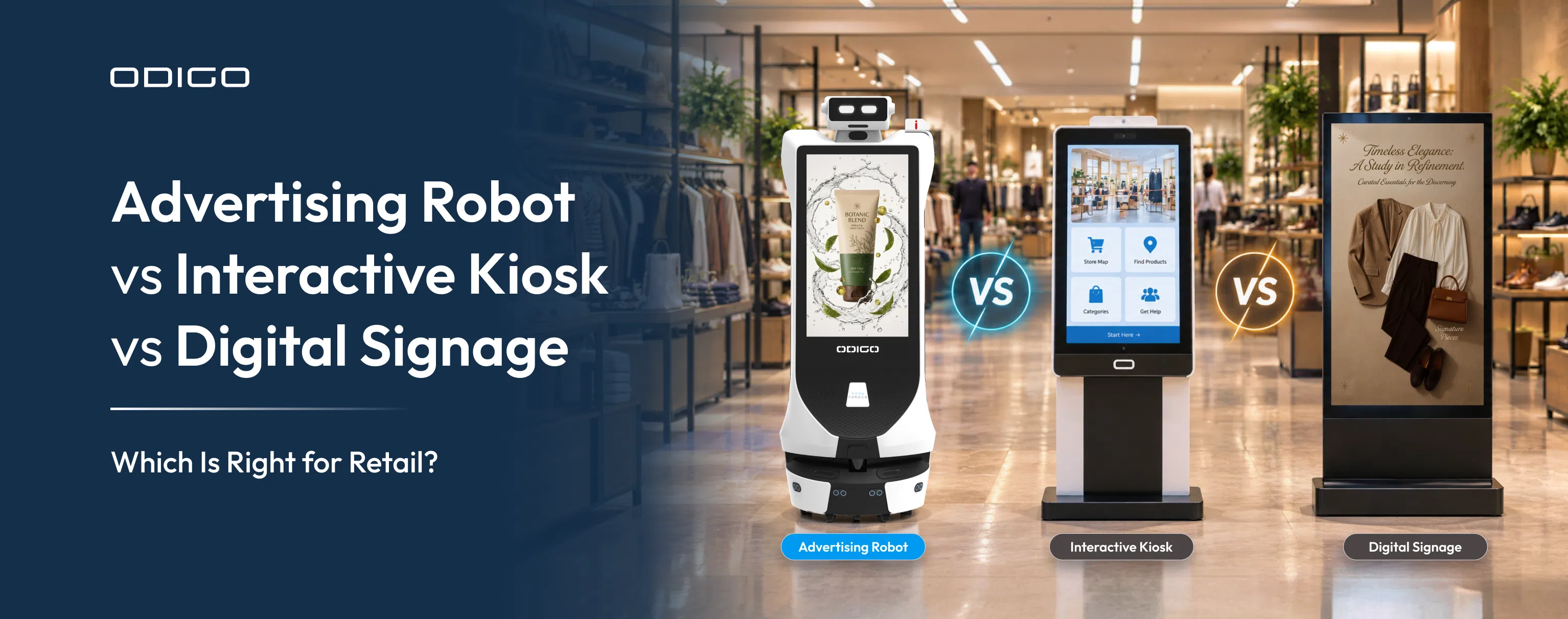
Retailers have several ways to place promotional content in front of shoppers, but every advertising format creates a different type of interaction. Advertising robot vs interactive kiosk vs digital signage becomes an important comparison when retailers need to decide how advertising should appear across a physical shopping environment.
Physical stores still account for 80% of all shopping, according to Deloitte’s 2025 US Retail Industry Outlook. Deloitte also found 47% of surveyed shoppers said digital screens positively affect the in-store grocery shopping experience. The findings reinforce the value of well-planned digital experiences in physical retail. (Source: Deloitte)
Digital signage keeps promotions visible in fixed locations, while interactive kiosks let shoppers search for information, explore offers, or access assistance. An advertising robot adds mobility, bringing promotional content into different areas while supporting navigation and shopper assistance.
Odigo combines AI navigation, interactive displays, targeted advertising, and centralized ad management in a mobile robotic platform. Odigo supports images, videos, and interactive content, with advertising targeted according to location, time, and day of the week. The comparison ahead examines mobility, interaction, visibility, campaign control, and operational requirements to help retailers identify the right fit for specific retail environments.
What Are Advertising Robots, Interactive Kiosks, and Digital Signage?
Retailers use a variety of digital tools to communicate with shoppers, promote products, and deliver information inside physical locations. Advertising robots, interactive kiosks, and digital signage can all display promotional content, yet each solution operates differently and supports a distinct shopper experience.
Advertising Robot
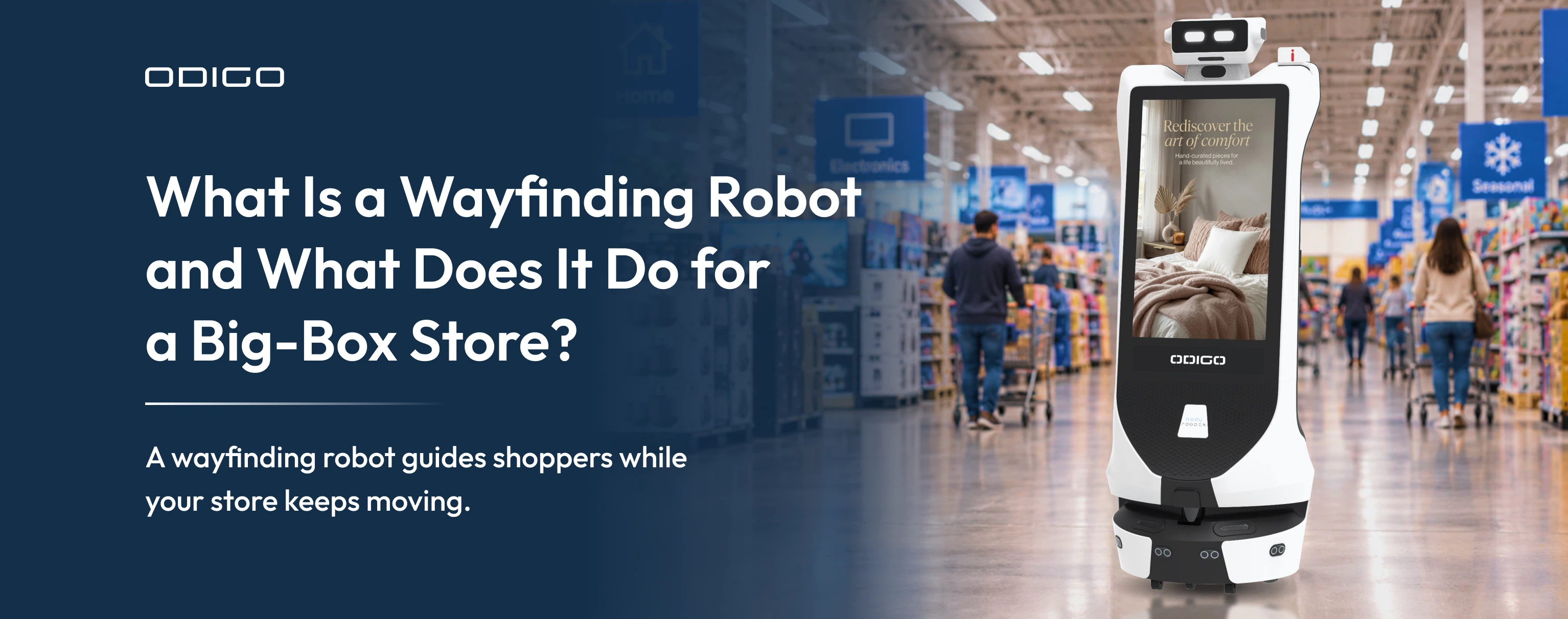
An advertising robot combines digital advertising with mobility. Instead of remaining in one location, a robotic platform can move through different areas of a store, shopping center, airport, or public venue while displaying promotional content. Certain platforms also support shopper assistance, navigation, interactive displays, and targeted advertising.
Odigo falls into this category, combining AI navigation, interactive displays, targeted advertising, and centralized ad management in a mobile robotic platform. Advertising campaigns can include images, videos, and interactive content while supporting location- and time-based targeting.
Interactive Kiosk
An interactive kiosk provides a fixed digital touchpoint where shoppers can actively engage with content. Common use cases include wayfinding, product information, self-service support, digital directories, loyalty programs, and promotional campaigns.
Unlike an advertising robot, shopper interaction begins only after a visitor approaches the kiosk and starts using the screen. Visibility and engagement remain limited to the kiosk’s physical location.
Digital Signage
Digital signage uses fixed digital displays to deliver advertising, announcements, promotions, and branded content. Retailers often place digital signage near entrances, checkout areas, product displays, food courts, and other high-traffic locations.
Digital signage excels at maintaining continuous visibility in a specific area. However, audience reach depends on shopper traffic passing through the display’s location.
Although all three solutions support digital advertising, differences in mobility, interaction, visibility, and placement flexibility create distinct advantages for different retail objectives. Understanding those differences provides a stronger foundation for evaluating advertising robot vs interactive kiosk vs digital signage in real-world retail environments.
Advertising Robot vs Interactive Kiosk vs Digital Signage: Key Differences
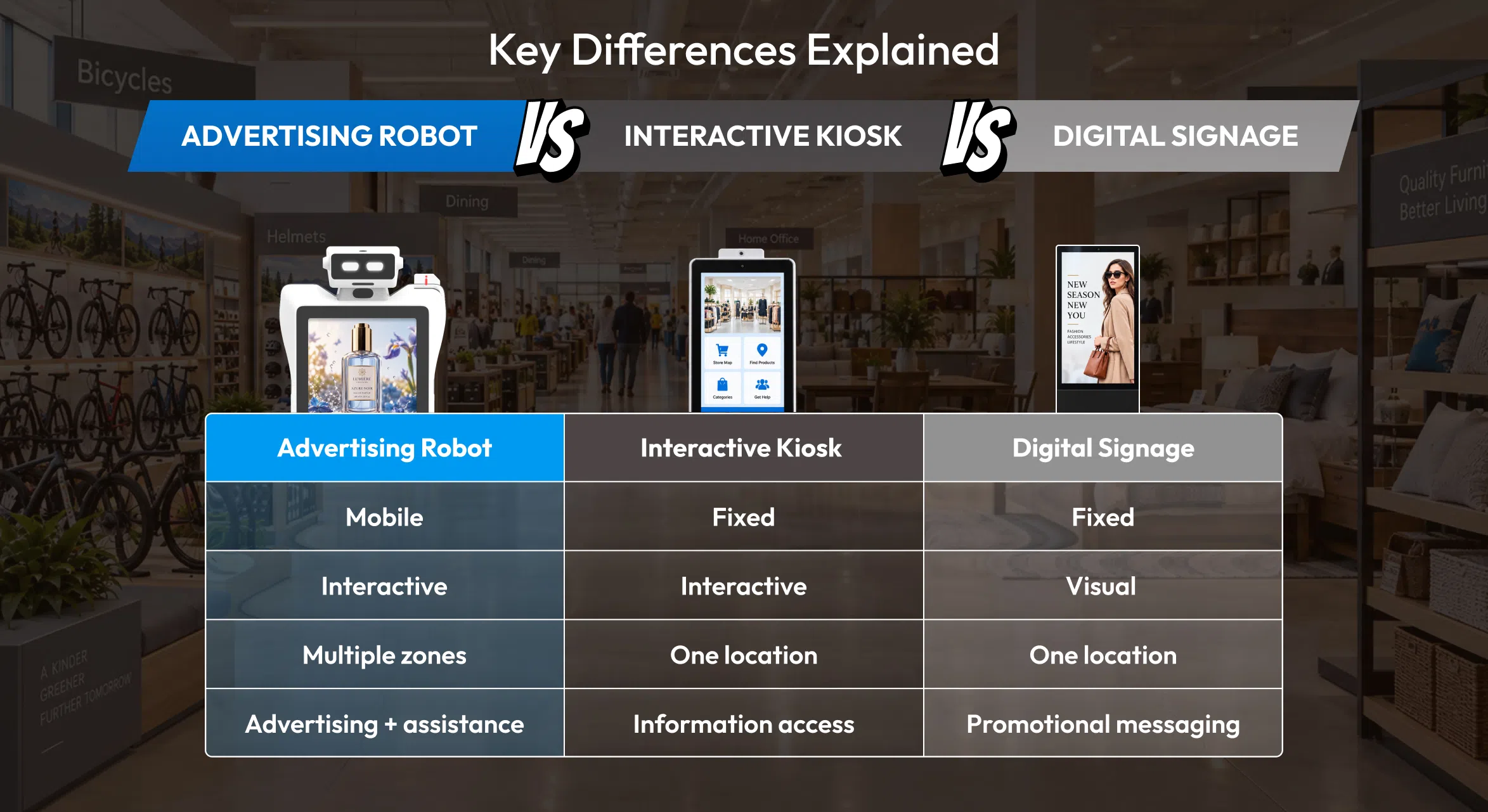
Retail advertising works differently depending on where the screen sits, how shoppers interact with the content, and how often the message reaches different store zones. Comparing an advertising robot vs an interactive kiosk vs digital signage helps retailers understand the practical differences before choosing a format.
| Factor | Advertising Robot | Interactive Kiosk | Digital Signage |
| Mobility | Moves through multiple store areas | Fixed in one location | Fixed in one location |
| Shopper interaction | Interactive and proactive | Interactive and shopper-initiated | Primarily visual |
| Advertising placement | Multiple locations during operation | One fixed location | One fixed location |
| Content | Images, videos, interactive content | Interactive digital content | Images, videos, promotional content |
| Targeting | Location, time, day, and campaign | Depends on placement and setup | Depends on placement and scheduling |
| Navigation support | Available with Odigo | Possible depending on kiosk setup | Not a core function |
| Campaign management | Centralized advertising platform | Depends on software | Depends on signage system |
| Primary role | Advertising, navigation, and shopper assistance | Information and self-service interaction | Continuous promotional messaging |
Mobility Changes Advertising Reach
The biggest difference in an advertising robot vs digital signage comparison is movement.
A digital sign stays in one position. A kiosk also serves shoppers within a defined area. An advertising robot moves through multiple zones while displaying promotional content.
For a grocery retailer, a fixed display near an entrance may promote a weekly offer. A kiosk near customer service may provide product or store information. A mobile advertising robot can carry promotional content across different areas during operating hours.
Odigo combines mobile advertising with AI navigation, allowing advertisements to appear while the robot moves through high-traffic areas. Its navigation capabilities also support shopper assistance, similar to the role explained in what is a wayfinding robot blog. The platform supports targeted advertising based on location and time.
Interaction Works Differently Across the Three Formats
The difference between advertising robots and interactive kiosks becomes clearer when you consider shopper interaction.
An interactive kiosk waits for a shopper to approach and use the screen. The interaction starts with the shopper.
An advertising robot adds a mobile presence to the interaction. Odigo uses interactive touch displays alongside navigation and advertising functions. The product materials describe shopper interactions such as greetings, directions, promotions, and assistance.
Digital signage follows another model. The screen presents scheduled content without requiring direct shopper interaction.
For retailers, the choice depends on the desired experience. A kiosk suits an information point. Digital signage suits continuous visual communication. A robot suits environments where advertising and shopper assistance need to move across multiple areas.
Advertising Flexibility Also Differs
The advertising robot vs interactive kiosk comparison also depends on campaign control and placement flexibility.
A fixed kiosk provides a dedicated location for digital content. Digital signage follows the same fixed-location model. Retailers choose where each screen sits and schedule content for the intended audience.
Odigo adds greater placement flexibility through mobility. Its advertising platform supports image, video, and interactive content, along with targeting based on location, day, and time. Centralized management also lets you adjust campaign content, schedules, and targeting settings, with performance analytics available for campaign evaluation.
The mobile advertising robot vs fixed kiosk distinction matters when a retailer wants promotional content across multiple store zones without installing a separate screen at every location.
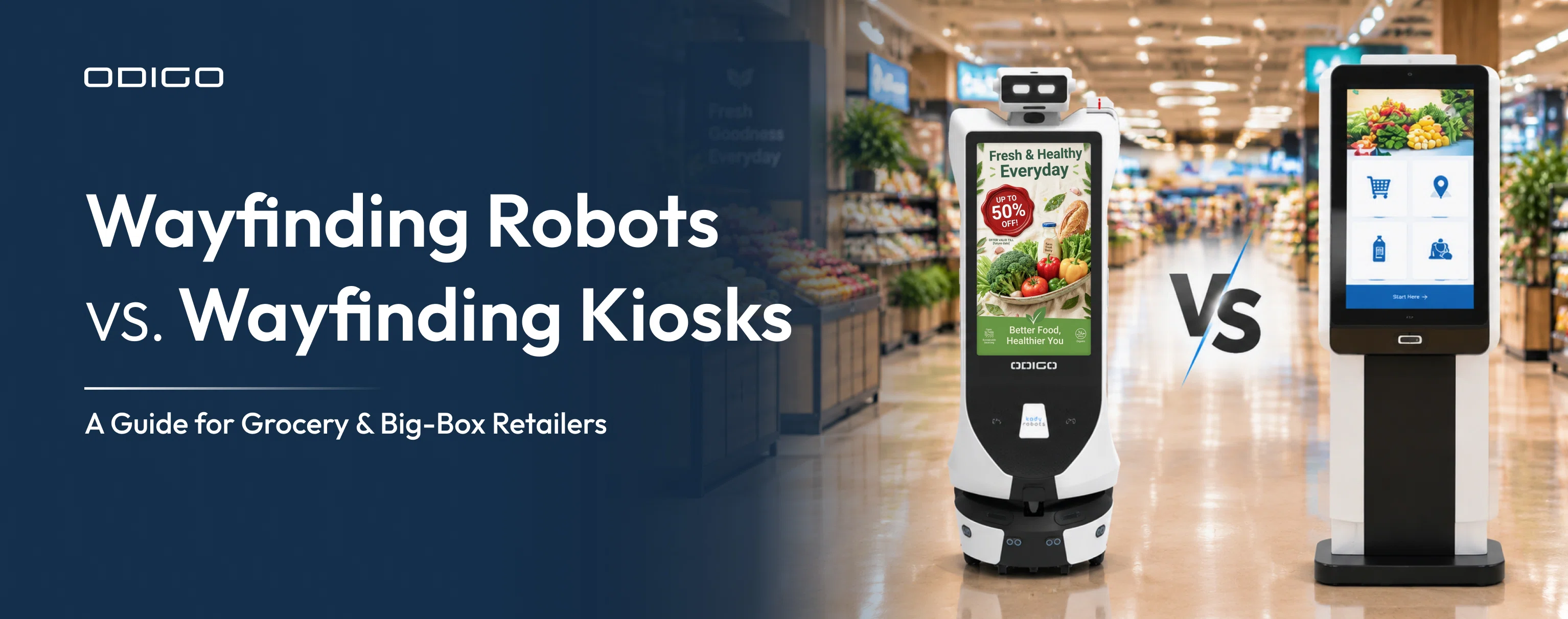
Want to understand how wayfinding robots compare with wayfinding kiosks? Explore the detailed comparison.
Where Each Retail Advertising Solution Works Best
Choosing between an advertising robot, interactive kiosk, and digital signage depends on the role you want the technology to play inside your store. Each format supports a different combination of visibility, interaction, mobility, and shopper assistance.
Digital Signage for Consistent Brand Visibility
Digital signage fits retail areas where promotional content needs a fixed, highly visible position. Entrance displays, checkout areas, and other high-traffic zones provide dedicated locations for campaigns, announcements, and product promotions.
Retailers also get predictable screen placement. Marketing teams know where content appears, which makes digital signage useful for campaigns built around specific store zones.
The main limitation in an advertising robot vs digital signage comparison is mobility. A fixed display stays within its assigned area, so campaign reach depends heavily on shopper movement around the screen.
Interactive Kiosks for Shopper-Led Engagement
Interactive kiosks create a dedicated point where shoppers actively access digital information. A kiosk works well when the primary goal involves giving shoppers access to information through a fixed screen.
The difference between advertising robots and interactive kiosks becomes clear when mobility enters the picture. A kiosk depends on shoppers reaching the installation point and starting the interaction. An advertising robot brings the display into different areas while also supporting navigation and shopper assistance.
Advertising Robots for Mobile Promotions and Assistance
An advertising robot adds movement to the retail advertising experience. Odigo combines AI navigation, interactive displays, targeted advertising, and shopper assistance within one mobile platform.
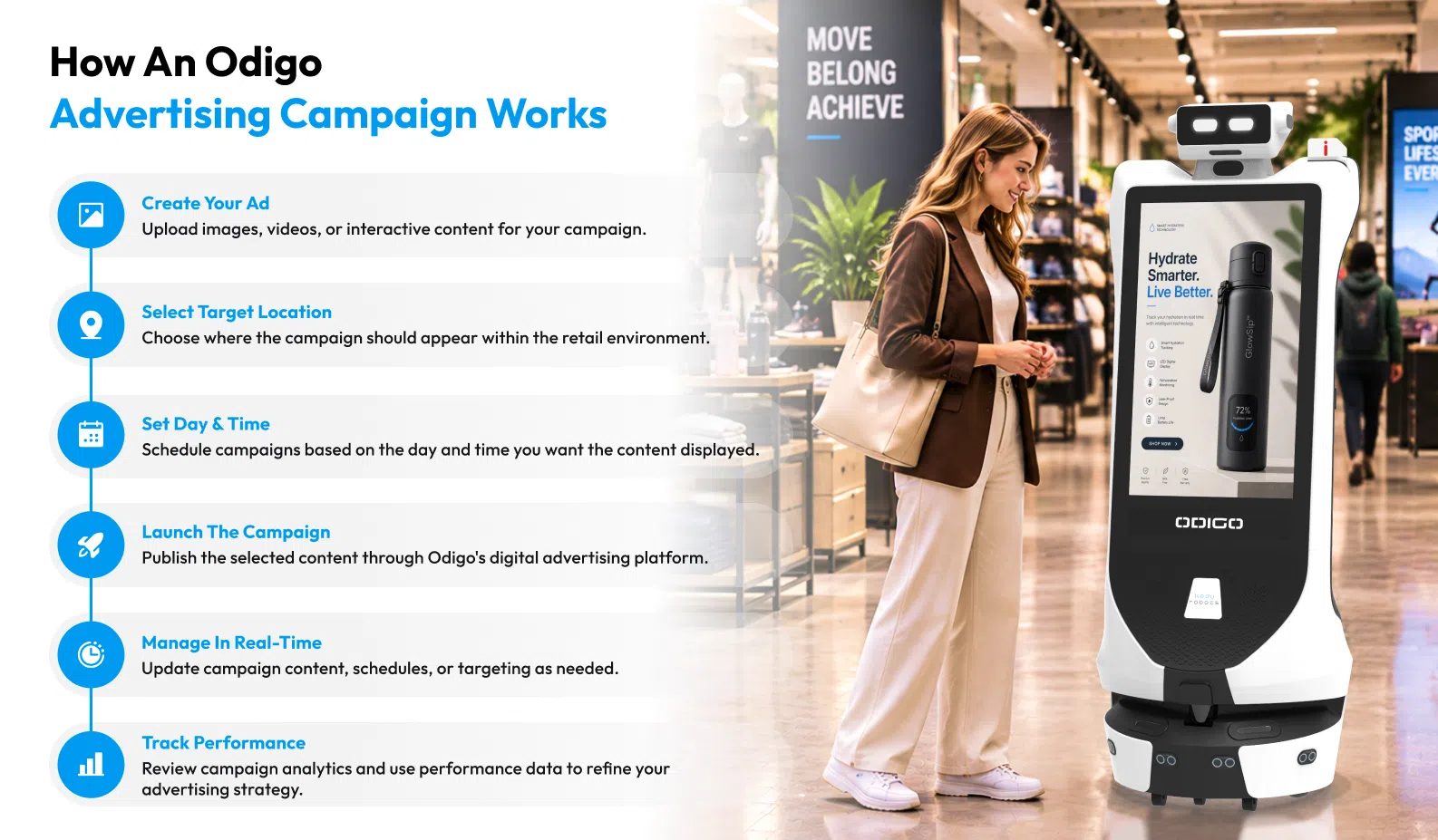
Odigo also supports location, day, and time-based advertising, allowing campaigns to match specific retail conditions. The centralized advertising platform supports content customization, campaign scheduling, real-time updates, and performance analytics.
The interactive advertising robot vs digital kiosk comparison therefore comes down to the role each platform plays. A kiosk creates a fixed interaction point. An advertising robot combines an interactive screen with movement across the retail environment.
A Practical Retail Scenario
Imagine a retailer running a weekend promotion across several store zones.
A digital sign near the entrance displays the offer throughout the campaign. An interactive kiosk gives shoppers a place to explore information. An advertising robot carries the promotion through different areas while also helping shoppers navigate. Understanding how AI robot assistants work helps explain how navigation, interaction, and advertising operate together on a mobile platform.
Compared to kiosks and digital signage, the advertising robot offers a broader combination of advertising, mobility, and assistance. Retailers with a strong need for fixed messaging may prefer digital signage, while retailers focused on dedicated shopper interaction may use kiosks. A mobile platform fits campaigns where promotional visibility needs to travel with shopper traffic.
Which Advertising Technology Fits Your Retail Strategy?
Retail advertising does more than display a promotion. Placement and interaction influence how shoppers encounter information during a store visit. Digital signage, interactive kiosks, and advertising robots create different touchpoints within the same retail environment.
Fixed Screens Create Predictable Touchpoints
Digital signage gives retailers a consistent location for promotional messaging. A screen positioned near an entrance, product area, or checkout remains available throughout operating hours.
The approach works well when retailers want shoppers passing through a specific area to see the same campaign repeatedly. Content can include promotions, brand messages, product information, or announcements.
For an advertising robot vs fixed digital signage comparison, the primary distinction is movement. Digital signage maintains a fixed position, while an advertising robot carries promotional content through different areas.
Kiosks Require Shopper Participation
Interactive kiosks create a more active digital experience. Shoppers approach the screen and choose when to interact with available content.
The format suits situations where shoppers need access to information at a specific location. A retailer may dedicate a kiosk to directions, promotions, or other digital assistance based on the store’s requirements.
The mobile advertising robot vs fixed kiosk comparison introduces another important consideration: reach. A kiosk serves shoppers who reach its location, while a mobile robot operates across multiple areas.
Mobile Robots Combine Visibility With Interaction
An advertising robot introduces movement alongside interactive digital content. Odigo uses a 32-inch interactive touch display, AI navigation, smart obstacle avoidance, and a digital advertising platform.
Odigo’s product materials also describe shopper interactions involving greetings, directions, promotions, and assistance.
The result creates a different shopper touchpoint. Promotional content travels through the retail environment while the robot also supports navigation and shopper assistance.
Which Experience Fits Your Store?
The advertising robot vs interactive kiosk vs digital signage decision becomes easier when retailers define the desired shopper interaction:
Digital signage
consistent messaging at a fixed location.
Interactive kiosk
dedicated, shopper-initiated interaction.
Advertising robot
mobile advertising combined with interactive engagement and navigation.
For supermarkets where shoppers also need guidance and assistance during their visit, an AI robot assistant for supermarket offers a broader role than a fixed advertising display. Odigo combines targeted advertising with navigation and interactive engagement, giving retailers a mobile touchpoint across different store areas.
Odigo also supports targeted advertising based on location, day, and time, giving retailers greater control over where and when campaigns appear.
The right format depends on the role assigned to the technology. A retailer focused on fixed promotional visibility has different requirements than a retailer seeking mobile advertising and shopper assistance.
Match the Advertising Format to Your Retail Goals
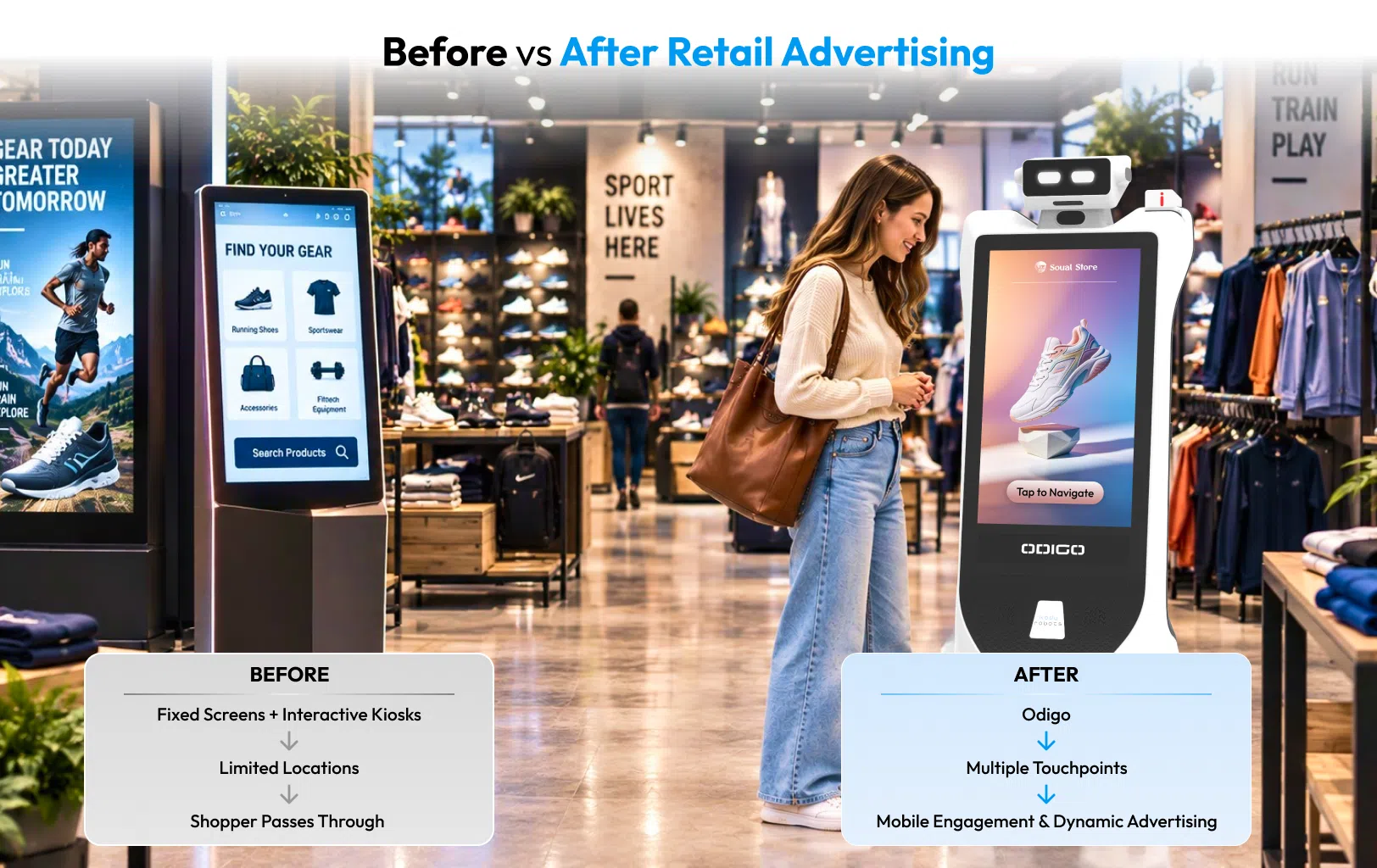
Retail advertising works best when the technology matches the outcome a store wants to achieve. A fixed display supports consistent messaging, an interactive kiosk creates a dedicated information point, while a mobile advertising robot combines promotional content with movement and shopper assistance.
When Consistent Visibility Matters
Digital signage keeps promotional messages in a defined location. Retailers may place screens near entrances, product areas, or other high-traffic zones where shoppers regularly pass.
The format suits campaigns that need steady visual exposure without requiring shopper interaction.
When Shoppers Need Information on Demand
Interactive kiosks create a dedicated space for shopper-led engagement. Visitors approach the screen when they need information or want to explore available content.
The advertising robot vs interactive kiosk comparison becomes relevant when retailers assess where engagement should happen. A kiosk creates one established interaction point, while a mobile platform operates across multiple areas.
When Advertising Needs Greater Reach Across Store Zones
An advertising robot introduces mobility into the promotional experience. Odigo combines AI navigation, interactive displays, targeted advertising, and shopper assistance within one platform.
Odigo also supports advertising based on location, day, and time. Retail teams manage content, schedules, targeting, and campaign performance through a centralized advertising platform.
For retailers assessing advertising robot vs digital signage, the key consideration is where promotional exposure needs to happen. A fixed display remains tied to one location, while a mobile advertising robot operates across different areas.
When One Format Is Not Enough
A retail environment may have several communication needs at once. Digital signage provides fixed promotional visibility. Interactive kiosks create dedicated points for shopper interaction. An advertising robot adds mobility, advertising, navigation, and assistance.
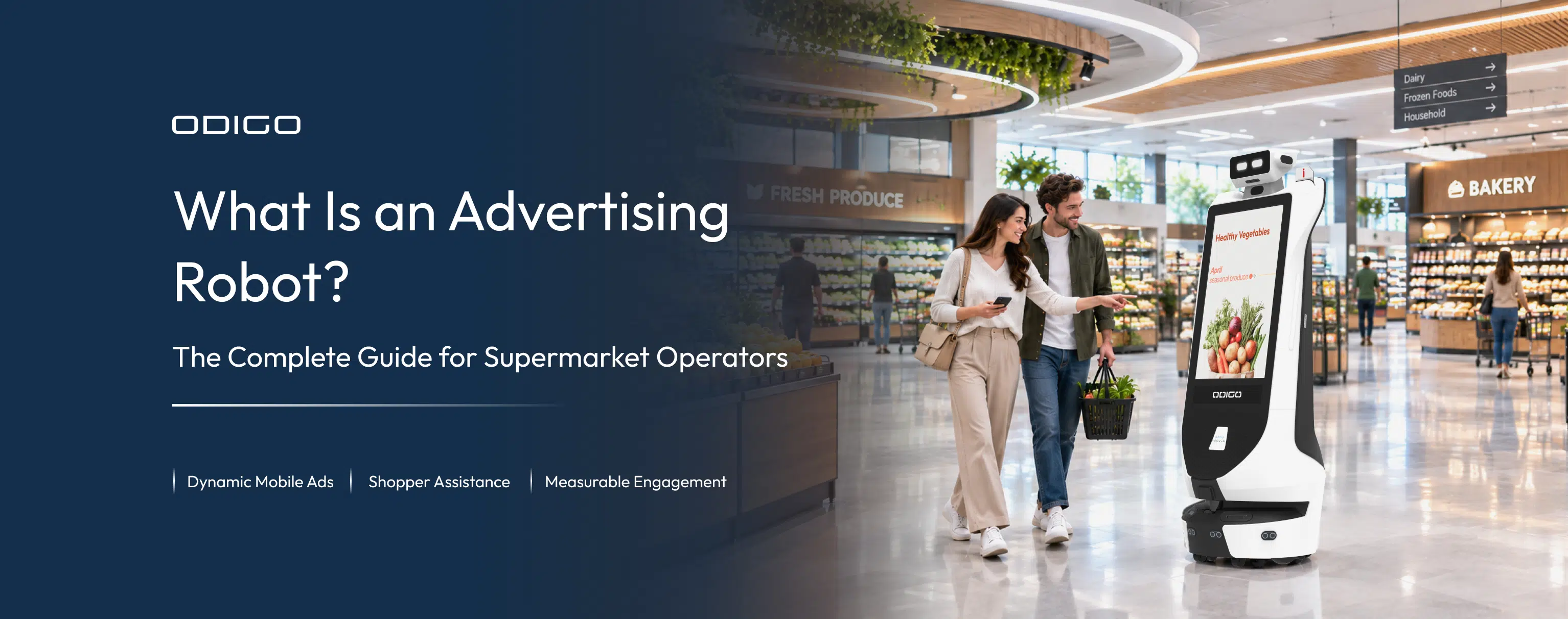
Want to know what an advertising robot is? Read our detailed guide.
Odigo’s platform supports images, videos, and interactive content, giving retailers multiple ways to present campaigns within a mobile advertising environment.
The advertising robot, compared to kiosks and digital signage, therefore depends on the specific retail objective. The strongest fit comes from matching the technology with the location, audience, campaign type, and shopper experience the retailer wants to create.
What Should Retailers Consider Before Choosing an Advertising Solution?
Comparing an advertising robot vs interactive kiosk vs digital signage requires more than looking at screen size or display quality. Retailers need to assess how each solution fits the store layout, campaign strategy, shopper behavior, and day-to-day operations.
1. Coverage Across the Store
Consider how many areas need promotional visibility.
A fixed display communicates within one defined zone. A kiosk also remains tied to its installation point. A mobile advertising robot operates across multiple areas, giving promotional campaigns greater placement flexibility.
Key question: Does your campaign need visibility in one location or across multiple store zones?
2. Shopper Interaction
Consider whether shoppers need to actively engage with promotional content.
Digital signage primarily presents visual content. An interactive kiosk creates a dedicated touchpoint for shopper-led interaction. Odigo combines an interactive display with navigation and shopper assistance, creating opportunities for engagement while the robot operates within the retail environment.
Key question: Should shoppers approach the technology, or should the technology operate within the shopper journey?
3. Campaign Targeting
Campaign relevance depends on when and where an advertisement appears.
Odigo’s advertising platform supports targeting based on location, day of the week, and time of day. Retail teams also receive tools for content customization, scheduling, real-time campaign updates, and performance analytics.
Key question: Does your advertising strategy require location- and time-based campaign control?
4. Operational Requirements
Technology also needs to fit daily store operations. Retailers should consider placement, monitoring, charging, content management, and staff involvement.
Odigo includes autonomous charging, a centralized dashboard, smart obstacle avoidance, and up to eight hours of battery life.
Key question: How much operational involvement should the advertising system require from store staff?
5. Revenue Opportunities
Advertising technology can also serve a commercial purpose beyond promoting the retailer’s own products.
Odigo’s materials describe an advertising platform that gives mall and retail owners an opportunity to sell advertising space to retailers and external brands, creating an additional revenue stream.
Odigo also combines advertising with navigation and shopper assistance, giving the robot assistant role a commercial dimension within retail environments. Promotional content appears alongside guidance and assistance, creating additional opportunities for brands to reach shoppers during their store visit.
Key question: Will the platform support only internal promotions, or also create opportunities for paid advertising partnerships?
A useful advertising robot vs digital signage evaluation should therefore look at coverage, interaction, targeting, operations, and revenue potential together. The screen itself is only one part of the investment decision.
Can Advertising Robots, Kiosks, and Digital Signage Work Together?
Retailers do not have to rely on a single advertising format. Each technology has a distinct role within the shopper journey.
Digital signage keeps brand messages visible in fixed locations. Interactive kiosks provide dedicated points for shopper-led interaction. An advertising robot adds mobility, allowing promotional content and assistance to reach different store areas. For a closer look at how fixed displays compare with mobile advertising, static screens vs advertising robot in supermarkets provide useful context.
Odigo also supports images, videos, and interactive content through its advertising platform, while location, day, and time targeting help align campaigns with specific retail conditions.
A combined setup could place digital signage at key store entrances, use kiosks for dedicated information points, and deploy Odigo for mobile promotions and navigation. The advertising robot, compared to kiosks and digital signage, therefore does not always have to be a replacement discussion. Retailers may use each format where its specific capability adds value.
Advertising Robot vs Interactive Kiosk vs Digital Signage: Making the Right Choice
Each retail advertising format serves a different purpose.
Digital signage keeps promotional content visible in a fixed location. Interactive kiosks give shoppers a dedicated point for accessing information and engaging with content. Advertising robots add mobility, interactive advertising, navigation, and shopper assistance.
Odigo brings several functions into one platform. The system combines AI navigation, interactive displays, targeted advertising, autonomous charging, and centralized advertising management.
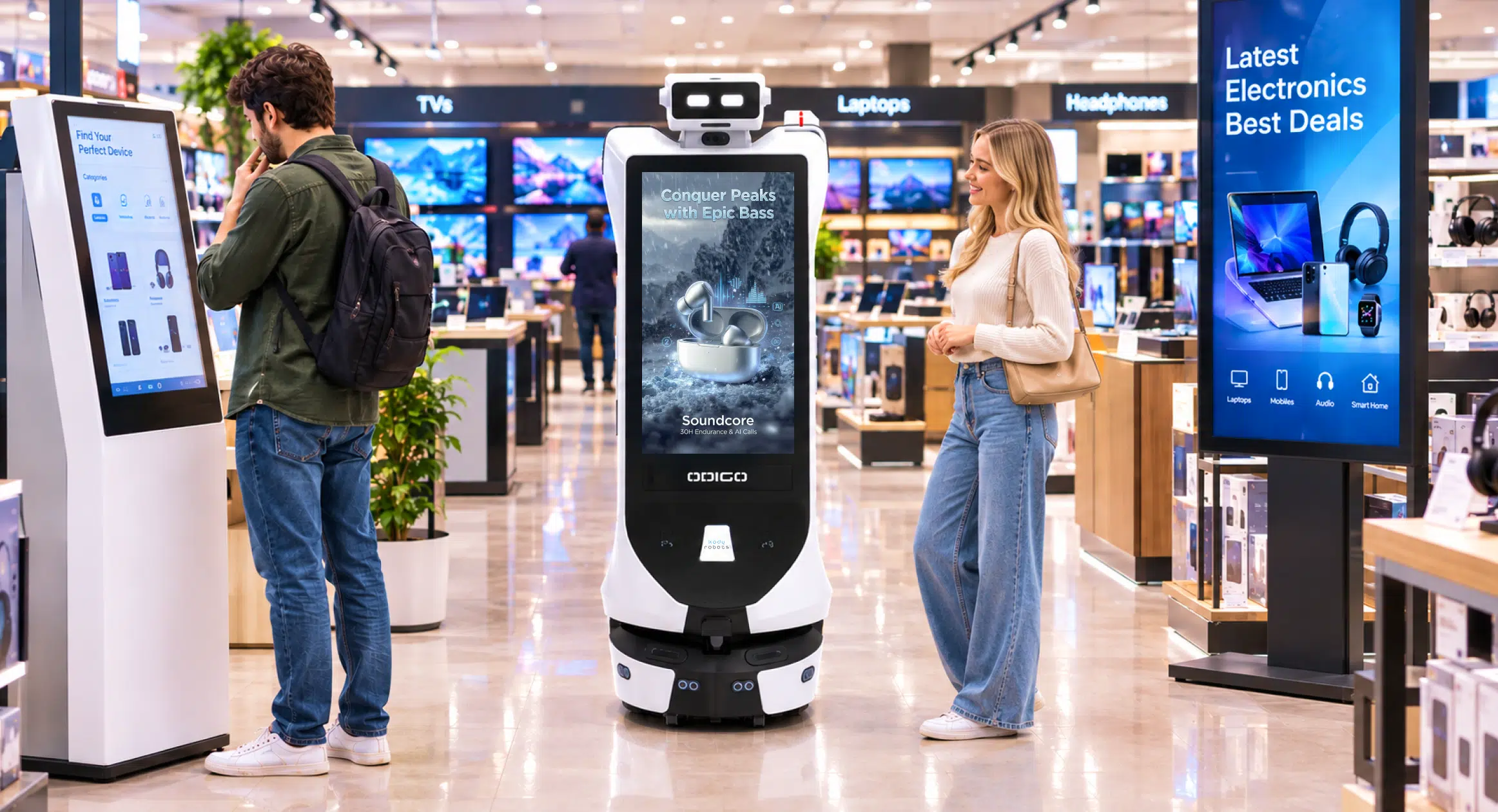
When evaluating an advertising robot vs an interactive kiosk or an advertising robot vs digital signage, retailers should look at four practical factors:
Coverage
How many areas need advertising visibility?
Interaction
How actively should shoppers engage with the content?
Campaign control
How much targeting and real-time management does the marketing team need?
Operations
What level of staff involvement does the solution require?
A fixed display works well for consistent messaging in a defined area. A kiosk creates a dedicated interaction point. An advertising robot suits retail environments where promotional content, shopper assistance, and navigation need to operate across multiple areas.
The decision ultimately depends on the store layout, advertising goals, shopper needs, and operational requirements.
Advertising Robot vs Interactive Kiosk vs Digital Signage: Plan Your Next Step
Retailers already have valuable shopper traffic moving through their stores. The opportunity lies in deciding how effectively promotional messages reach shoppers during that journey.
Digital signage delivers consistent visibility in fixed locations. Interactive kiosks create dedicated points for shopper engagement. An advertising robot adds mobility, interactive content, navigation, and targeted advertising within one platform.
Odigo brings those capabilities together while giving retail teams centralized control over advertising content, schedules, targeting, and campaign performance. Kody Robots offers a broader look at robotic solutions designed for retail environments and customer-facing applications.
If your team is evaluating an advertising robot vs interactive kiosk vs digital signage, seeing the technology in a real retail setting is the most practical next step. Explore how Odigo fits your store layout, advertising goals, and shopper experience.
Ready to put your retail advertising strategy in motion?
Advertising Robot vs Interactive Kiosk vs Digital Signage – General FAQs
These FAQs answer common questions about Advertising Robot vs Interactive Kiosk vs Digital Signage, including how each option differs in mobility, shopper interaction, advertising reach, targeting, and retail use cases. They can help retail business leaders in the US better understand which solution fits different in-store goals and operating environments.
1. What is the difference between an advertising robot and an interactive kiosk?
The main difference is mobility. An interactive kiosk stays in a fixed location and waits for shoppers to initiate an interaction. An advertising robot combines an interactive display with mobility, allowing promotional content to reach different areas. Odigo also adds AI navigation and shopper assistance.
2. How does an advertising robot compare with digital signage?
The advertising robot vs digital signage comparison centers on placement and reach. Digital signage displays content from a fixed location, while an advertising robot moves through different areas while displaying promotional content. Odigo also supports targeted advertising based on location, day, and time.
3. Is an advertising robot better than a fixed kiosk for retail advertising?
The answer depends on the campaign objective. A fixed kiosk suits dedicated information or interaction points. A mobile advertising robot suits campaigns that require promotional visibility across multiple store areas. The mobile advertising robot vs fixed kiosk distinction becomes especially relevant for retailers managing large or high-traffic environments.
4. What makes an interactive advertising robot different from a digital kiosk?
An interactive advertising robot vs digital kiosk comparison involves more than the screen. A digital kiosk provides a stationary interactive touchpoint. An advertising robot combines interactive content with mobility, navigation, and advertising capabilities. Odigo also supports a 32-inch interactive touch display.
5. Can advertising robots replace digital signage?
Not necessarily. Digital signage remains useful for fixed promotional messaging, while advertising robots suit mobile campaigns and shopper assistance. Retailers may also use both formats in different areas, depending on the role each technology needs to perform.
6. Can an advertising robot replace an interactive kiosk?
An advertising robot covers some functions associated with interactive kiosks while adding mobility. Odigo combines interactive displays with AI navigation, advertising, and shopper assistance. The right setup depends on whether the retailer needs a fixed information point, mobile engagement, or both.
7. How does advertising targeting work on Odigo?
Odigo’s advertising platform supports targeting based on location, day of the week, and time of day. Retail teams can create and customize content, adjust campaign schedules, make real-time updates, and review performance analytics through the platform.
8. What should retailers consider when comparing advertising robots and fixed digital signage?
Retailers should assess store coverage, campaign targeting, shopper interaction, operational requirements, and advertising objectives. The advertising robot vs fixed digital signage decision becomes particularly relevant when campaigns need promotional visibility across multiple retail zones rather than one fixed location.
9. Can an advertising robot generate additional advertising revenue?
Odigo’s materials describe opportunities for mall owners to sell advertising space to retailers and external brands, creating an additional revenue stream. Actual revenue depends on factors such as advertising demand, pricing, traffic, campaign performance, and the commercial model used by the property owner.
10. What is the difference between advertising robots and interactive kiosks for shopper engagement?
The difference between advertising robots and interactive kiosks largely comes down to how shoppers encounter the technology. A kiosk creates a fixed interaction point. An advertising robot moves through the environment while combining promotional content with interactive capabilities and shopper assistance. Odigo’s product materials describe greetings, directions, promotions, and assistance as part of the shopper experience.
11. How does an advertising robot differ from kiosks and digital signage?
An advertising robot combines mobility, digital advertising, interactive engagement, and navigation in one platform. Kiosks provide a fixed interactive touchpoint, while digital signage delivers promotional content from a fixed location. Odigo brings advertising, navigation, and shopper assistance together within a mobile platform.
12. How does store layout affect the choice between these retail advertising technologies?
Store layout can influence the Advertising Robot vs Interactive Kiosk vs Digital Signage decision. Fixed screens work best in planned locations, while an advertising robot can move through different store areas. Retailers should consider traffic flow, available space, and where shoppers are most likely to need information or see promotions.
13. Which option works better when promotional needs change during the day?
The right option depends on how often campaign placement and timing need to change. Digital signage and kiosks remain in fixed locations, while an advertising robot can carry promotional content across different areas. Odigo also supports advertising based on location, day, and time.
14. What should retailers plan before deploying an advertising robot, kiosk, or digital signage?
Retailers should review store layout, placement, content management, staff involvement, and daily operations before deployment. When comparing Advertising Robot vs Interactive Kiosk vs Digital Signage, they should also consider where the technology will operate and how shoppers are expected to interact with it.