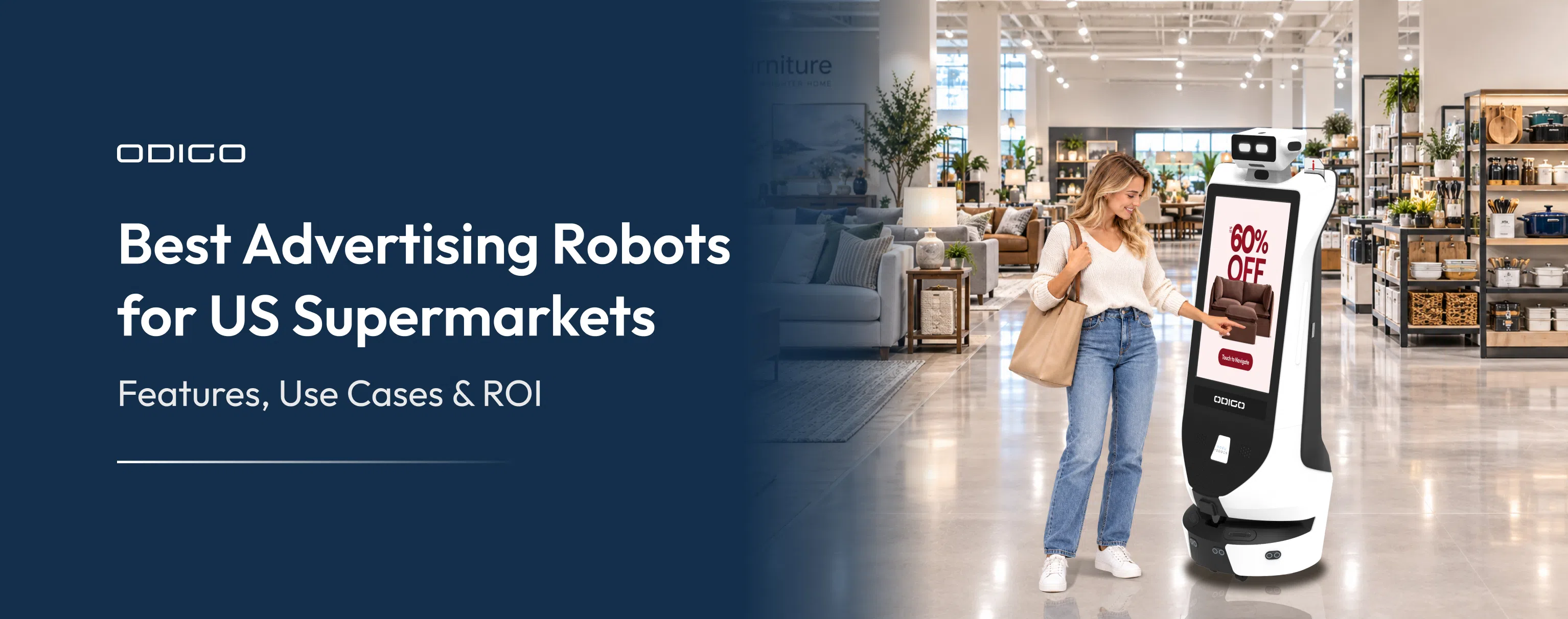

Quick Summary: Advertising robots are changing how supermarkets deliver promotions, engage shoppers, and measure in-store campaigns. This guide explores the best advertising robots for US supermarkets environments, key capabilities, use cases, technology, measurement, and how Odigo can support a more connected supermarket advertising strategy.
Key Takeaways
- Advertising robots can bring promotional content to different areas of a supermarket.
- Location and time-based campaigns can align promotions with different parts of the shopper journey.
- Interactive displays and QR codes create opportunities for direct shopper engagement.
- Proof-of-play and campaign analytics help supermarkets measure advertising activity.
- Autonomous navigation allows robots to operate across designated supermarket areas.
- One robot can deliver different campaigns across multiple supermarket zones as it moves through the store.
- Odigo combines mobile advertising, shopper assistance, and campaign analytics on one platform.
If you are comparing the best advertising robots for US supermarkets needs, look beyond a robot that simply displays ads. An effective solution can engage shoppers, extend advertising reach, and support broader in-store marketing goals.
Supermarket advertising covers much more than placing screens across aisles, store entrances, checkout counters, deli counters, and pharmacies. The real challenge is determining whether advertisements are being noticed, influencing decisions, or encouraging shoppers to explore products they might otherwise overlook.
A 2026 field study analyzing 237 advertising campaigns and nearly 30 million shoppers found that digital signage increased the purchase probability of featured products by 8.1%. The impact was much stronger when advertising was placed closer to the advertised product. (source: sage journals)
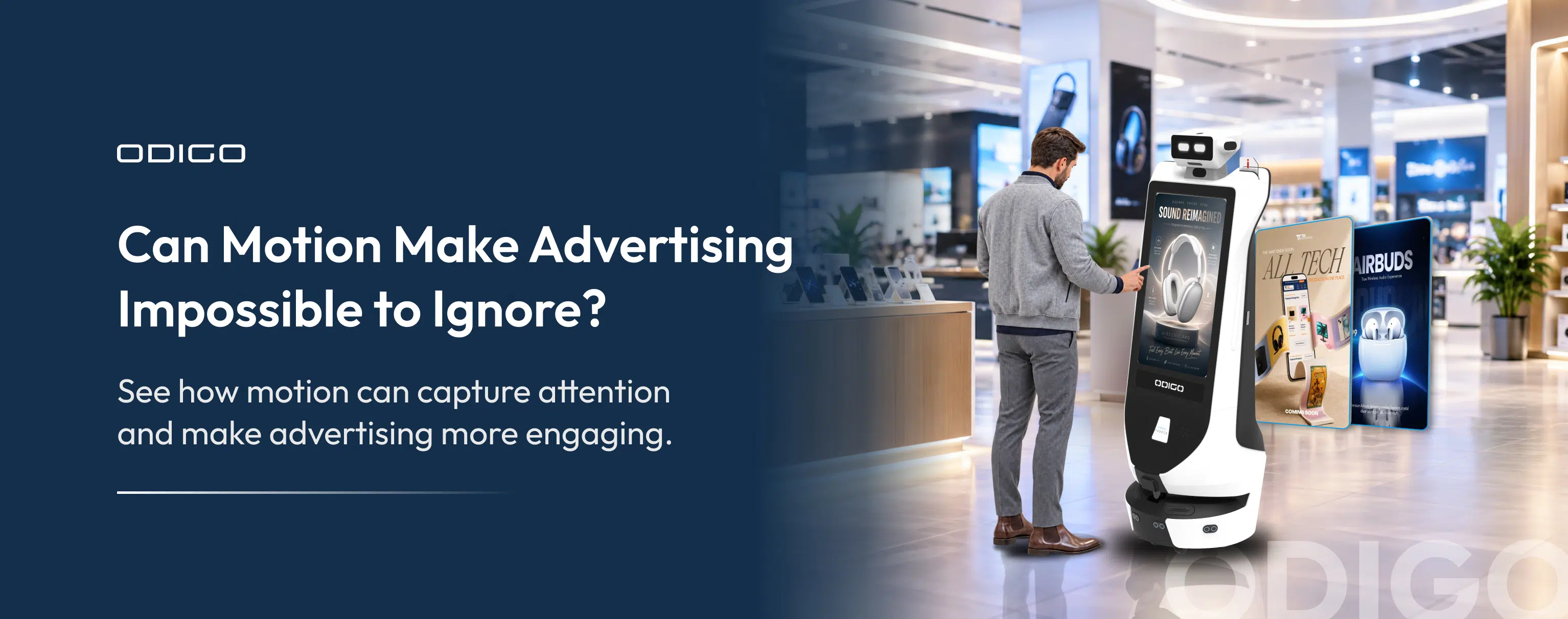
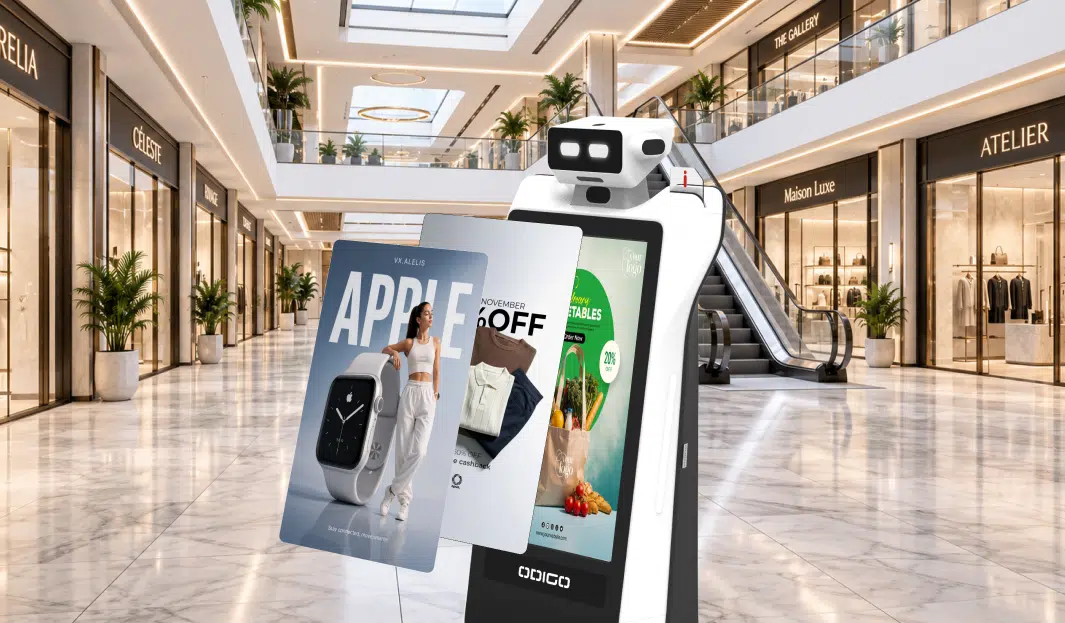
This is where autonomous advertising robots can add another layer to supermarket advertising. Mobility allows promotional content to appear across different areas, while shopper interaction creates additional opportunities to engage with campaigns. These capabilities also help explain how AI robot assistants work in environments where autonomous movement and customer interaction need to work together.
In this guide, we will explore the technology, use cases, and benefits of best advertising robots for supermarkets in USA, along with how Odigo can support a more engaging supermarket advertising campaign.
What Is an Advertising Robot for Supermarkets?
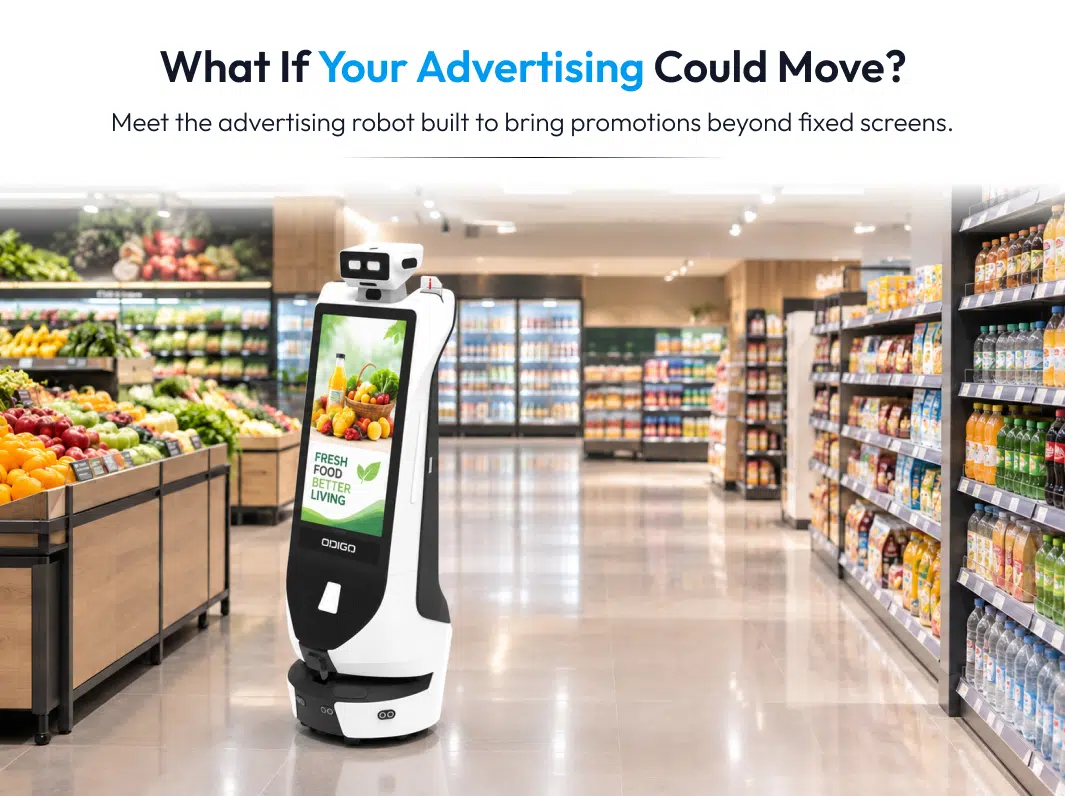
An advertising robot is a mobile robotic system designed to deliver promotional campaigns and engage shoppers within a supermarket. It can move through designated areas while displaying advertisements for products, brands, offers, and seasonal campaigns.
Its advertising content can be scheduled according to factors such as location, time, and campaign requirements, allowing one robot to support different promotions across the supermarket.
Understanding what is an advertising robot in this context comes down to the combination of autonomous mobility, digital advertising, and shopper interaction within one supermarket environment.
What Makes the Best Advertising Robots for US Supermarkets?
The best advertising robots for US supermarkets is one that does more than display promotional content. It should help you reach shoppers across different areas of the store, deliver relevant advertising, and create opportunities for interaction while supporting your broader marketing goals.
Choosing the best advertising robot for US supermarket environments requires evaluating how well its features fit your store, retail advertising strategy, and shopper experience. Key factors include:
Location-based advertising
The robot should support relevant campaigns based on its location, allowing ads to align with specific product sections and supermarket zones.
Strong visual engagement
The display should be high-quality and interactive, helping advertisements capture shoppers’ attention and encourage interaction.
Flexible campaign management
Retailers should be able to rotate, schedule, and update multiple campaigns based on zones, routes, time of day, or specific points of interest.
Measurable performance
Engagement, ad plays, proof-of-play, and campaign activity should be trackable so supermarkets can evaluate campaign performance.
Autonomous operations
Reliable navigation, obstacle avoidance, and sufficient operating time are important for consistent movement across designated supermarket areas.
Centralized control
For multiple units or locations, centralized campaign, content, and robot management can simplify daily operations.
Ultimately, the best advertising robots for a US supermarket should combine effective advertising, reliable autonomous movement, flexible campaign control, and measurable performance. Evaluating these capabilities can help you choose a solution that fits your store’s advertising goals while creating a better experience for shoppers.
What Does Kody Robots Offer for Supermarket Advertising?
Kody Robots develops robotic solutions designed to support customer engagement and advertising in high-footfall supermarket environments. For supermarkets, Odigo can deliver promotional campaigns while moving through designated areas.
Odigo combines autonomous mobility with an advertising & media platform that supports campaign scheduling, dynamic advertising, content management, and engagement measurement. Supermarkets can manage promotional content according to location, time, and campaign requirements while tracking campaign performance through a centralized platform.
Meet Odigo: An Advertising Robot for Supermarkets
Odigo is an AI-powered smart advertising robot designed for high-footfall supermarket environments. It combines autonomous mobility, dynamic digital advertising, shopper interaction, and security monitoring in one platform, helping supermarkets engage shoppers while supporting visibility across the store.
Its dual 32-inch Full HD touchscreens provide the main surface for advertising and interaction, while centralized controls allow campaigns and content to be managed remotely.
Odigo can also support customer-facing functions such as wayfinding and visitor assistance, depending on configuration. Its role as an AI robot assistant for supermarket environments can therefore extend beyond advertising while keeping promotional engagement at the center.
If you are evaluating the best advertising robots for US supermarkets environments, Odigo brings mobility, advertising, interaction, and measurement into one solution.
What Are the Key Advertising Features of Odigo?
Odigo combines mobile advertising with tools that help supermarkets create, manage, and measure promotional campaigns. For supermarkets looking for the best retail store robots in the USA, Odigo offers an advertising platform that supports dynamic content, location-based targeting, campaign scheduling, and engagement tracking.
Dynamic Advertising
- Geo-contextual advertising: Deliver different messages based on the robot’s location.
- Zone-specific campaigns: Present relevant offers in designated supermarket sections.
- Day/time scheduling: Align advertising content with specific schedules.
- Deals Near You: Present relevant offers based on the robot’s current location.
Campaign Management
- Campaign scheduling: Plan campaigns around specific times, zones, routes, or points of interest.
- Creative rotation: Rotate advertisements across a single robot or multiple units.
- Section-level placement: Assign campaigns to specific supermarket sections.
- Fleet-wide content management: Manage content across multiple robots.
- Instant remote content push: Update advertising content remotely.
Shopper Engagement
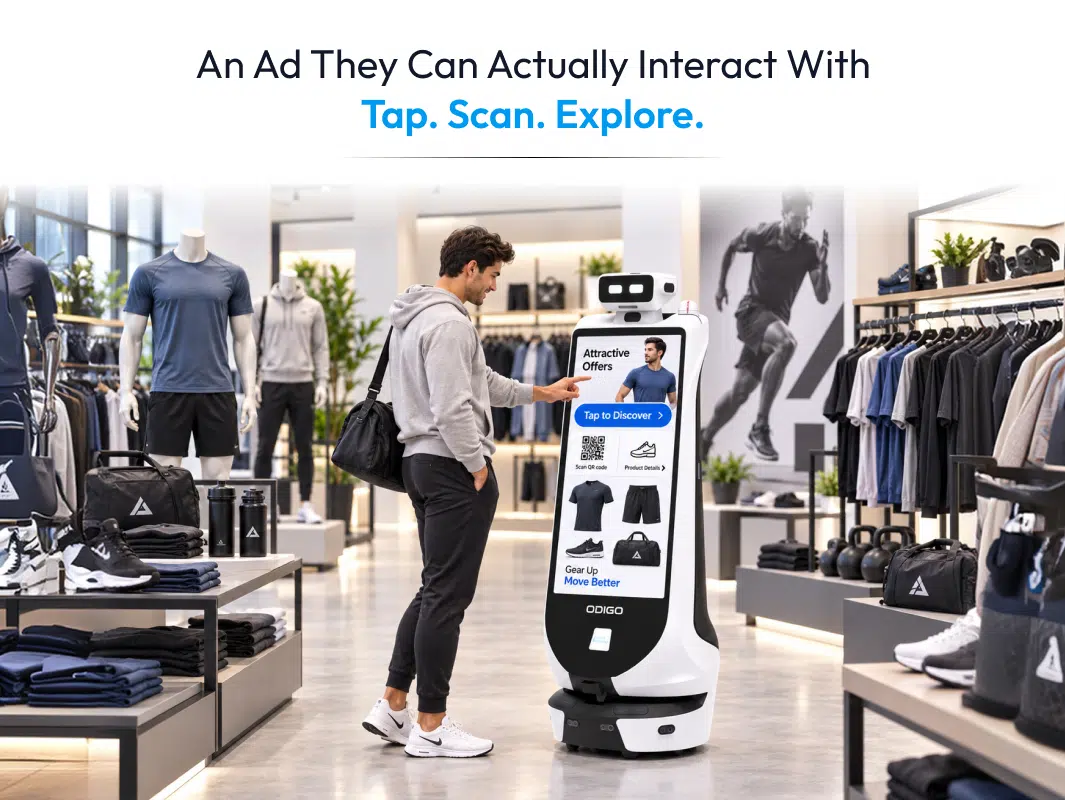
- Touch interaction: Let shoppers interact directly with advertising content.
- QR engagement: Connect shoppers with digital offers, information, or experiences.
- Interactive brand experiences: Support brand-sponsored experiences.
- Promotional engagement signals: Track shopper interactions with promotional content.
Advertising Measurement
- Proof-of-play: Record what advertising content played, where, and when.
- Ad-play analytics: Track advertising activity across different areas and time periods.
- Audience engagement analytics: Measure interactions with campaigns.
- Partner performance tracking: Track advertising activity for individual partners.
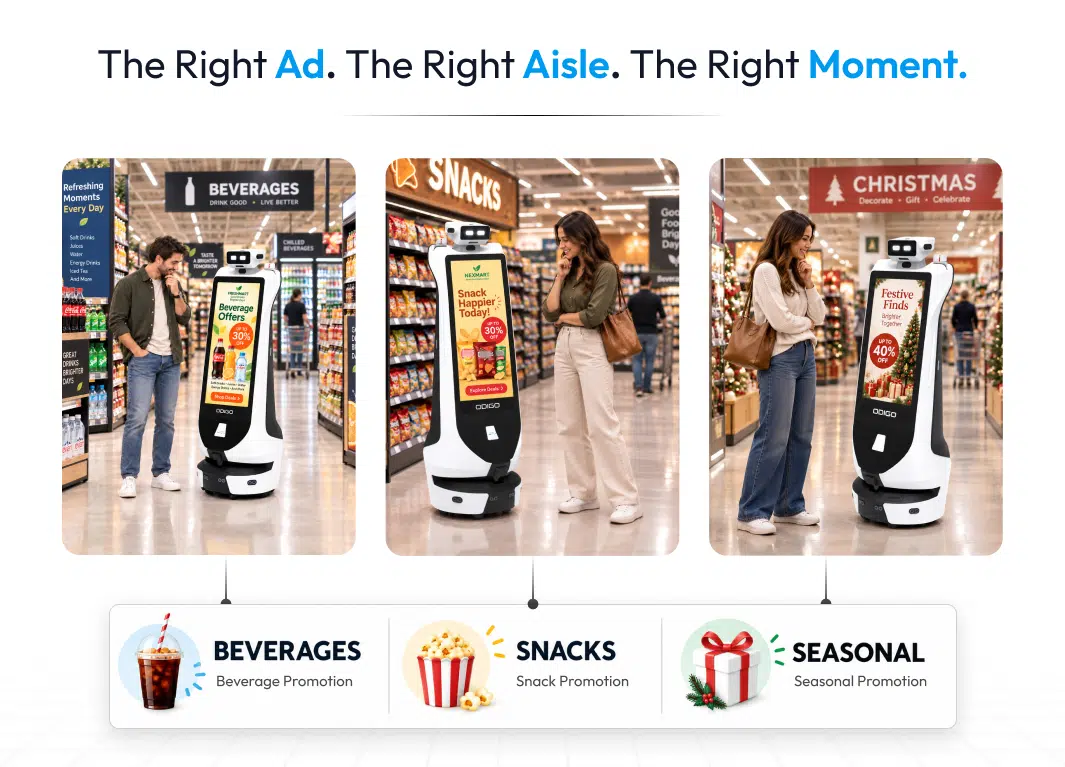
For example, a beverage promotion can appear near the relevant aisle while another campaign runs when the robot enters a different section. A single robot can therefore support multiple campaigns while keeping ads relevant to its location.
Odigo’s Real-World Performance
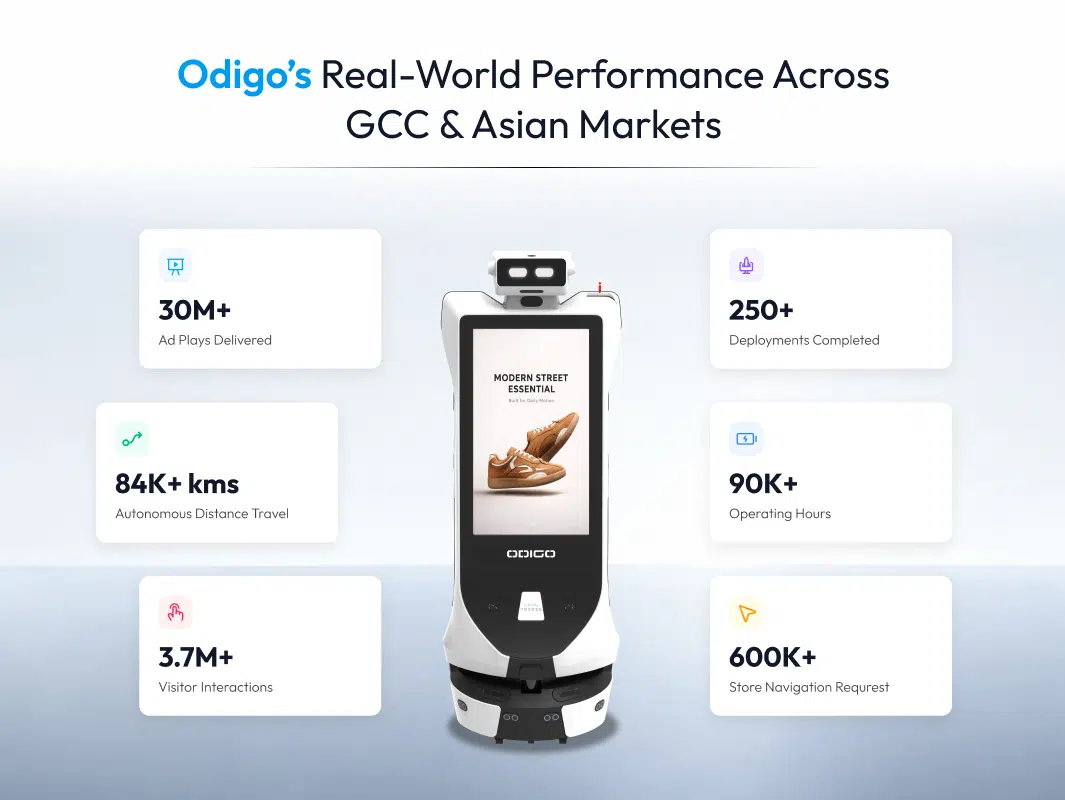
Odigo has already been deployed across GCC and Asian markets, supporting advertising, visitor engagement, navigation, and operational intelligence. Odigo has supported 250+ deployments, delivered 30M+ ad plays, and recorded 90K+ operating hours across commercial environments.
It has also covered more than 84K+ km autonomously, supported 3.7M+ visitor interactions, and handled 600K+ store navigation requests. These figures reflect the range of environments and customer-facing applications Odigo has supported beyond advertising.
These deployment results can help you make a more informed decision about what an advertising robot can deliver on the store floor. Beyond advertising, Odigo brings multiple capabilities that can enhance the customer experience throughout the shopper journey and provide room to scale as retail needs evolve.
Advertising Robots, Digital Signage, or Kiosks: Which Fits Your Supermarket?
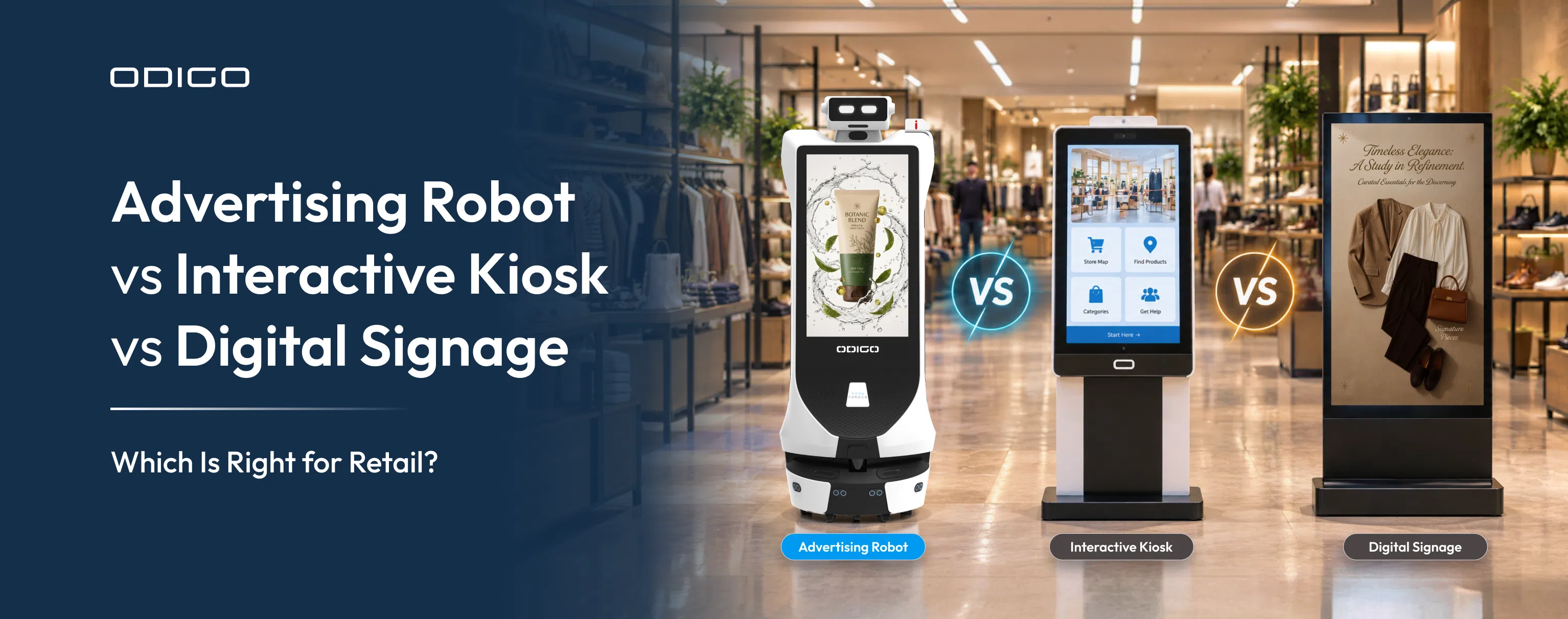
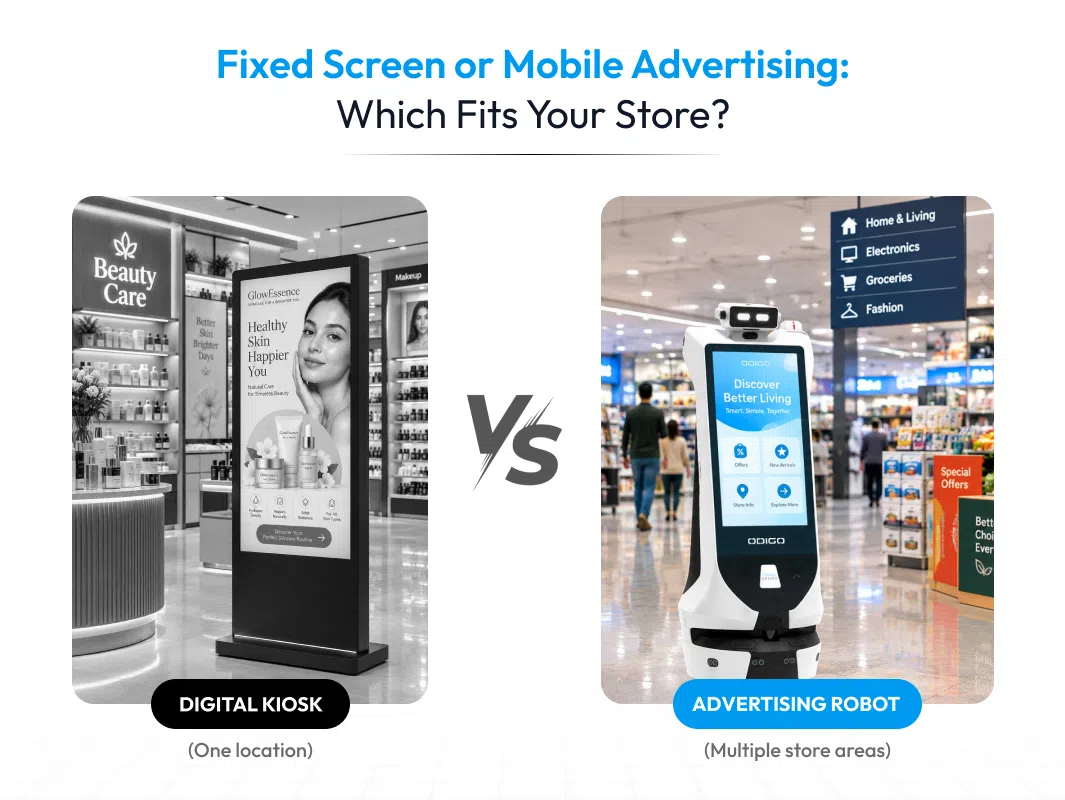
When choosing an in-store advertising format, supermarkets need to consider more than where an advertisement appears. The way a solution reaches shoppers, supports campaigns, and fits into the store environment can influence its overall value. Advertising robot vs interactive kiosk vs digital signage is ultimately a comparison of how each format supports different advertising and engagement goals.
Advertising Robot
An advertising robot introduces mobility, allowing promotional content to move through selected supermarket areas. Unlike a fixed display, it can move through selected store areas and bring promotional content closer to different groups of shoppers. Location-based campaigns, flexible routes, interactive displays, and campaign measurement can make an advertising robot suitable for retailers looking to extend promotions across multiple areas of the store.
Digital Signage
Digital signage provides a consistent advertising presence in a specific location. It can be useful for campaigns that require continuous visibility in high-footfall areas such as entrances, aisles, checkout zones, or promotional sections. Because the display remains fixed, retailers can create predictable advertising touchpoints and deliver consistent messaging to shoppers passing through that area.
Interactive kiosk
An interactive kiosk creates a dedicated point where shoppers can actively access information or engage with promotional content. It can support product information, digital directions, offers, and other self-service experiences while giving retailers a defined location for shopper interaction. This makes interactive kiosks particularly useful when engagement is centered around specific store areas.
The right choice depends on factors such as available floor space, shopper movement, campaign frequency, content flexibility, interaction requirements, and measurement needs. A fixed format may work well when consistent messaging in one location is the priority, while a mobile solution can extend advertising across different parts of the shopper’s journey.
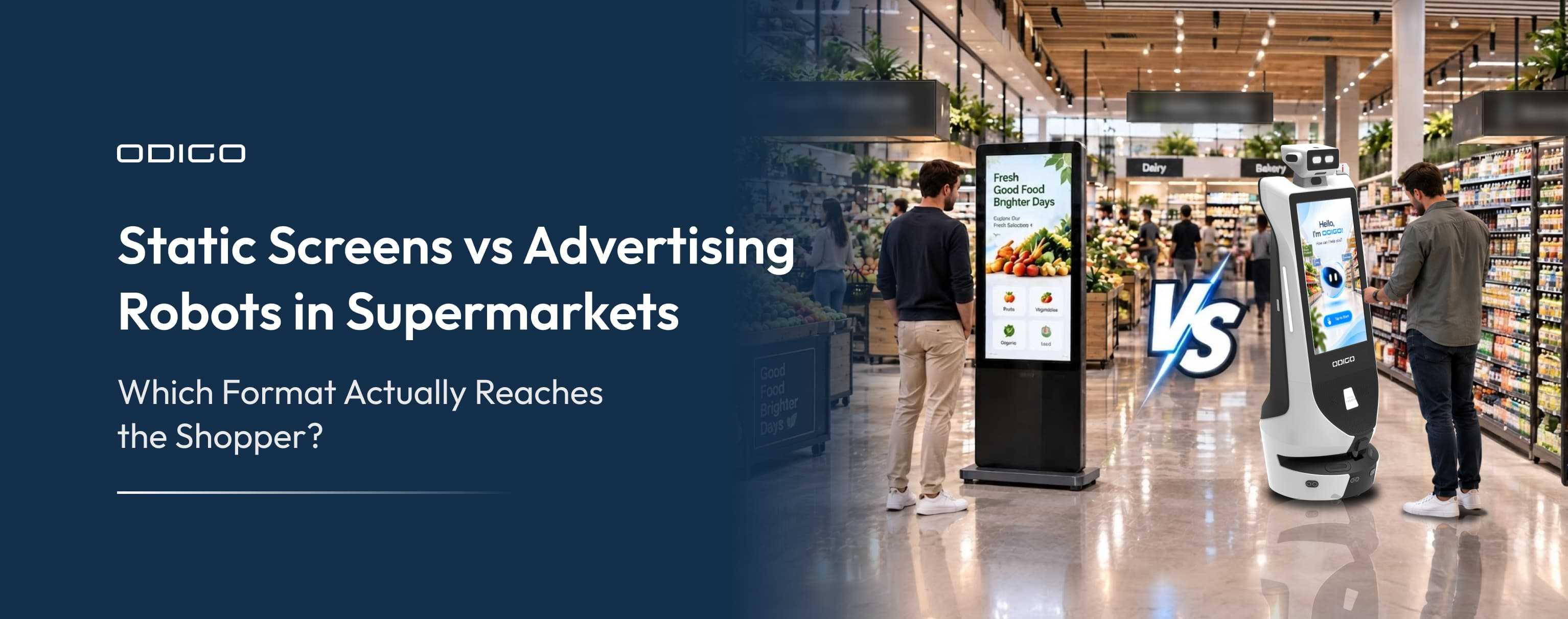
This distinction becomes particularly relevant when evaluating static screens vs advertising robots in supermarkets. An advertising robot comparison for US supermarkets can help retailers assess how each format handles placement, mobility, interaction, content management, and campaign delivery before deciding which approach best fits their advertising strategy.
Where Can an Advertising Robot Be Deployed in a Supermarket?
The placement of an advertising robot can influence how effectively a campaign reaches shoppers. Supermarkets can designate routes and areas based on shopper movement, promotional priorities, product categories, and available floor space.
Common deployment areas include:
Different store zones create different opportunities for advertising and shopper engagement. An advertising robot can move between these areas to support campaigns where and when they are most relevant.
Store entrance
Promote new products, seasonal campaigns, and store-wide offers.
Product aisles
Display relevant promotions near specific products or categories.
High-footfall zones
Support campaigns in areas with greater shopper movement.
Promotional areas
Highlight featured products, seasonal displays, and special campaigns.
Sampling and demonstration zones
Deliver brand content around active product experiences.
Checkout and service areas
Keep shoppers engaged with offers, brand messages, or upcoming promotions.
With route and zone controls, supermarkets can determine where advertising content is displayed according to campaign requirements.
Advertising Robot Use Cases for American Supermarkets
Once an advertising robot is deployed across selected supermarket areas, its mobility can support several advertising objectives. For advertising robots for American supermarkets, common applications include product promotion, seasonal campaigns, brand advertising, and shopper engagement.
Product Promotion
Advertising robots can highlight selected products as they move through relevant sections. Location-based content allows promotions to appear closer to the products being advertised, helping shoppers discover offers while browsing.
Seasonal Campaigns
The best advertising robots for supermarkets in USA can support seasonal products, holiday offers, clearance campaigns, and limited-time promotions. Scheduled content can align campaigns with changing supermarket priorities.
Brand and Vendor Advertising
Advertising robots can create additional opportunities for brands and vendors to promote products within the supermarket. Campaigns can be assigned according to advertising plans, relevant sections, and campaign periods.
Shopper Engagement
For top advertising robots for US supermarkets, shopper engagement can include touchscreens, QR codes, and brand-sponsored experiences. These interactions also provide useful signals for evaluating campaign activity.

What Additional Capabilities Can an Advertising Robot Bring?
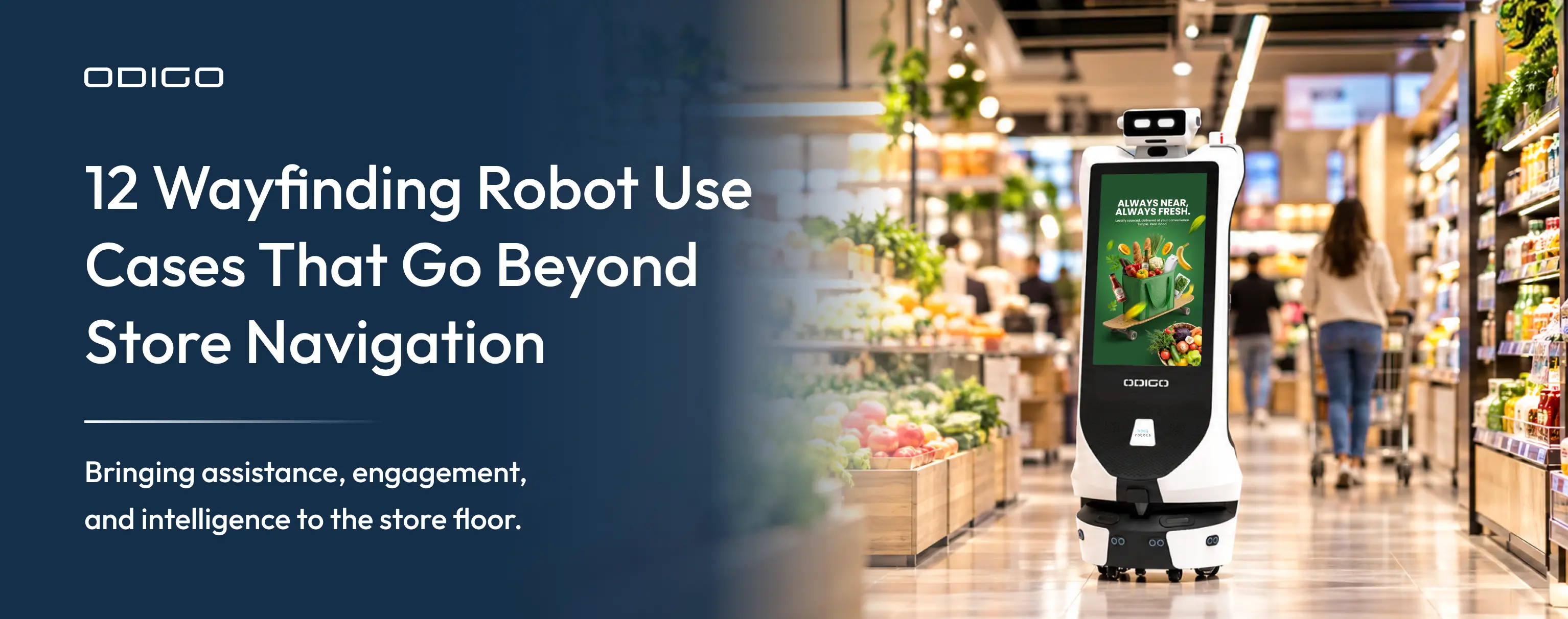
An advertising robot can support more than promotional content across the supermarket. Alongside displaying advertisements, it can assist shoppers, provide product information, guide shoppers to specific locations, and support other interactions throughout the shopping journey.
Wayfinding
Odigo can support digital wayfinding by helping shoppers identify products, departments, services, and other destinations, while its autonomous navigation capabilities can physically guide shoppers to requested locations.
AI Concierge
Shoppers can use multilingual voice and touch interaction to ask questions, access supermarket information, and find products or services.
Retail Intelligence
Odigo can support insights into shopper searches, dwell activity, footfall, and demand patterns, depending on deployment and configuration.
These capabilities can extend the role of a robot assistant within the supermarket, giving the same platform additional customer-facing applications as requirements evolve.
What Technology Supports an Advertising Robot?
For an advertising robot to operate effectively in a busy supermarket, the technology behind its movement, interaction, and advertising delivery matters.
Autonomous Navigation
Odigo uses laser and visual SLAM for indoor mapping and navigation. Its navigation system combines 2D LiDAR, depth cameras, and ultrasonic sensors to support movement through designated areas.
Smart Obstacle Avoidance
Multiple sensors work together to detect obstacles, including objects that may be low, transparent, or reflective. Odigo can slow down and reroute when navigating around people and other obstacles.
All-Day Operation
Odigo provides 10+ hours of continuous operation, depending on usage, with autonomous docking and charging. When the battery reaches its configured threshold, the robot can return to its charging station and resume operation.
Displays and Interaction
Odigo uses dual 32-inch Full HD capacitive touchscreens for advertising, navigation, and visitor interaction, along with a 7.9-inch top display.
Connectivity and Remote Management
Wi-Fi and Bluetooth connectivity support connected services, while remote monitoring and over-the-air updates allow operators to manage the robot and update content remotely.
The same autonomous robot can support broader supermarket deployments where mobility and customer-facing functions need to operate together, including autonomous robots for superstore applications.
How Can Supermarkets Measure Advertising Robot Performance?
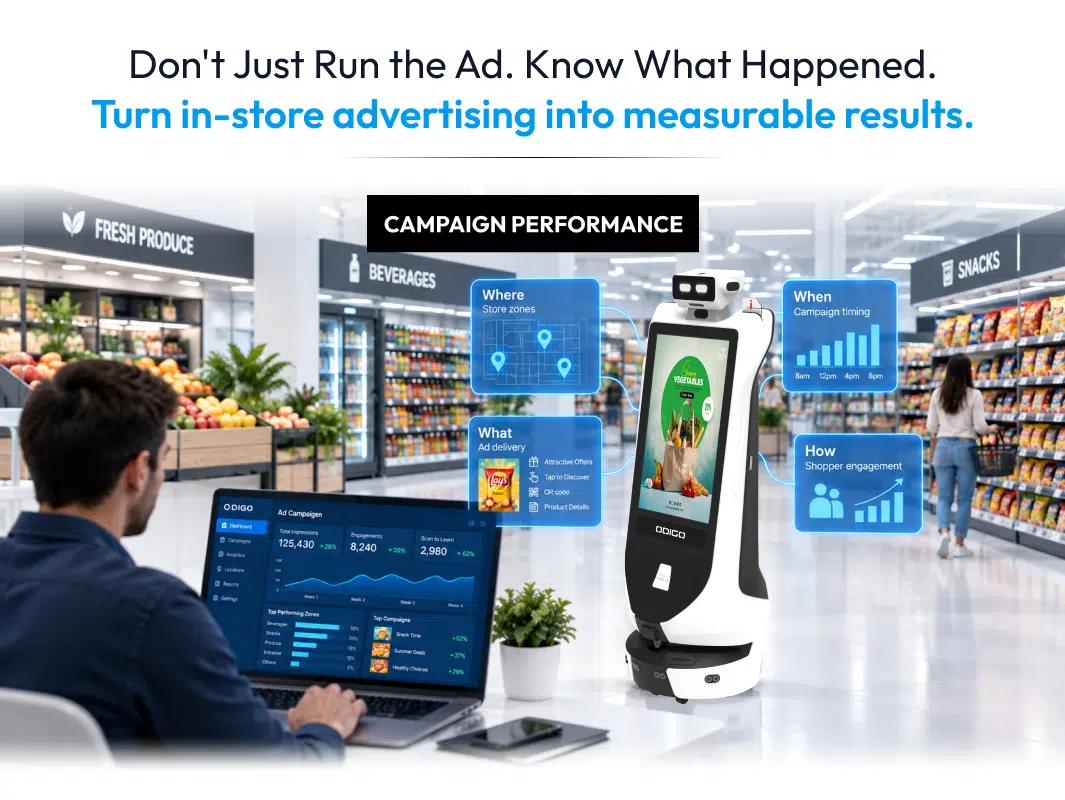
For supermarkets, evaluating an advertising robot should include more than how often advertisements are displayed. Campaign and engagement data can show where content was played, when shoppers interacted with it, and which campaigns generated activity.
Key metrics can include
These metrics help supermarkets understand how the best advertising robots for US supermarkets contribute to campaign visibility, shopper interaction, and advertising effectiveness. By tracking delivery, engagement, and operational activity, retailers can evaluate campaign performance and make informed decisions about future in-store advertising strategies.
Ad plays by zone and time
See where and when advertisements are delivered.
Proof-of-play records
Maintain a record of what played, where, and when.
Promotional engagement
Track taps and QR interactions with promotional content.
Audience engagement
Monitor interactions with campaigns across different periods and locations.
Campaign performance
Review advertising activity by campaign, section, or partner.
Operational activity
Consider uptime and active operating hours when evaluating advertising coverage.
These measurements can help supermarkets assess campaign delivery and engagement alongside their broader advertising objectives.
Why Choose Kody Robots for Advertising Robots?
Selecting an advertising robot involves considering the robotic platform, advertising technology, and measurement capabilities together. Kody Robots combines these elements through Odigo, giving supermarkets a solution designed around autonomous operation and measurable campaign activity.
Purpose-built robotic expertise
Kody Robots brings expertise in robotics and autonomous systems, with Odigo designed for high-footfall environments where navigation and reliable operation are important.
Advertising platform
Odigo combines mobility with an Advertising & Media Platform for delivering promotional content across different supermarket areas.
Measurable performance
Analytics and reporting provide visibility into ad plays, proof-of-play, and shopper engagement.
Flexible deployment
Odigo can be configured around supermarket zones, routes, schedules, promotional campaigns, and shopper engagement goals.
For supermarkets looking for the best advertising robots for US supermarket environments, this combination provides a foundation for immediate advertising campaigns and future customer-facing applications.
How to Get Started with an Advertising Robot
Getting started with an advertising robot begins with a clear understanding of what you want to achieve and where a robot can fit into your supermarket.
Define your goals
Identify the products, promotions, brands, or campaigns you want to support.
Choose deployment areas
Select supermarket zones based on shopper movement, product categories, and campaign priorities.
Plan your content
Decide which messages, offers, and interactive experiences should run in each area.
Set your metrics
Determine how you will measure ad delivery, shopper engagement, and campaign activity.
Start with a focused deployment
Test selected campaigns or zones, review the results, and use the insights to plan future expansion.
For retailers considering the best advertising robots for US supermarket environments, a focused deployment can provide a practical way to understand how the technology fits into the supermarket and advertising strategy.
Choosing the Best Advertising Robots for Your Supermarket
The value of an advertising robot in a supermarket comes from how effectively it connects advertising with the shopper’s journey. Mobility creates opportunities to place relevant campaigns across different supermarket areas, while interactive content and measurable engagement give supermarkets more ways to understand how shoppers respond.
For supermarkets evaluating the best advertising robots for supermarkets in USA, the focus should be on how well the technology fits the supermarket environment, campaign objectives, and measurement requirements.
Odigo brings these elements together through its Advertising & Media Platform, supported by autonomous mobility and shopper interaction. This creates a practical foundation for building a mobile advertising strategy that can serve shoppers, brands, and supermarket teams across different areas.
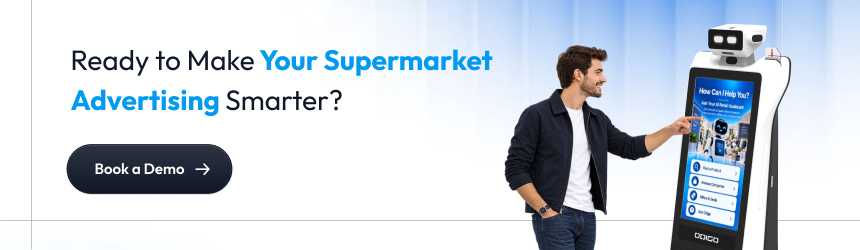
To see how Odigo could fit into your supermarket advertising strategy, book a demo with our team.

Best Advertising Robots for US Supermarket – General FAQs
Understanding the Best Advertising Robots for US Supermarkets involves looking at how these solutions support promotional campaigns, shopper engagement, advertising measurement, and daily supermarket operations. The following FAQs explore how advertising robots work, where they can be deployed, what features they offer, and how supermarkets can evaluate their role in modern in-store advertising strategies.
1. What is an advertising robot for supermarket operators?
An advertising robot is a mobile robotic system that delivers promotional content and engages shoppers within a supermarket. It can move through designated areas while displaying advertisements for products, brands, offers, and seasonal campaigns.
2. How does an advertising robot work in a supermarket?
An advertising robot combines autonomous navigation, digital displays, advertising software, and shopper interaction. It can follow designated routes, display scheduled content, change campaigns based on location, and collect advertising and engagement data.
3. What can an advertising robot advertise inside a supermarket?
An advertising robot can promote products, daily deals, seasonal offers, clearance promotions, new launches, brand campaigns, and vendor promotions. Interactive content can also give shoppers product information or opportunities to engage with a campaign.
4. How do supermarket operators use advertising robots for in-store promotions?
Advertising robots for American supermarkets can support product promotions, seasonal campaigns, brand partnerships, and shopper engagement across different supermarket areas. Retailers can align campaigns with specific products, zones, routes, and promotional periods.
Large-format supermarket environments associated with brands such as Walmart, Best Buy, and IKEA can have diverse shopper journeys and multiple promotional touchpoints where targeted in-store advertising may be relevant.
5. How can advertising robots display different promotions in different supermarket aisles?
The best advertising robots for supermarkets in USA can use location-based advertising to associate specific campaigns with designated supermarket sections. As the robot moves between zones, content can change according to the campaign assigned to each location.
6. Can advertising robots target campaigns by store zone, time, and location?
Best retail advertising robots in USA can support campaigns based on factors such as supermarket zones, routes, points of interest, and day or time schedules. This allows retailers to align promotional content with different areas and campaign periods.
7. Can supermarket operators schedule advertising campaigns across multiple robots?
Yes. A centralized platform can help supermarkets schedule and manage campaigns across multiple robots. Content can be coordinated according to location, zone, route, schedule, or individual campaign requirements.
8. Can advertising robots display daily deals, seasonal offers, and clearance promotions?
Top advertising robots for US supermarkets can support scheduled and rotating content for daily deals, seasonal campaigns, limited-time offers, and clearance promotions. Supermarkets can update campaigns as promotional priorities change.
9. How do advertising robots support supermarket retail media networks?
Advertising robots can add a mobile advertising channel to a supermarket’s retail media strategy. Supermarket advertising robot options in USA can provide brands and vendors with opportunities to run campaigns while supporting capabilities such as proof-of-play and engagement analytics.
10. Can advertising robots provide proof-of-play for supermarket advertising campaigns?
Yes. Advertising robots can maintain records of advertising content played, including where and when campaigns were delivered. This gives supermarkets and advertising partners greater visibility into campaign delivery and can support reporting requirements.
11. Can advertising robots track QR scans and touchscreen engagement?
Yes. Advertising robots can use touchscreens and QR codes to create interactive campaign experiences. Supermarkets can track interactions such as touchscreen engagement and QR activity to better understand how shoppers respond to promotional content.
12. How can advertising robots support retail intelligence in supermarkets?
Advertising robots can support retail intelligence through insights related to shopper searches, footfall, dwell activity, demand patterns, and areas of shopper interest, depending on the deployment and configuration.
Supermarkets with environments similar to Walmart, Best Buy, and IKEA can consider these insights alongside campaign and operational data when planning customer-facing robotic deployments.
13. How can advertising robots improve the ROI of supermarket advertising?
The best advertising robots for US supermarket environments can support ROI evaluation by making advertising activity more measurable and adaptable. Supermarkets can review campaign delivery, shopper engagement, advertising activity, and operational coverage to assess performance against their objectives.
14. What factors should supermarket operators consider when calculating advertising robot ROI?
When evaluating the ROI of advertising robots for American supermarkets, retailers can consider campaign delivery, shopper engagement, advertising partner activity, operating time, deployment coverage, and relevant sales or campaign data. These measures can help connect advertising activity with business objectives.
15. How can supermarket operators measure the financial impact of an advertising robot?
The best advertising robots for US supermarket deployments can provide operational and engagement data that supermarkets can combine with their own sales and campaign information. Measures such as ad plays, proof-of-play, QR interactions, shopper engagement, and campaign performance can contribute to a broader ROI assessment.
For supermarkets comparing the best robotic advertising solutions for supermarkets, these metrics can provide a practical basis for evaluating how an advertising robot contributes to the broader supermarket advertising strategy.